Which Breakfast Is Best for Weight Loss: 5 Protein Options
Oatmeal, eggs, cottage cheese, a sandwich, or just a cup of coffee? Debates about the right breakfast have been going on for years. Some believe you must eat porridge in the morning, others completely avoid carbohydrates, while others skip breakfast in hopes of losing weight faster.
In practice, there is no perfect dish that triggers fat burning. The best breakfast for weight loss is the one that keeps you full, fits your daily caloric intake, and doesn’t have you reaching for cookies an hour later.
What Prevents Women Over 40 From Losing Weight: Nutrition, Sleep, Stress, Activity
After 40, many women notice a strange pattern: their diet has barely changed, portions seem small, but their weight gradually increases. Attempts to go on a diet give a short-term result, after which the pounds return. The belly becomes more noticeable, familiar clothes fit differently, and losing weight requires much more effort than it did ten years ago.
This doesn’t mean losing weight after 40 is impossible or that the body has stopped burning fat. Most often, several factors change at once: the amount of muscle mass, daily activity, sleep quality, eating habits, and hormonal background.
On Monday, you decide to start a new life. You weigh your oats, record the milk in your coffee, and carefully study the bread packaging. Everything goes great for the first few days. But then comes a rush, a family dinner, eating out at a café, or just plain tiredness. One missed entry, then another, and by the weekend, you no longer open your food diary.
Sound familiar?
The issue is usually not weak willpower. It's just that from the very beginning, people turn food tracking into an overly complicated and demanding system. They try to count every crumb with perfect accuracy, spend too much time recording, and see any missed entry as a failure.
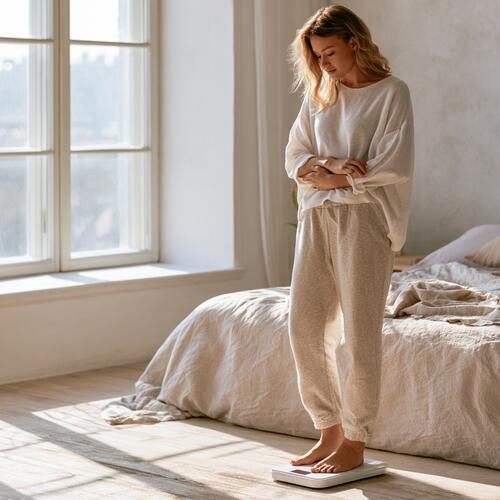
You’ve started working out, are trying to follow a diet, moving more, and expect to see a lower number on the scale. But the morning after a workout, the number has gone up. Sometimes by 300–500 grams, sometimes by a kilo or even more.
The first thought is usually a worried one: “Are workouts not helping and am I gaining weight?”
How to Lose Weight on Vacation Without Counting Every Crumb
Vacation is often perceived as a challenge for your figure. Buffet meals, ice cream, local cuisine, late dinners, cocktails, and the lack of your usual routine force you to choose between two extremes: strictly controlling every portion or completely forgetting about nutrition until you return home.
In practice, neither of these options is necessary. On vacation, you can try new dishes, visit cafes, and relax without kitchen scales. You don’t have to count every crumb. It’s enough to follow a few simple guidelines that help you avoid overeating and maintain a moderate calorie deficit.
The main goal during your trip can be formulated as follows: not to lose weight at any cost, but to maintain your habits and avoid constant overeating. Even if your weight temporarily stalls, that’s already a great result.
Yes, it is possible to lose weight without breakfast. For weight loss, it is not the mere fact of eating in the morning that matters, but the number of calories a person consumes and expends throughout the day.
If skipping breakfast makes it easier for you to maintain a calorie deficit, you don’t feel weak, and you don’t overeat in the evening, this regimen can be convenient. However, skipping breakfast by itself does not trigger intensified fat burning or guarantee weight loss.
For some people, skipping the morning meal does indeed reduce their overall calorie intake. For others, the opposite happens: by evening, they experience strong hunger, larger portion sizes, and unplanned snacking. Therefore, there is no universal rule here.
A practical norm for most people who are losing weight:
400-600 g of vegetables per day This is usually 3-5 servings, with 1 serving being about 80-120 g.
Why this range is convenient:
provides food volume with low calories
adds fiber, which reduces hunger
helps you build your plate so it’s easier to maintain a deficit
Important: don’t start right away with 600 g if you currently eat almost no vegetables. It’s better to add them gradually, otherwise there will be bloating and aversion.
The problem is almost never the lack of a continuous 60 minutes. The problem is that walking is perceived as a separate workout, not as the sum of short segments.
Working principle: 3-6 micro-walks of 5-10 minutes a day give more than an occasional long walk once a week. And it's easier to fit into reality.
Why It’s Hard to Lose Weight in the Evening Without Hunger
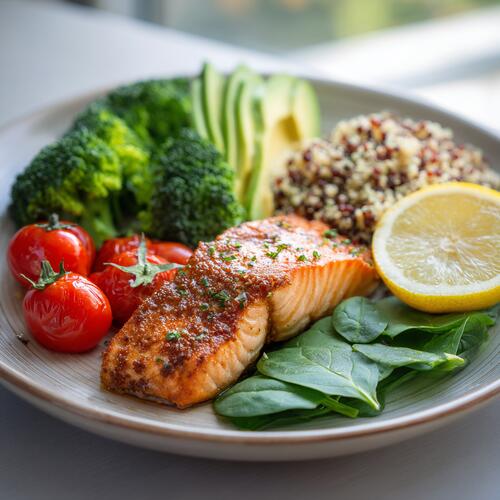
Evening appetite usually increases not because something is wrong with you, but because you had too little normal food during the day, not enough protein and fiber, long gaps between meals, stress, and lack of sleep. In practice, the best dinner for weight loss is not “the minimum calories” but a clear structure: protein + volume (vegetables) + carbohydrates as needed. This approach is directly used in the dinner examples in the SIT30 menu.
 Which Breakfast Is Best for Weight Loss: 5 Protein Options
 What Prevents Women Over 40 From Losing Weight: Nutrition, Sleep, Stress, Activity
 How Not to Abandon Your Food Diary After a Week
 Why Your Weight Goes Up After a Workout
 How to Lose Weight on Vacation Without Counting Every Crumb
 Is it Possible to Lose Weight Without Breakfast?
 Who is this workout suitable for?
 How Many Vegetables Per Day for Weight Loss
 Why It Seems Like There’s No Time
 Why It’s Hard to Lose Weight in the Evening Without Hunger