Fiber: How Much You Need and How to Get Enough Without Bloating
 What is fiber and why do you need it
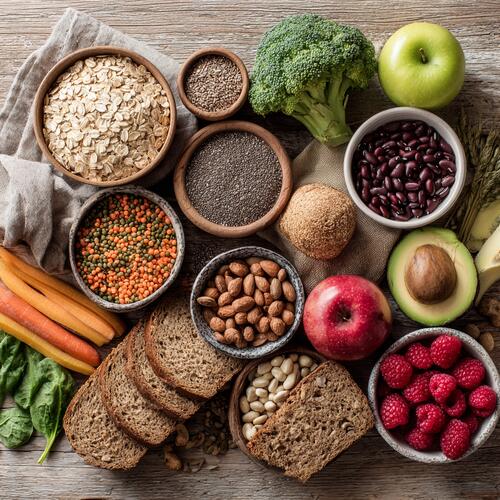
Fiber is dietary fiber from plant foods. It is hardly digested, but it affects satiety, bowel function, microbiota, and appetite stability. Fiber is especially useful for weight loss because it adds bulk and helps maintain a calorie deficit without constant hunger.
How much fiber do you need per day
A practical guideline for adults: at least 25 g of fiber per day. (World Health Organization)
Some recommendations for adults mention a target of 30 g per day as a clear upper benchmark for health. If you currently eat little fiber (often 10-15 g per day), you don't need to jump straight to 30-35 g. A sharp increase most often causes bloating.
Soluble and insoluble fiber: why does one cause bloating but not the other
Simplified:
-
Soluble fiber (oats, legumes, apples, berries, psyllium) forms a gel, better affects satiety, and is gentler on the gut, but in sensitive people it can also cause gas when increased abruptly.
-
Insoluble fiber (bran, cabbage, skins, whole grains) increases motility and stool volume, but it more often provokes discomfort if increased rapidly and without enough water.
The best option for most people: raise fiber through a mix of sources, not through a single product like bran or raw cabbage salad every day.
Why does bloating occur when you increase fiber
The most common reasons:
-
too sharp an increase in fiber grams
-
not enough water
-
a lot of raw rough fiber (cabbage, salads, bran) on an empty gut
-
a lot of FODMAP foods (onions, garlic, legumes, apples, some dairy) in sensitive GI tracts
-
lack of physical activity, constipation
Important: Moderate gas at the beginning is often normal, as the microbiota adapts. But severe pain, sharp cramps, blood, persistent diarrhea, or unexplained weight loss are reasons to see a doctor.
How to reach your fiber goal without bloating: practical rules
1) Add gradually
Plan: +3-5 g of fiber every 3-4 days, until you reach your goal (25-30 g).
2) Water is a must
If you add fiber, add water too. Practical tip: a glass of water with every meal plus another 1-2 glasses between meals.
3) Start with gentle sources
Oatmeal, berries, banana (not green), stewed vegetables, soups, grains, chia seeds in small portions.
4) Raw vegetables are not your main growth point
If you get bloated, focus on cooked veggies: stew, bake, soups. Leave raw cabbage and large salads for later.
5) Introduce legumes smartly
Start with 2-3 tablespoons of cooked legumes, 2 times a week. Better in soup or stew. Rinse canned beans.
6) Don't rely on bran
Bran often causes quick discomfort. If you want to add them, start with 1 teaspoon a day and only with good hydration.
Step-by-step 14-day plan
Goal: increase fiber with no bloating or heroics.
Days 1-4
-
Add 1 serving of berries or fruit per day
-
Replace a side dish with a grain (oatmeal, buckwheat, barley)
-
Cooked vegetables: 200-300 g per day
Days 5-9
-
Add another serving of vegetables (preferably stewed or soup)
-
Add 1-2 teaspoons of seeds (flax, chia) to yogurt or porridge
Days 10-14
-
Add legumes twice a week in a small portion
-
Switch 1-2 products to whole grain versions (bread, pasta)
-
Assess tolerance and maintain a comfortable level
Examples: how to get enough fiber without overdoing it
The following is not about exact grams, but about the logic—to avoid bloating:
-
Breakfast: oatmeal + berries + yogurt
-
Lunch: vegetable soup + grain side dish
-
Dinner: fish or chicken + stewed vegetables
-
Snack: apple or pear (if it doesn't bloat) or berries
Common mistakes
-
«I'll make a brush-salad and everything will be fixed»
A big serving of raw rough fiber often causes bloating, especially if you weren't eating many vegetables before. It's better to increase gradually. -
«I'll eat fiber but won't touch water»
This can result in constipation and discomfort. -
«I'll add bran but keep the rest of my diet the same»
Fiber should come from food: vegetables, fruits, grains, legumes. -
«It's painful, but I'll endure»
Severe pain is not normal. Simplify sources, reduce the dose, go back a step.
Frequently asked questions
How much fiber does an adult need per day?
Guideline: at least 25 g per day, and a target of 30 g suits many if the gut handles it well. (World Health Organization)
Why does fiber cause bloating?
Most often due to a sharp increase, lack of water, and lots of raw rough fiber. Graduality and cooking vegetables help.
How can I increase fiber quickly without discomfort?
Increase by 3-5 g every 3-4 days, start with grains, berries, and stewed vegetables, and add water.
Which foods provide the softest fiber?
Oatmeal, berries, stewed vegetables, pureed soups, chia seeds in small amounts. If your GI tract is sensitive, postpone raw cabbage and bran.
Do I need supplements like psyllium?
Sometimes they're convenient, but it's better to start with food. If you decide to try them, start with a small dose and with water; see how you tolerate it. For chronic GI problems, it's best to consult a specialist.
Read also
- Gut microbiota and health: how nutrition affects immunity
- 5 effective ways to reduce appetite without pills or strict diets
- Myth: Carbs are the main cause of excess weight
- 1,500 kcal daily menu: breakfast, lunch, dinner, and snack options
- "Brush" salad for weight loss: cleansing, minus kilos and maximum benefit
- How to stop eating sweets and not relapse: 12 practical strategies without banning forever
- How to keep weight off after weight loss: a practical strategy without breakdowns