What Is More Important for Weight Loss: Weight or Measurements
When losing weight, almost everyone looks at the scale. If the number goes down, everything is good. If it stays the same, then something is wrong. But very often the weight is misleading and doesn't reflect real progress.
Let's break down what is actually more important when losing weight: weight or measurements, and how to properly evaluate your results.
Walking uphill for weight loss often turns out to be the best compromise: the load is higher than on a flat surface, but the impact load is usually lower than when running. This helps burn more energy in the same amount of time while making it easier to stay consistent.
A 1200 kcal meal plan helps create an energy deficit and lose weight, provided it matches your health, activity level, and real needs. Below you’ll find a ready-made menu option for the day with precise gram weights and approximate caloric/macronutrient values, plus substitutions so you don’t fall off track or get “stuck” eating the same foods.
One of the most common concerns during weight loss: I’m losing weight but I don’t know what exactly is going. Is it fat, water, or muscle? Weight changes, measurements don’t always change, and your sensations may be conflicting.
Let’s break down, step by step, how to understand that you are truly losing fat, and not just water or muscle mass.
Brisk walking for weight loss is good because it provides a training load without running: it's easier to do regularly, easier to recover from, and it's simpler to reach the required volume of activity over the week. Three things matter for results: the total volume of walking (minutes or steps), intensity (pace and heart rate), and nutrition (calorie deficit).
Specifics below: what pace counts as "brisk," what heart rate you need, how to do interval walking, and a ready-to-use 4-week plan.
A 1200 kcal meal plan is usually chosen when you need to quickly put your eating habits in order and start monitoring calories. To make the menu filling rather than leaving you hungry, stick to a simple formula: protein at every meal, vegetables for volume, oil and sauces measured strictly by the gram. Below is a ready-made day of about 1200 kcal, which you can copy and add to SYPB 30 as "My Recipe".
The query "walking after eating for weight loss" is popular for a reason. This is one of the simplest habits you can actually implement without a gym: you eat and go for a short walk. For weight loss, it primarily works through overall energy expenditure and consistency. An additional bonus: a short walk after a meal helps smooth out glucose spikes, which often reduces cravings for sweets and late-night snacking.
Here are the specifics: when it’s best to walk, how many minutes are enough, what pace to choose, and how to fit it into your routine so the habit sticks.
Запрос "ходьба для похудения сколько шагов в день" обычно про два вопроса: какая цифра работает и как сделать так, чтобы вы не бросили через неделю. Важный момент: шаги помогают худеть, но результат определяют два фактора вместе: регулярный расход энергии (шаги, тренировки, активность в течение дня) и питание (дефицит калорий).
Ниже даю практичные диапазоны по шагам, готовый план на 4 недели и правила, как ускорить эффект без травм и выгорания.
How to Break Through a Plateau Without Cutting Calories: Real and Effective Methods
A plateau during weight loss is a situation almost everyone faces. Calories have already been reduced, there’s a deficit, but the weight won’t budge. The first thought is obvious: cut calories even more. But this solution most often makes things worse.
Good news: in many cases, you can break through a plateau without further reducing calories. Let’s go through how to do this smartly and safely.
If you are looking for a 1200 kcal meal plan, the goal is usually simple: weight loss and order in nutrition without complicated schemes. The working formula is this: protein in every meal, vegetables for volume, oils and sauces strictly by grams. Below is a ready-made menu for the day at about 1200 kcal, which is convenient to copy and enter into SYPB 30 as “My Recipe.”
 What Is More Important for Weight Loss: Weight or Measurements
 Walking uphill for weight loss often turns out to be the best compromise: the load is higher than on a flat surface, but the impact load is usually lower than when running. This helps burn more energy in the same amount of time while making it easier to stay consistent.
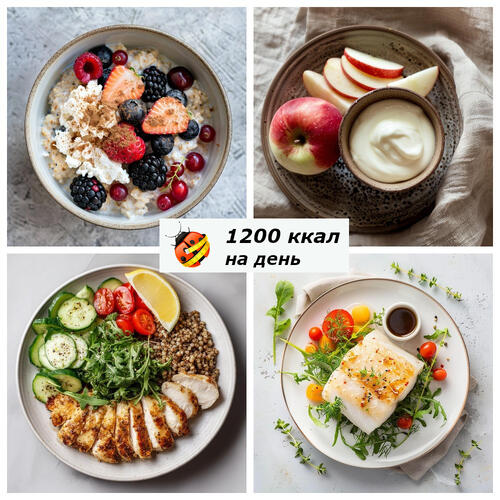 A 1200 kcal meal plan helps create an energy deficit and lose weight, provided it matches your health, activity level, and real needs. Below you’ll find a ready-made menu option for the day with precise gram weights and approximate caloric/macronutrient values, plus substitutions so you don’t fall off track or get “stuck” eating the same foods.
 How to Know You’re Losing Fat
 Brisk walking for weight loss is good because it provides a training load without running: it's easier to do regularly, easier to recover from, and it's simpler to reach the required volume of activity over the week. Three things matter for results: the total volume of walking (minutes or steps), intensity (pace and heart rate), and nutrition (calorie deficit).
 A 1200 kcal meal plan is usually chosen when you need to quickly put your eating habits in order and start monitoring calories. To make the menu filling rather than leaving you hungry, stick to a simple formula: protein at every meal, vegetables for volume, oil and sauces measured strictly by the gram. Below is a ready-made day of about 1200 kcal, which you can copy and add to SYPB 30 as "My Recipe".
 The query "walking after eating for weight loss" is popular for a reason. This is one of the simplest habits you can actually implement without a gym: you eat and go for a short walk. For weight loss, it primarily works through overall energy expenditure and consistency. An additional bonus: a short walk after a meal helps smooth out glucose spikes, which often reduces cravings for sweets and late-night snacking.
 Запрос "ходьба для похудения сколько шагов в день" обычно про два вопроса: какая цифра работает и как сделать так, чтобы вы не бросили через неделю. Важный момент: шаги помогают худеть, но результат определяют два фактора вместе: регулярный расход энергии (шаги, тренировки, активность в течение дня) и питание (дефицит калорий).
 How to Break Through a Plateau Without Cutting Calories: Real and Effective Methods