13.03.2026
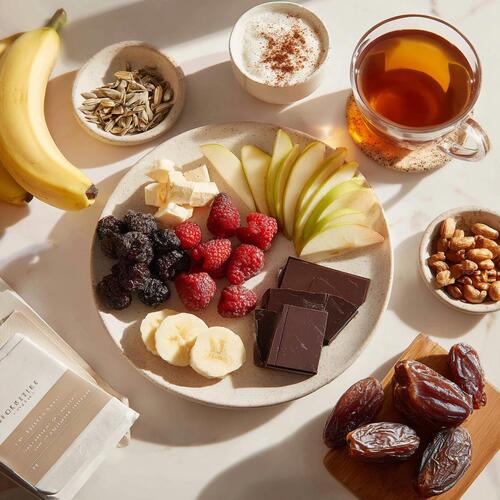 Cravings for sweets most often appear not because of weak willpower, but due to a combination of reasons:
-
hunger and too little protein in a meal
-
lack of sleep
-
stress and the habit of "stress eating"
-
sudden blood sugar spikes due to sweet snacks on an empty stomach
-
restrictions based on the "never allowed" principle, which end in bingeing
Effective strategy: don't prohibit, but replace and build your diet so that sweets are not your only source of pleasure and energy.
11.03.2026
 The goal of 7,000 steps a day often turns out to be the most practical: it noticeably increases activity, is easier to maintain for months, and doesn’t require you to “live on a walk.” For health, studies show that the benefit increases with the number of steps, but for many people, the effect begins to slow down somewhere around the range of 7,000-10,000 steps (depending on age and initial activity level).
Short summary:
-
7,000 steps a day is a strong foundational goal, especially if you currently walk very little.
-
In a study of middle-aged adults, 7,000+ steps per day were associated with a significantly lower risk of mortality compared to fewer steps.
-
For weight loss, steps work through energy expenditure and discipline, but the result is determined by a calorie deficit.
09.03.2026
 The goal of 10,000 steps a day became popular not because it’s a perfect medical norm, but because it’s a convenient, round number. Historically, it originated from the Japanese pedometer Manpo-kei and was more of a marketing guideline.
Good news: you don’t have to hit 10,000 every single day to benefit. At the same time, 10,000 can be a great weight loss goal if it helps you maintain a calorie deficit and regular activity.
Short summary:
-
For health, the benefits of steps increase, but for many people the effect starts to slow down after about 6,000–8,000 steps for those 60+ and 8,000–10,000 for people under 60.
-
For weight loss, steps work through energy expenditure and discipline, but food choices and deficit are what really matter.
-
Intensity can be assessed simply: at moderate intensity, you can talk but can’t sing.
07.03.2026
 The "12,000 steps a day" challenge is often seen as a golden middle ground between the standard 10,000 and the advanced 15,000–20,000. For weight loss, this is a truly effective goal because it significantly increases daily energy expenditure and helps maintain a calorie deficit. But it's important to remember: when it comes to health, most benefits are often achieved at lower step counts, and after that the effect increases more slowly and depends on age and starting activity level.
In short:
-
12,000 steps a day can be a great goal for weight loss if you introduce it gradually and monitor your diet.
-
For health, about 6,000–8,000 steps is enough for people 60+, and around 8,000–10,000 for those younger than 60.
-
Intensity matters too: a guideline for moderate activity is about 100 steps per minute.
05.03.2026
 This menu option is made from affordable products. The calculated C/P/F/C (Calories/Proteins/Fats/Carbohydrates) is approximate and may vary slightly depending on the brand of the products, fat content, and method of preparation.
How to cook so that the calorie count does not "drift"
-
Add oil by grams, not "by eye"
-
Weigh meat and fish in ready-to-eat form, if specified in the menu
-
Use low-calorie sauces or count their calories separately
Menu for 1200 kcal: tasty, simple, no hunger!
 Breakfast: Omelette with vegetables and cheese + crispbreads (approx. 320 kcal)
Ingredients
Recipe
-
Beat the eggs with milk, salt, and pepper in a bowl.
-
Cut the tomato into cubes, rinse the spinach.
-
Heat a non-stick frying pan, pour in the mixture.
-
Add the vegetables, cook covered for 3-4 minutes over low heat.
-
Sprinkle with grated cheese, leave for another minute until it melts.
-
Serve with crispbreads.
Approximate C/P/F/C: 320 kcal, P 22 g, F 16 g, C 20 g
 Snack 1: Cottage cheese dessert with berries (approx. 170 kcal)
Ingredients
Recipe
-
Mash the cottage cheese with a fork or blend it.
-
Add vanilla, sweetener.
-
Top with berries or mix them in.
Approximate C/P/F/C: 170 kcal, P 24 g, F 3 g, C 15 g
 Lunch: Turkey meatball soup + salad (approx. 410 kcal)
Ingredients for 1 serving
For the soup:
For the salad:
Recipe
-
Form the meatballs: mix the mince, half an egg, salt, pepper. Roll 8-10 balls.
-
Pour water into a pot and bring to a boil.
-
Add chopped potatoes and cook for 7 minutes.
-
Add carrots and onions (you can lightly sauté them in a dry pan), cook another 5 minutes.
-
Add the meatballs, cook for 7-10 minutes until done. Add bay leaf and greens.
-
Salad: Shred the cabbage, add cucumber, dress with yogurt.
Approximate C/P/F/C: 410 kcal, P 33 g, F 10 g, C 50 g
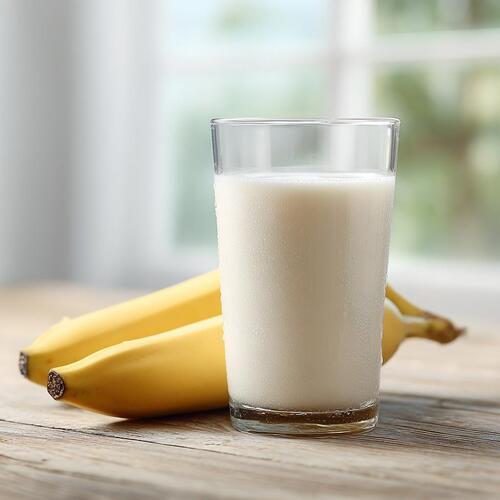 Snack 2: Banana + kefir (approx. 160 kcal)
Ingredients
-
kefir 1% 250 ml
-
banana 80 g
How to consume
Just drink the kefir separately, you can eat the banana immediately or after 10-15 minutes.
Approximate C/P/F/C: 160 kcal, P 9 g, F 3 g, C 26 g
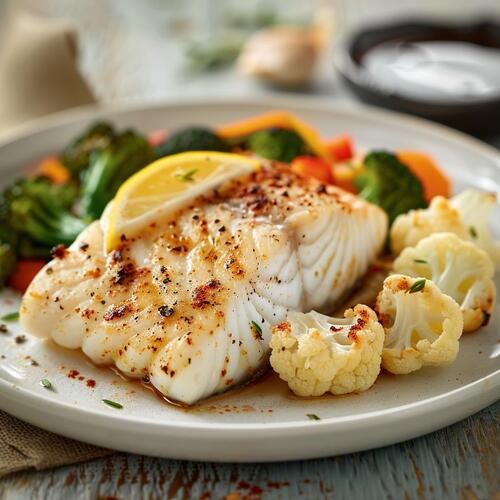 Dinner: Baked fish + vegetables (approx. 140 kcal)
Ingredients
-
pollock/hake 170 g (raw weight)
-
lemon 1-2 slices
-
spices (paprika, garlic, pepper)
-
vegetables (broccoli/cauliflower/zucchini) 250 g
-
soy sauce 10 g optional
Recipe
-
Salt the fish, add spices and lemon.
-
Bake at 190°C for 15-20 minutes (depends on thickness of the piece).
-
Steam or stew the vegetables in water for 8-10 minutes.
-
Serve the fish with vegetables, you may add a bit of soy sauce.
Approximate C/P/F/C: 140 kcal, P 30 g, F 2 g, C 8 g
Total for the day (approximate)
1200 kcal
Proteins: about 118 g
Fats: about 34 g
Carbohydrates: about 119 g
Food substitutions for variety
-
Turkey in soup: chicken, lean beef, fish
-
Fish for dinner: cod, pike perch, shrimp
-
Cottage cheese snack: Greek yogurt + berries, sugar-free protein yogurt
-
Vegetables: any non-starchy, at least 400 g per day
Shopping list for 1 day
Eggs, milk 1.5%, cottage cheese 2%, berries, turkey mince, potatoes, carrots, onion, cabbage, cucumbers, kefir 1%, banana, pollock/hake, broccoli/vegetable mix, lemon, spices.
Also read in the SYPB 30 blog
03.03.2026
 The goal of "15,000 steps a day" is often chosen for weight loss when you want to increase energy expenditure without running. It really works if the steps help you maintain a calorie deficit and you can do this amount regularly. At the same time, studies show that the key health benefits for most people are achieved at lower values, and beyond that the effect increases more slowly and depends on age.
In short:
-
15,000 steps is a high, "advanced" volume.
-
For health benefits, the effect often plateaus earlier: about 6,000-8,000 steps for those 60+ and 8,000-10,000 for people under 60.
-
For weight loss, regularity, total weekly activity, and nutrition are more important.
01.03.2026
 20,000 steps a day sounds like iron discipline and fast results. But it's important to understand: for health, most people do not need such a high number of steps, and for weight loss, what matters is a calorie deficit and consistency, not one specific number. According to meta-analyses, the reduction in mortality risk grows as the number of steps increases, but the effect plateaus at about 6,000–8,000 steps for people 60+, and about 8,000–10,000 steps for people under 60.
This doesn’t mean that 20,000 is useless. It means that 20,000 steps is already an advanced volume, which makes sense as a tool for increasing energy expenditure and building a movement habit, but it requires a smart approach to starting.
Who needs 20,000 steps and why
20,000 steps a day is usually chosen in three scenarios:
-
Need to increase energy expenditure, but running is not suitable
-
You want to quickly accumulate your weekly activity volume
-
You are already active and want a challenge
At the same time, the basic recommendations for activity for adults are: 150–300 minutes of moderate aerobic activity per week or the equivalent, plus strength training at least 2 times a week. (PubMed)
Many people meet these recommendations with fewer steps, especially if they also do workouts.
How many km and how much time is 20,000 steps
The distance depends on stride length, height, and pace. On average, walking yields roughly 2,000–2,500 steps per mile.
Practical reference
-
20,000 steps is about 13–16 km for most adults
-
In terms of time, it's often about 2.5–3.5 hours of walking total per day, if the pace is normal or moderately brisk
The best approach: don't try to do it all in one go. Break it up into 3–5 sessions.
How many calories can you burn with 20,000 steps
Calories depend on weight, speed, incline, and whether you hold onto the treadmill rails.
Estimation by MET
The Compendium of Physical Activities lists different MET values for various walking paces, for example, around 4.3 MET for brisk walking at about 3.5 mph and higher for a faster pace. (cdn-links.lww.com)
Simple formula
kcal per minute = MET × 3.5 × weight(kg) / 200. (Omni Calculator)
Example calculation
If you walk at a moderately brisk pace (about 4.3 MET) and your weight is 80 kg, then expenditure is approximately:
4.3 × 3.5 × 80 / 200 = 6.0 kcal per minute
For 180 minutes, that's about 1,080 kcal. This is a rough estimate—the actual figure will vary.
Important for SYPB 30 practice
Even if you burn a lot, weight loss will still require controlling your food intake. It's easier to see in a food diary whether you are offsetting the energy expenditure with snacks and drinks.
Benefits and possible harm
Benefits
-
Higher total energy expenditure, easier to maintain a deficit
-
Improved endurance and discipline
-
The health effect of increasing steps is overall positive, but for many people key benefits are achieved before reaching 20,000.
Potential risks with a sudden start
-
Overloading the feet and shins, e.g., the plantar fascia can hurt after high volumes of load.
-
Overtraining and accumulation of fatigue
-
Overuse injuries are often associated with repetitive load without enough recovery.
Who should NOT start with 20,000
Pregnancy, significant obesity with pain, joint and heart diseases, rehabilitation after injuries. Here, it's better to start with a lower goal and, if needed, discuss with your doctor.
How to safely reach 20,000 steps
Key principle: increase the volume gradually.
4-week plan
Week 1
- Your average over 3–5 days plus 2,000 steps
- 1 long walk, the rest split up
Week 2
- 1,000–2,000 steps more than week 1
- Add 1 recovery day: fewer steps, more sleep
Week 3
- Reaching 15,000–18,000 on average for the week
- 1 day can be 20,000, but not every day
Week 4
- 18,000–20,000 on average for the week or 20,000 every other day
- If you have discomfort in your feet or knees, keep 15,000–18,000 as your working goal and consolidate there
Technique to protect your joints
-
Shorter stride, slightly higher frequency
-
Keep your torso engaged, shoulders relaxed
-
Shoes with comfortable cushioning, socks without folds
How to reach 20,000 steps without feeling like a marathon
Sample daily schedule
-
5,000 in the morning
-
5,000 during the day
-
5,000 after lunch
-
5,000 after dinner
Lifehacks
-
10 minutes of walking 6 times a day already gives a significant part of your goal
-
Treadmill: a slight incline and moderate pace often help you hit your step count, but don't hold onto the rails all the time
-
Take all phone calls while walking
-
Park further away, take the stairs instead of the elevator, quick "bonus walks" of 800–1,200 steps
Mistakes that prevent results
-
You walked 20,000 but started "rewarding yourself" with food
Weight stalls because the deficit disappears.
-
Starting off too aggressively
Legs ache, then a break after a week. It's better to choose a lower goal but be consistent.
-
Comparing your weight every day
Look at the 7–14 day average, plus your waist.
-
Only steps, no strength training
Strength training twice a week improves body composition and maintains muscle. (World Health Organization)
FAQ
Is 20,000 steps a day beneficial for everyone?
No. Most people achieve health and basic effects with fewer steps, and 20,000 is a high volume that needs to be introduced gradually.
How many km is 20,000 steps?
Most often about 13–16 km, depending on stride length.
How much time does it take to walk 20,000 steps?
Usually 2.5–3.5 hours total per day at a comfortable pace. It’s easier to split across several walks.
Can you lose weight by walking 20,000 steps?
Yes, if the steps help keep you in a calorie deficit. Without dietary control, steps are often "compensated" by eating more.
What if your feet or heel hurt?
Reduce your volume by 20–30 percent, check your shoes, add a recovery day. If pain persists, it’s better not to push through pain.
"Read also"
27.02.2026
 The query "how long to walk on a treadmill to lose weight" is always about practice: how many minutes, at what speed, if an incline is needed, and how to actually make the weight go down instead of quitting after three workouts. Walking on a treadmill works if you keep a calorie deficit and accumulate a regular weekly volume of activity. Recommendations for adults: 150–300 minutes of moderate activity per week (or the equivalent), plus strength training twice a week. (World Health Organization)
In short:
-
Beginner: 30–45 minutes of walking 4–5 times a week
-
Intermediate: 45–60 minutes 4–6 times a week or intervals of 30–40 minutes
-
If you’re short on time: 25–35 minutes, but with incline or intervals (fast + easy)
Use the “talk test”: at moderate intensity you can talk but can’t sing.
25.02.2026
 Why You Need a High-Protein Breakfast
Protein at breakfast helps you stay full longer, reduces sweet cravings throughout the day, and makes calorie control easier. This is especially helpful if you are losing weight, working out, or just want to snack less.
Guideline for most people: 20–35 g of protein at breakfast. If your weight is higher, your activity level is high, or you do strength training, a higher comfortable range may work — but the main thing is not to "chase" protein at any cost, but to get it from real foods.
23.02.2026
 Climbing stairs for weight loss often works better than regular walking when time is short and you want to feel a tangible workout. Stair climbing is generally considered more intense and noticeably increases energy expenditure. According to the Compendium of Physical Activities, climbing stairs ranges from about 4 MET (slowly) to 8.8-9.3 MET (quickly), depending on the pace.
However, weight loss is still determined by a calorie deficit and consistency. The basic guideline for adult physical activity: 150 minutes of moderate exercise per week, up to 300 minutes for additional benefits, plus strength training 2 times a week. (World Health Organization)