PP Desserts from Cottage Cheese: 12 Sugar-Free Recipes Without Excess Calories
Cottage cheese often comes to the rescue when you crave something sweet but are maintaining a calorie deficit. It provides quality protein, easily transforms into creams or baked goods, and helps make desserts not only delicious but also predictable in calorie content.
This article collects 12 options for PP (proper nutrition) cottage cheese desserts: with and without baking, with berries, fruits, and cocoa. At the end, you’ll find an FAQ and life hacks to ensure your dessert always turns out well.
Professional tip for better results: enter the recipe into SYPB 30 once and then cook without recalculating. It truly saves time and reduces the risk of mistakes in measurements. You can also add the recipe to your app via a unique code.
Why Weight Stalls on a Calorie Deficit: Main Causes and What to Do
This situation is familiar to many: the calories are counted, there is a deficit, but the weight stays the same. For a day, a week, sometimes even a month. It feels like the body is "broken" or the formulas just don't work.
In practice, in 90 percent of cases, the problem is not metabolism, but specific factors that can be identified and corrected. Let's sort out why weight can stall even with a calorie deficit and how to get things moving downward again.
Calorie Deficit: Which One to Choose and Why Too Little Often Gets in the Way
A calorie deficit is the foundation of weight loss. Without it, weight does not go down, but this is also where most mistakes are made. Some set the deficit too low and see no results, while others cut calories too much and face plateaus, breakdowns, and a decline in well-being.
Let's break down which calorie deficit to choose, why too low a calorie intake often hinders weight loss, and how to find a functional balance.
A 1500 kcal Menu for a Day: Breakfast, Lunch, Dinner, Snack Options
A 1500 kcal meal plan is often chosen for gentle and controlled weight loss. This format helps maintain a calorie deficit without hunger if the menu is balanced in protein, fiber, and healthy fats. Below you’ll find a ready-made 1500 kcal daily meal plan with precise weights, recipes, nutritional values, and also ideas for how to swap out dishes so your diet doesn’t get boring.
How to Count Calories Correctly: Scales, Portions, Oil, Drinks
Calorie counting works only under one condition: if you count them truly correctly. In practice, most people "are in a deficit" but the weight doesn’t go down precisely because of accounting errors. Oil, drinks, snacks, and inaccurate portions easily bring the deficit to zero.
In this article, we’ll look at how to count calories properly, what you absolutely must pay attention to, and how to simplify the process so it doesn’t turn into constant stress.
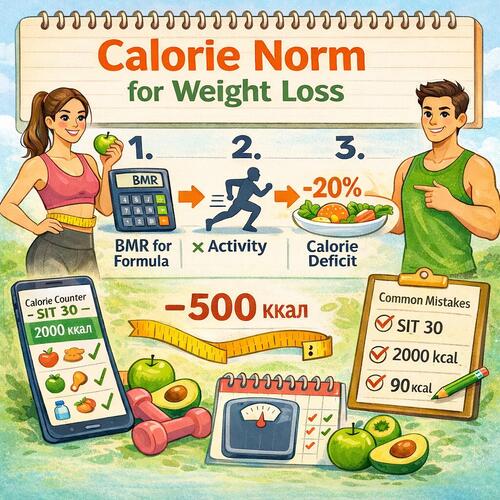
Calorie Norm for Weight Loss: How to Calculate (Formula, Example, Common Mistakes)
The right calorie norm for weight loss doesn't start with guessing and not with "1200 for everyone," but with calculating your daily needs and setting a reasonable deficit. The most practical option for most people in everyday life:
calculate your basal metabolic rate (BMR) using the Mifflin-St Jeor formula
multiply by the activity factor to get your maintenance (TDEE)
make a 10-20% deficit and monitor the trend for 2-3 weeks
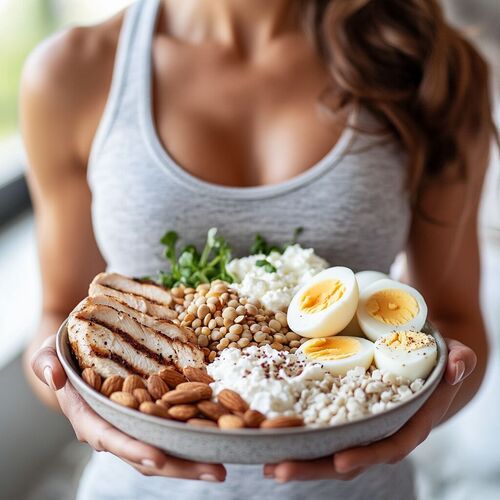
Protein is a building material for cells, the basis of muscles, skin, hormones, and enzymes. It participates in tissue regeneration, metabolism, immune protection, and even in appetite regulation. Protein is especially important for:
weight loss (reduces hunger, speeds up metabolism);
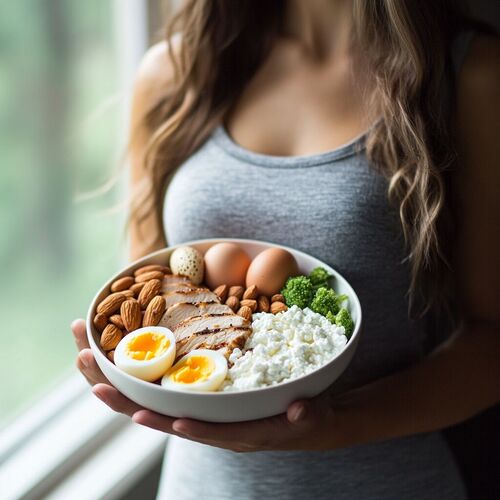
Protein — is not only a building material for muscles, but also an important component that helps you lose weight effectively and safely. During weight loss, your body often loses not only fat but also muscle mass. Sufficient protein intake helps to preserve muscles, speeds up metabolism, and contributes to a feeling of fullness.
Salt baths have long been used in home body care. But do they really help with weight loss? Let's figure out how salt works in water, what types exist, how to properly take salt baths, and what science has to say.
What is a salt bath?
A salt bath is a bath to which sea, Epsom (English), pink Himalayan, or other natural salts are added. The water becomes enriched with minerals, which, when in contact with the skin and body, may have various effects—from relaxation to improved microcirculation.
Sassi Water — one of the most popular detox drinks among those who want to lose weight without diets or pills. The recipe is simple, the ingredients are accessible, and the promises are impressive. But does it really help you lose weight? Let's examine what science, reviews, and common sense have to say.
 PP Desserts from Cottage Cheese: 12 Sugar-Free Recipes Without Excess Calories
 Why Weight Stalls on a Calorie Deficit: Main Causes and What to Do
 Calorie Deficit: Which One to Choose and Why Too Little Often Gets in the Way
 A 1500 kcal Menu for a Day: Breakfast, Lunch, Dinner, Snack Options
 How to Count Calories Correctly: Scales, Portions, Oil, Drinks
 Calorie Norm for Weight Loss: How to Calculate (Formula, Example, Common Mistakes)
 Why is protein important for the body?
 Why Protein is Important for Weight Loss
 Salt baths have long been used in home body care. But do they really help with weight loss? Let's figure out how salt works in water, what types exist, how to properly take salt baths, and what science has to say.
 Sassi Water — one of the most popular detox drinks among those who want to lose weight without diets or pills. The recipe is simple, the ingredients are accessible, and the promises are impressive. But does it really help you lose weight? Let's examine what science, reviews, and common sense have to say.