1400 kcal Daily Meal Plan: Menu with Recipes and Portion Sizes
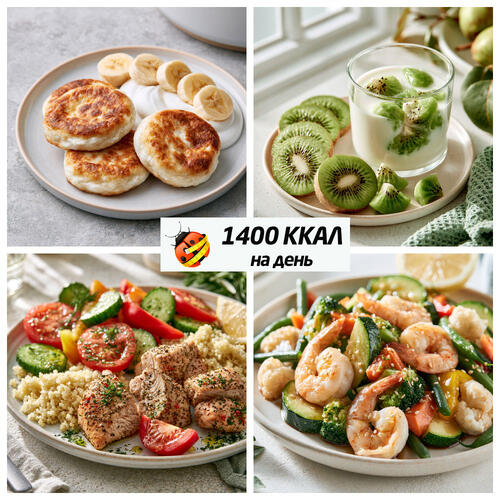 Daily Meal Plan for 1400 kcal: Menu with Recipes and Portions
A 1400 kcal daily plan doesn't have to consist of plain chicken breast, lettuce leaves, and black coffee. Even with a limited calorie budget, your menu can include cottage cheese pancakes, grains, fruit, fermented milk products, and a full hot dinner.
The main point is not to look for special diet foods, but to have the right portion sizes. Pay particular attention to oil, seeds, nuts, cheese, sauces, and other foods that are calorie-dense even in small amounts.
Below is a sample menu for 1400 kcal. It is completely different from the previous meal plan and includes five meals:
-
cottage cheese pancakes with banana for breakfast;
-
orange with pumpkin seeds;
-
turkey with bulgur and salad;
-
kefir with kiwi;
-
shrimp with vegetables for dinner.
All the dishes can be made from regular foods, and most of the meals can conveniently be prepared in advance for one or two days.
Who Might Benefit from a 1400 kcal Meal Plan
1400 kcal can be used for weight loss if it creates a moderate deficit relative to your daily energy expenditure.
This plan is most often suitable for people:
-
with low or moderate physical activity;
-
with a sedentary job;
-
not doing intense workouts daily;
-
with relatively low maintenance calories;
-
who feel comfortable eating five times a day.
You should not rely solely on a ready-made number. Two people of the same age may have completely different energy expenditures due to differences in height, weight, steps taken, exercise, and lifestyle.
If you consistently experience weakness, persistent hunger, irritability, sleep problems, or regular overeating on 1400 kcal, this calorie level may be too low.
Ready-Made Menu for 1400 kcal
| Meal | Dish | Calories |
|---|---|---|
| Breakfast | Cottage cheese pancakes with banana and yogurt | 338 kcal |
| First Snack | Orange and pumpkin seeds | 141 kcal |
| Lunch | Turkey with bulgur and vegetable salad | 422 kcal |
| Second Snack | Kefir with kiwi | 141 kcal |
| Dinner | Shrimp with zucchini and vegetables | 360 kcal |
| Total | About 1402 kcal |
Approximate proteins, fats, carbs for the day:
-
protein: about 125-130 g;
-
fat: about 40-43 g;
-
carbohydrates: about 135-140 g.
Calories may differ slightly depending on the fat content of the cottage cheese and kefir, the grain brand, the composition of the vegetable mix, and the actual weight of the foods.
Important Clarification about Product Weights
In this menu:
-
cottage cheese is listed in its package weight;
-
fruit weight is given without inedible parts;
-
bulgur is weighed dry;
-
turkey is listed cooked;
-
shrimp are given peeled and thawed;
-
oil is weighed separately;
-
vegetables can be counted raw or frozen.
Choose one method of accounting and stick to it. You shouldn't weigh cooked grain but record the value for the dry product in your app.
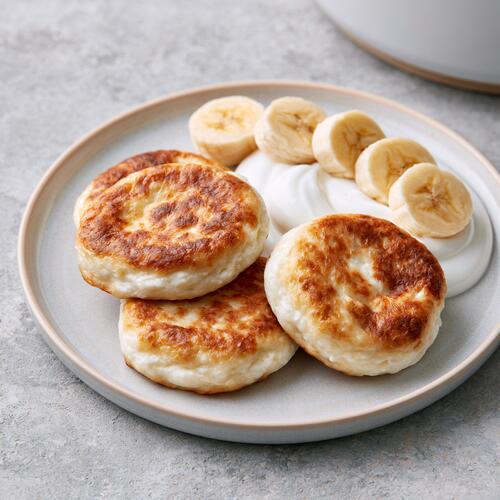 Breakfast: Cottage Cheese Pancakes with Banana and Yogurt
Calories: about 338 kcal
Cooking time: 15-20 minutes
Ingredients
-
5% cottage cheese: 130 g;
-
egg: 1 pc.;
-
rice or wheat flour: 15 g;
-
banana: 40 g;
-
plain yogurt 2%: 30 g;
-
vanilla, cinnamon, and sweetener as desired.
How to Cook
Mash the cottage cheese with a fork. Add the egg, flour, cinnamon, and sweetener. Mix the mixture well.
Form small pancakes. If the mixture is too soft, spoon it onto the pan as you would small fritters.
There are three ways to cook the pancakes:
-
On a non-stick pan without oil.
-
In the oven at 180°C (356°F) for about 15-20 minutes.
-
In an air fryer until lightly golden brown.
Slice the banana and serve with yogurt.
Approximate Proteins, Fats, Carbs
-
protein: 32-33 g;
-
fat: 12-13 g;
-
carbs: 26-28 g.
How to Prep Pancakes in Advance
You can make two or three servings at once. Store the ready pancakes in a closed container in the fridge.
Before breakfast, simply reheat them in the microwave, oven, or dry pan. Add banana and yogurt right before eating.
What to Substitute for Banana
Instead of 40 g of banana you can use:
-
70-80 g berries;
-
80 g apple;
-
80 g pear;
-
50 g peach;
-
10-12 g sugar-free jam.
It’s best to check the calories for substitutions in a calorie counter.
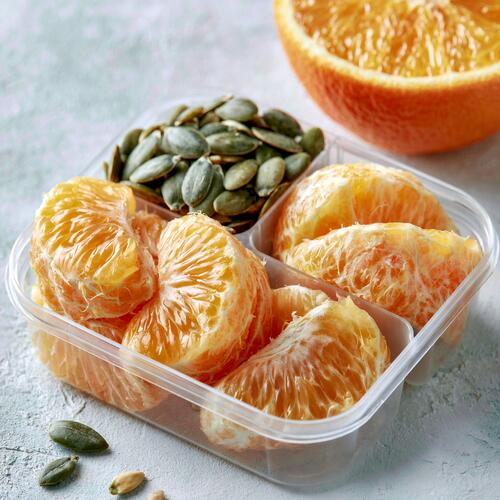 First Snack: Orange and Pumpkin Seeds
Calories: about 141 kcal
Ingredients
-
peeled orange: 180 g;
-
shelled pumpkin seeds: 10 g.
This snack is convenient to take with you. The orange provides volume, while a small portion of seeds adds fat.
Always weigh the seeds. There are relatively few calories in 10 g, but if you eat straight from the pack, the portion can easily multiply several times.
Approximate Proteins, Fats, Carbs
-
protein: 4-5 g;
-
fat: about 5 g;
-
carbs: about 21 g.
What to Substitute for Orange
Instead of orange you can take:
-
apple: 150-170 g;
-
pear: 140-150 g;
-
mandarins: 180-200 g;
-
kiwi: 130-150 g;
-
berries: 200 g.
What to Substitute for Pumpkin Seeds
You can use:
-
almonds: 9-10 g;
-
walnut: 8-9 g;
-
peanuts: 10 g;
-
sunflower seeds: 10 g;
-
peanut butter: 9-10 g.
All these products are quite calorie-dense, so keep the portion small.
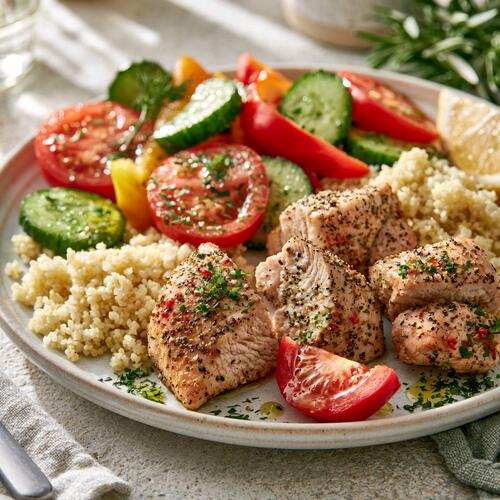 Lunch: Turkey with Bulgur and Vegetable Salad
Calories: about 422 kcal
Cooking time: 25-30 minutes
Ingredients
-
cooked turkey fillet: 120 g;
-
dry bulgur: 40 g;
-
tomato: 100 g;
-
cucumber: 100 g;
-
sweet pepper: 50 g;
-
vegetable oil: 7 g;
-
lemon juice, salt, herbs, and spices to taste.
For 120 g of cooked turkey you typically need about 145-160 g of raw fillet. The exact amount depends on how long you cook it and the moisture lost.
How to Cook Turkey
Cut the fillet into small pieces. Add salt, paprika, black pepper, and dried garlic.
The turkey can be:
-
baked in the oven;
-
stewed with a little water;
-
grilled;
-
pan-fried on a non-stick skillet.
If you use extra oil during cooking, be sure to add it to your food diary.
How to Cook Bulgur
Rinse 40 g of dry bulgur. Add water according to package instructions and cook until done.
No need to add oil to the pot. The 7 g of oil in this menu is already allocated for the vegetable salad.
How to Make the Salad
Chop the tomato, cucumber, and sweet pepper. Add herbs, lemon juice, and 7 g of vegetable oil.
To measure the oil exactly, place the bottle on the kitchen scale, zero it, pour oil into the salad, and then put the bottle back on the scale. The difference shows how much you used.
Approximate Proteins, Fats, Carbs
-
protein: about 43 g;
-
fat: about 10 g;
-
carbohydrates: about 42 g.
What to Substitute for Turkey
Instead of 120 g cooked turkey, you can use:
-
chicken breast;
-
lean beef;
-
lean pork;
-
white fish;
-
canned tuna in own juice;
-
shrimp;
-
squid.
Meat calories vary depending on the cut and fat content. For example, turkey thigh usually has more calories than turkey breast fillet.
What to Substitute for Bulgur
Instead of 40 g dry bulgur, you can use about the same calorie portion of:
-
buckwheat;
-
rice;
-
couscous;
-
quinoa;
-
whole wheat pasta.
You can also use potatoes, but compare by calorie content, not by the same weight. Usually, 40 g dry grain has more calories than 40 g of potatoes.
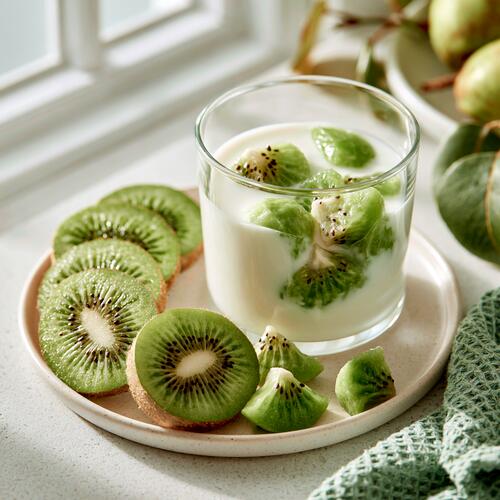 Second Snack: Kefir with Kiwi
Calories: about 141 kcal
Ingredients
-
1% kefir: 200 g;
-
kiwi: 100 g.
You can slice the kiwi and add it directly to the kefir or eat it separately.
If you take your snack to work, pour kefir into a small sealed bottle and put the fruit in a separate container.
Approximate Proteins, Fats, Carbs
-
protein: about 7 g;
-
fat: 2-3 g;
-
carbohydrates: about 23 g.
What to Substitute for Kefir
Instead of 200 g kefir, you can use:
-
plain yogurt;
-
Greek yogurt;
-
low-fat ryazhenka (baked milk);
-
soft cottage cheese;
-
drinkable yogurt without added sugar.
Sweet drinkable yogurt can be much higher in calories than regular kefir. Check the label for information.
What to Choose if You Are Lactose Intolerant
You can use lactose-free kefir or yogurt. Their energy content is usually close to the regular product, but check the label for the exact value.
If you exclude dairy altogether, the snack can be replaced with unsweetened plant-based yogurt. Be sure to check the protein content, as it may be low.
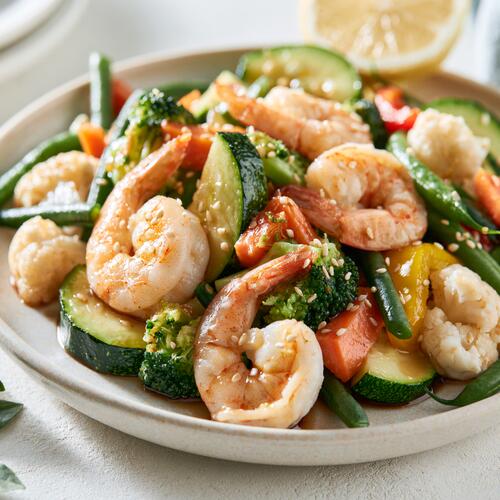 Dinner: Shrimp with Zucchini and Vegetables
Calories: about 360 kcal
Cooking time: 15-20 minutes
Ingredients
-
peeled shrimp: 150 g;
-
zucchini: 200 g;
-
frozen vegetable mix: 200 g;
-
vegetable oil: 7 g;
-
sesame seeds: 5 g;
-
soy sauce: 10 g;
-
garlic, lemon juice, and spices to taste.
A mix of broccoli, carrots, cauliflower, green beans, and bell pepper will work for this dish.
Check the ingredients before buying. Make sure there’s no cream sauce, oil, or breading in the mix if you are counting calories as for plain vegetables.
How to Cook
Cut the zucchini into cubes or thin strips.
Heat the pan and add 7 g of vegetable oil. Add the zucchini and frozen vegetable mix. Cook for about 7-10 minutes, stirring occasionally.
Add thawed shrimp, soy sauce, garlic, and spices. Cook for another 3-5 minutes. Don’t cook the shrimp too long or they will turn tough.
Before serving, sprinkle the dish with 5 g sesame seeds and add a little lemon juice.
Approximate Proteins, Fats, Carbs
-
protein: about 43 g;
-
fat: 12-13 g;
-
carbohydrates: about 23 g.
What to Substitute for Shrimp
Instead of shrimp, you can take:
-
cod fillet;
-
pollock;
-
hake;
-
squid;
-
chicken breast;
-
turkey;
-
tofu.
If using oily fish such as salmon or trout, reduce the amount of oil and sesame seeds.
Can You Add a Side Dish?
If you get hungry soon after a light dinner, you can substitute some of the vegetables with a small serving of a side dish:
-
80-100 g cooked rice;
-
100-120 g potatoes;
-
70-80 g cooked bulgur;
-
25-30 g wholegrain bread.
To keep total daily calories near 1400 kcal, you’ll need to reduce another portion. For example, skip the seeds from the first snack or cut back on oil.
Why This Meal Plan Can Satisfy Hunger Well
Satiety depends not only on total calories. The foods providing those calories are also important.
In the suggested menu:
-
protein foods are included in main meals;
-
vegetables, fruits, and berries are included;
-
sources of fat are present;
-
grains are not excluded;
-
calories are distributed throughout the day;
-
there is no long period of hunger between lunch and dinner.
It’s not necessary to eat five meals a day. If it's easier for you to eat three or four times, you can combine snacks with breakfast, lunch, or dinner.
For example, eat the orange after lunch and move the kefir with kiwi to a late dinner.
Shopping List for One Day
Dairy and Eggs
-
5% cottage cheese;
-
plain yogurt 2%;
-
1% kefir;
-
one egg.
Meat and Seafood
-
turkey fillet;
-
peeled shrimp.
Vegetables
-
tomato;
-
cucumber;
-
sweet pepper;
-
zucchini;
-
frozen vegetable mix;
-
herbs;
-
garlic;
-
lemon.
Fruits
-
banana;
-
orange;
-
kiwi.
Grains and Other Ingredients
-
bulgur;
-
rice or wheat flour;
-
pumpkin seeds;
-
sesame seeds;
-
vegetable oil;
-
soy sauce;
-
spices;
-
sweetener as desired.
How to Prep Your Meal Plan in Advance
Planning helps you stick to your chosen calorie target without constantly searching for food.
In the Evening You Can Prepare
-
Bake or stew several servings of turkey.
-
Cook bulgur.
-
Make cottage cheese pancakes.
-
Divide seeds into portions.
-
Pour kefir into a small bottle.
-
Wash vegetables and fruits.
-
Thaw shrimp.
-
Weigh out a portion of frozen vegetables.
Turkey and bulgur are easy to cook for two days at once. Vegetable salad is better to cut fresh so it doesn't release too much water.
Shrimp cook quickly, so you can leave them for the evening. If you’re short on time, you can cook the entire dish in advance and reheat, but don't overheat seafood repeatedly.
How to Make the Menu Cheaper
Shrimp and turkey can cost more than everyday foods. The menu is easy to adapt for a regular budget.
Shrimp can be replaced with pollock, hake, or chicken breast. Instead of turkey, chicken fillet will do.
Kiwi can be swapped for apple, and pumpkin seeds for a small amount of sunflower seeds.
Bulgur is not mandatory. Buckwheat, rice, or barley work too if the portion is calculated correctly.
How to Increase the Meal Plan to 1500 kcal
To reach about 1500 kcal, add about 100 kcal in one of these ways:
-
increase the bulgur portion by 25-30 g cooked;
-
add 25 g wholegrain bread;
-
increase the seeds by 15-17 g;
-
add 100 g potatoes to dinner;
-
add 100-120 g low-fat cottage cheese to a snack;
-
eat a small banana;
-
add 15 g nuts to breakfast and slightly reduce the fruit portion.
You don't need to make up calories with sweets. It's more convenient to choose a food that will help with satiety.
How to Reduce the Meal Plan to 1300 kcal
You can cut about 100 kcal this way:
-
remove pumpkin seeds;
-
skip sesame seeds and reduce oil by 3 g;
-
cut the bulgur portion by 15-20 g dry;
-
make pancakes without banana;
-
swap 5% cottage cheese for a lower-fat version;
-
reduce oil in lunch and dinner.
Don't cut all foods at once. Cutting portions too sharply may lead to strong hunger.
How to Enter the Meal Plan in SIT30
You can save each meal separately so you don't have to input foods again.
For example, create your own recipes:
-
cottage cheese pancakes with banana;
-
turkey with bulgur;
-
shrimp with vegetables.
When creating a recipe, enter all ingredients at the weights you used. Weigh the finished dish and enter its total weight.
Then just weigh your serving. The app will calculate its calories based on the total dish weight.
It's especially important to include:
-
oil;
-
flour;
-
sauces;
-
seeds;
-
sugar;
-
cheese;
-
cream;
-
breading.
These ingredients are often forgotten when counting calories.
Common Mistakes When Eating 1400 kcal
Not Accounting for Oil
A layer of oil in the pan can add more calories than a serving of vegetables. Oil must be weighed, even if considered healthy.
Choosing Foods Only by Packaging Labels
Words like “fitness,” “sugar-free,” “light,” or “Healthy Eating” don't guarantee low calories.
Cutting Breakfast and Lunch Sizes Too Much
If you eat only a small part of your daily allowance by evening, appetite control after work becomes harder.
Always Eating the Same Meals
A monotonous meal plan quickly gets boring. Use substitutes, but keep similar calorie portions.
Only Counting Weekdays
If you stick to 1400 kcal for five days but go overboard at weekends, your average weekly deficit may disappear.
Excluding Entire Food Groups
For weight loss, you don’t have to completely give up bread, grains, fruits, or potatoes. Just account for them in the total calories.
Judging Results by One Weigh-In
Weight may fluctuate after salty food, lots of carbs, a workout, a late dinner, or certain phases of the menstrual cycle.
To track trends, compare your average weight over several weeks.
Frequently Asked Questions
Can You Lose Weight with a 1400 kcal Plan?
Yes, if this calorie intake creates a deficit for your average energy expenditure. The number 1400 itself doesn't guarantee weight loss for everyone.
How Many Times a Day Should You Eat?
You can eat three, four, or five times. Choose the routine that helps you manage hunger and stick to daily calories.
Are Snacks Necessary?
No. Snacks can be combined with main meals. For example, add fruit to lunch, and have kefir after dinner.
Can You Swap Lunch and Dinner?
Yes. The meal timing doesn't really matter as long as daily calories and portions are maintained.
Can You Substitute Shrimp with Chicken?
Yes. Pick a chicken portion with similar calories and update your food diary accordingly.
Should You Count Vegetables?
Yes. Vegetables are usually low calorie, but should be logged—especially with large portions or when cooked with oil and sauces.
Can You Drink Tea and Coffee?
Tea and coffee without sugar are low in calories. Milk, cream, sugar, honey, and syrups need to be counted.
What to Do If You're Hungry in the Evening?
First, review your whole day’s menu. Perhaps you had too little protein or food overall at breakfast and lunch. You can also move some calories from snacks to dinner.
Can You Eat This Menu Every Day?
You can follow it for a few days, but it's better to swap protein sources, grains, veggies, and fruit for more variety and to keep from getting bored.
Why Isn't the Calculation Exactly 1400 kcal?
The 1400 kcal figure is a guideline. This menu comes to about 1402 kcal but the actual number depends on exact products. A difference of a few calories won’t affect the result.
Conclusion
A 1400 kcal meal plan can include familiar and tasty dishes. This menu contains cottage cheese pancakes, fruit, grains, turkey, fermented milk products, seafood, and plenty of vegetables.
You don’t have to follow this menu exactly. Use it as a ready base, swapping foods for others with similar calories and nutritional value.
For the best results, weigh your foods, include oils and sauces, check packaging data, and save your own recipes in SIT30.