

1400 Calorie Menu for Weight Loss: Daily Meal Plan
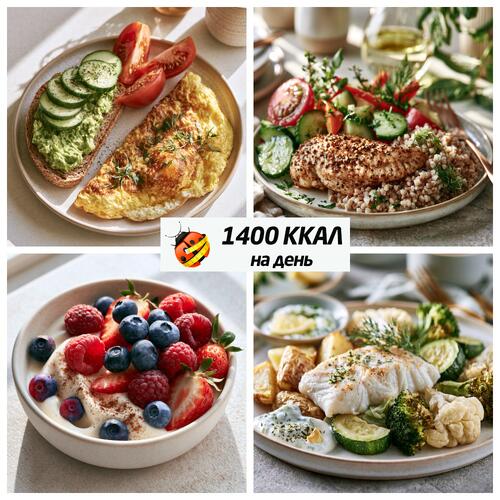 1400 Kcal Menu for Weight Loss: Ready Meal Plan for the Day
A 1400 kcal menu may be suitable for weight reduction if such caloric intake actually creates a moderate deficit. But this is not a universal standard for everyone. For one person, 1400 kcal will be enough, while for another, this plan may seem too meager and lead to constant hunger.
That’s why you should first calculate your daily requirement, taking into account gender, age, height, weight, and activity level. You can do this in the SIT30 calorie calculator. After the calculation, the app helps you control not just total calories, but also the amount of protein, fat, and carbohydrates.
Below is a ready-made menu for the day with approximately 1400 kcal. It contains no expensive superfoods or complex dishes. All the foods can be found in a regular store, and prepping most of the meals takes no more than 20–30 minutes.
Who Might Benefit from a 1400 kcal Meal Plan
Such a menu is most often suited for women with low or moderate physical activity, where 1400 kcal provides a slight deficit compared to maintenance levels.
The meal plan can be used:
-
for gradual weight loss;
-
for sedentary work;
-
with a small amount of training;
-
after a period of eating at a higher caloric intake;
-
to help control portion sizes;
-
as an example of a balanced day’s diet.
With high activity, significant weight, intense training, or persistent strong hunger, 1400 kcal may not be enough.
Pregnant and breastfeeding women, teenagers, people with digestive or endocrine disorders should not drastically restrict their diet without supervision. In such cases, it’s best to discuss your meal plan with a specialist.
1400 Kcal Menu for the Day
| Meal | Dish | Calories |
|---|---|---|
| Breakfast | Omelet with bread, avocado, and vegetables | 300 kcal |
| Snack | Greek yogurt with berries | 170 kcal |
| Lunch | Chicken fillet with buckwheat and salad | 440 kcal |
| Snack | Apple with almonds | 140 kcal |
| Dinner | Fish with potatoes and vegetables | 350 kcal |
| Total | About 1400 kcal |
Approximate proteins, fats, and carbs (PFC) per day:
-
protein: 120–125 g;
-
fat: 40–45 g;
-
carbohydrates: 130–140 g.
Exact numbers depend on the fat content of the products, brand, preparation method, and actual portion size.
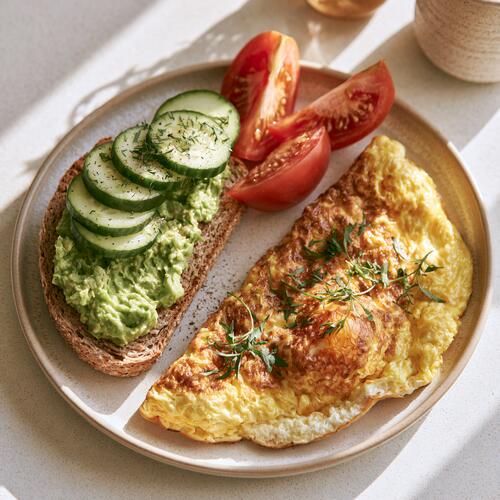 Breakfast: Omelet with Bread, Avocado, and Vegetables
Calories: about 300 kcal
Preparation time: 10 minutes
Ingredients
-
egg: 1 piece;
-
egg whites: 100 g;
-
whole grain bread: 30 g;
-
avocado: 30 g;
-
tomato: 100 g;
-
cucumber: 100 g;
-
vegetable oil: 2 g;
-
salt, pepper, and fresh herbs to taste.
How to Cook
Mix the egg with egg whites, add salt and spices. Heat a nonstick frying pan, spread 2 g of oil on the surface, and pour in the egg mixture.
Cook the omelet under a lid on low heat for about 5 minutes. The bread can be lightly toasted on a dry pan or in a toaster. Mash the avocado with a fork and spread it on the bread.
Serve the omelet with toast, cucumber, and tomato.
Approximate PFC
-
protein: 24–26 g;
-
fat: 11–13 g;
-
carbohydrates: 24–27 g.
Such a breakfast contains a notable portion of protein and is not made entirely of fast carbs. This is why it usually satisfies better than sweet cereals, pastries, or coffee with cookies.
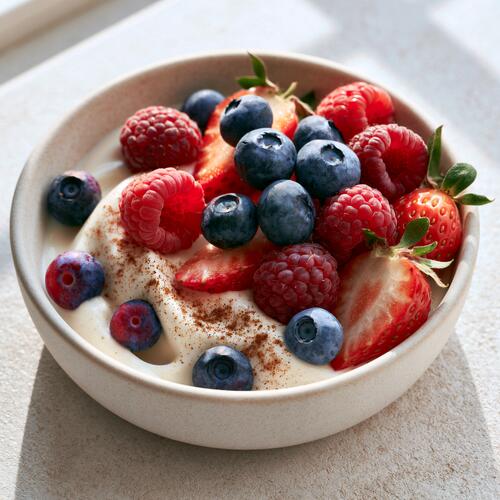 First Snack: Greek Yogurt with Berries
Calories: about 170 kcal
Preparation time: 2 minutes
Ingredients
-
Greek yogurt 2% unsweetened: 180 g;
-
berries: 100 g;
-
cinnamon or sweetener, optionally.
How to Cook
Place yogurt in a small bowl, add fresh or thawed berries. If desired, use cinnamon, vanilla, or a non-caloric sweetener.
Approximate PFC
-
protein: 16–18 g;
-
fat: 3–4 g;
-
carbohydrates: 15–18 g.
When choosing yogurt, look at more than just "fitness" or "light" on the label—check the ingredients. Drinking and fruit yogurts can contain quite a lot of added sugar.
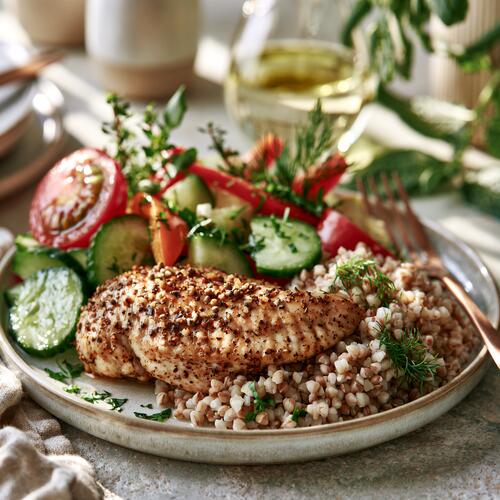 Lunch: Chicken Fillet with Buckwheat and Vegetable Salad
Calories: about 440 kcal
Preparation time: 25 minutes
Ingredients
-
cooked chicken fillet: 120 g;
-
buckwheat, dry: 40 g;
-
cucumber: 100 g;
-
tomato: 150 g;
-
sweet pepper: 100 g;
-
olive or sunflower oil: 7 g;
-
lemon juice, fresh herbs, and spices to taste.
How to Cook
Rinse the buckwheat, cover with water, and cook until done. Salt the chicken fillet, add paprika, pepper, or dried garlic. Bake, boil, or grill.
Slice cucumber, tomato, and pepper. Add fresh herbs, lemon juice, and 7 g of oil. Serve the salad with the buckwheat and chicken.
Approximate PFC
-
protein: 40–43 g;
-
fat: 10–12 g;
-
carbohydrates: 40–44 g.
It's best to weigh out the oil. A generous portion poured directly from the bottle can quietly add 100–200 kcal to your lunch. The same goes for mayonnaise, nuts, cheese, and ready sauces.
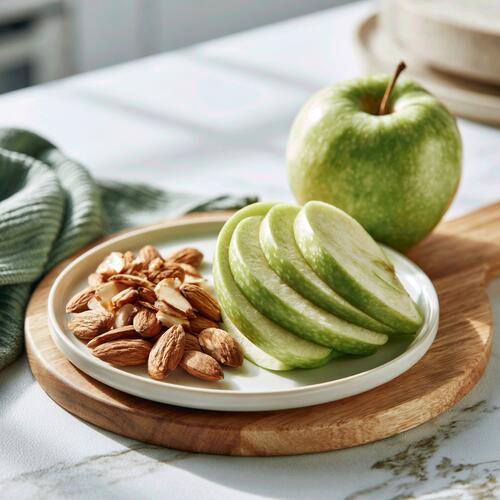 Second Snack: Apple with Almonds
Calories: about 140 kcal
Ingredients
-
apple: 150 g;
-
almonds: 10 g.
An apple is easy to take with you, and the nuts are better pre-portioned using kitchen scales. Don't eat them straight from the pack: a small handful can easily turn into 30–40 g.
If you are very hungry, you can replace this snack with a protein option, like cottage cheese or plain yogurt. In that case, you'll need to adjust the calories in the other dishes.
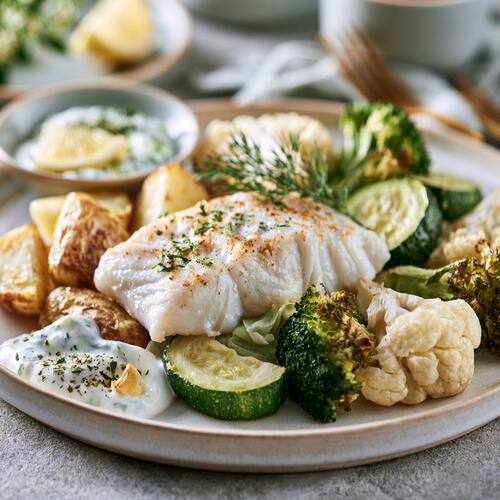 Dinner: White Fish with Potatoes and Vegetables
Calories: about 350 kcal
Preparation time: 25 minutes
Ingredients
-
cod, pollock, hake, or pike-perch fillet: 170 g;
-
potato: 100 g;
-
zucchini: 150 g;
-
broccoli or cauliflower: 150 g;
-
natural yogurt 2%: 50 g;
-
vegetable oil: 4 g;
-
lemon juice, salt, garlic, and spices to taste.
How to Cook
Cut the potatoes into small pieces and boil or bake. Salt the fish, sprinkle with lemon juice, and bake for about 15–20 minutes at 180–190°C.
Braise or bake the zucchini and broccoli together with the fish. Count the oil separately.
For the sauce, mix yogurt with salt, fresh herbs, lemon juice, and a little dried garlic.
Approximate PFC
-
protein: 35–38 g;
-
fat: 8–10 g;
-
carbohydrates: 30–34 g.
Potatoes do not interfere with weight loss if their calories fit into the daily allowance. The problem is usually not the potato itself, but the high amount of oil, creamy sauces, cheese, and deep frying.
Product List for the Day
Protein-rich foods
-
egg;
-
egg whites;
-
Greek yogurt;
-
chicken fillet;
-
white fish fillet;
-
natural yogurt for sauce.
Cereals and bread
-
buckwheat;
-
whole grain bread;
-
potatoes.
Vegetables, fruits, and berries
-
avocado;
-
tomatoes;
-
cucumbers;
-
sweet pepper;
-
zucchini;
-
broccoli or cauliflower;
-
apple;
-
berries;
-
fresh herbs;
-
lemon.
Additionally
-
almonds;
-
vegetable oil;
-
salt;
-
pepper;
-
paprika;
-
dried garlic;
-
cinnamon.
How to Prep the Menu in Advance
To avoid cooking five times a day, you can prep part of the ingredients in the evening or for two days at once.
You can prepare in advance:
-
Boil buckwheat.
-
Bake several portions of chicken fillet.
-
Portion out the meat and grains into containers.
-
Weigh out the required amount of nuts.
-
Wash and chop some of the vegetables.
-
Defrost fish and berries.
-
Make the yogurt sauce.
It's best to make the omelet just before breakfast, and the fish can be prepared in the evening along with the vegetables. Using this plan, active meal prep during the day will take minimal time.
How to Substitute Products in the Menu
It’s not necessary to eat the same foods every day. The main thing is that the substitute is close in calories and nutritional value.
What to Substitute for Chicken Fillet
Instead of 120 g of cooked chicken fillet, you can use:
-
turkey fillet;
-
lean beef;
-
lean pork;
-
tuna in its own juice;
-
shrimp;
-
squid.
Compare calories with the app, since the fat content of different meats varies significantly.
What to Substitute for Buckwheat
Instead of 40 g of dry buckwheat, you can use:
-
40 g bulgur;
-
35–40 g rice;
-
40 g couscous;
-
40 g durum wheat pasta;
-
160–180 g potatoes.
The weight of dry grains cannot be directly compared to cooked weight. When cooked, grains absorb water and get heavier, but the total calories in the pot do not increase.
What to Substitute for White Fish
You can use:
-
chicken fillet;
-
turkey;
-
shrimp;
-
squid;
-
tuna;
-
lean beef.
Red fish is also suitable but contains more fat and calories. In such substitutions you usually need to reduce the amount of oil or another fatty food.
What to Substitute for Yogurt
If you do not eat dairy, choose unsweetened plant-based yogurt. Check the amount of protein: many plant-based alternatives contain much less than Greek yogurt.
Alternatively, the snack can consist of eggs, tuna, hummus, tofu, or lean meat.
How to Turn This Menu into a 1500 kcal Meal Plan
To get about 1500 kcal, add one of the following options:
-
a banana weighing about 100 g;
-
20 g whole grain bread and 15 g cheese;
-
100 g cottage cheese 2–5% fat;
-
15 g nuts;
-
25 g dry grains at lunch;
-
a small extra snack.
Don’t add 100 kcal by eye. Even healthy foods are best weighed out, especially nuts, oils, cheese, and peanut butter.
How to Reduce the Menu to 1300 kcal
You can remove about 100 kcal in several ways:
-
omit nuts from the second snack;
-
reduce total oil intake by 5 g over the day;
-
remove bread from breakfast;
-
reduce the portion of buckwheat by 15–20 g cooked;
-
reduce the amount of avocado;
-
replace apple with less caloric berries.
However, you don’t need to keep lowering your intake with every fluctuation in weight. Body mass may temporarily increase due to salt, carbs, workouts, bowel contents, or menstrual cycle.
How to Correctly Calculate Menu Calories
For more accuracy, stick to one method of measurement.
If you weigh a product raw, choose the raw weight value in the app. If you weigh it cooked, use the cooked item value.
Do not mix up the data. For example, you can’t weigh already boiled buckwheat and log it as if it were dry.
Be sure to account for:
-
oil for frying and salads;
-
sauces;
-
sugar and cream in drinks;
-
nuts and seeds;
-
cheese;
-
small snacks;
-
tastes taken while cooking;
-
caloric drinks.
A small margin of error won’t hurt weight loss. It’s much more important to track consistently every day than to try to count lunch down to the very calorie.
Why 1400 Kcal May Leave You Hungry
Strong hunger does not always mean you lack willpower. Possible reasons:
-
1400 kcal is too little for your body;
-
not enough protein in your diet;
-
too few vegetables and other bulky foods;
-
intervals between meals are too large;
-
most calories come from sweets and pastries;
-
not enough sleep;
-
high physical activity;
-
too little fat;
-
a habit of eating much more.
If hunger appears every day, interferes with work, sleep, and leads to overeating, reconsider your plan. Often a 1500–1600 kcal plan gives better results, because it’s easier to stick to without constant breakdowns.
Can You Eat Sweets on 1400 kcal
Sweets are not forbidden, but they do take up part of your daily calorie allowance. For example, it's easier to stick to your plan without frequent breakdowns.
Can You Eat Sweets on 1400 kcal
A dessert of 250 kcal can fit into your menu if you reduce the portion of another dish.
A problem arises when, in order to eat sweets, a person omits a full lunch, protein, or vegetables. Formally the calorie content is kept, but satiety is much worse, and by evening strong hunger appears.
It is more practical to allow for 100–150 kcal for your favorite treat, and compose the rest of your diet from regular food.
How Much Weight Can You Lose on 1400 kcal
The result does not depend on the figure of 1400 itself, but on the difference between intake and expenditure of energy.
If your maintenance norm is 1800 kcal, a 1400 kcal meal plan creates a deficit of about 400 kcal. If your maintenance norm is close to 1500 kcal, weight loss will be minor. And with an energy expenditure of 2400 kcal, this plan might turn out too strict.
Don’t focus on one weigh-in, but on the average trend over several weeks. It’s also important to monitor not just weight, but body measurements, photos, well-being, and hunger levels.
Common Mistakes with a 1400 kcal Plan
Mistake 1. Not counting oil
Vegetable oil is healthy but very high in calories. Weigh it out rather than pouring from the bottle.
Mistake 2. Counting calories only in main dishes
Coffee with milk, a cookie, a candy, a piece of cheese, and a few nuts are all part of your daily intake.
Mistake 3. Completely eliminating carbs
Cereals, potatoes, bread, and fruit can be eaten while losing weight. What's important is the portion and total calories.
Mistake 4. Saving almost all calories for dinner
If your meals are too light all day, it’s harder to control your appetite in the evening. It’s better to distribute food so that you have full meals in the first half of the day.
Mistake 5. Eating too little protein
It's better to spread protein across breakfast, lunch, dinner, and one of the snacks. You don’t have to eat almost all your daily allowance in one meal.
Mistake 6. Cutting calories after every weight gain
A day’s weight gain does not mean you’ve gained fat. Check your average weight for at least one or two weeks first.
Frequently Asked Questions
Can you lose weight eating 1400 kcal a day?
Yes, if 1400 kcal is below your maintenance level and creates an energy deficit. If your body expends about as much as you consume, weight loss will be minimal or nonexistent.
Who is a 1400 kcal menu suitable for?
This menu is most often suitable for women with low or moderate activity. Gender alone is not enough—take into account height, weight, age, activity, and health status.
How many meals should you have on 1400 kcal?
You can eat three, four, or five times a day. The number of meals does not define how fast you lose weight. Choose a schedule that makes it easier to control hunger and stay within your daily allowance.
Can you swap lunch and dinner?
Yes. You can switch meals if the total calories and portion sizes remain the same.
Do you have to eat strictly by the clock?
No. A convenient routine is more important than a perfect schedule. However, very long intervals between meals may increase hunger and the chance of overeating.
What if you’re always hungry on 1400 kcal?
Check your intake of protein, veggies, fats, and water. If your diet is balanced but you’re still hungry, your calories may be too low. Try raising your intake by 100–200 kcal and assess how you feel and how your weight changes.
Can you drink coffee on this meal plan?
Yes. Black coffee hardly affects calories at all. Milk, cream, sugar, and syrups need to be counted separately.
Do you have to follow the suggested menu exactly?
No. This is an example of food and calorie distribution. Meals can be swapped for others with similar calories and protein, fat, and carbohydrate content.
Conclusion
A 1400 kcal menu can be filling and varied, as long as you don’t spend the bulk of daily calories on oils, sweets, drinks, and unplanned snacks.
It’s convenient to build your meal plan around protein foods, vegetables, moderate portions of grains, potatoes, bread, fruits, and fat sources. There’s no need to cook special diet meals or completely give up familiar products.
The most important condition for weight loss is not matching the number 1400 exactly, but maintaining a suitable deficit, consistent tracking, and a meal plan you can sustain for more than just a few days.