

Menu for 1600 kcal per day: portion sizes, recipes, and nutritional values (calories, proteins, fats, carbohydrates)
 Menu for 1600 kcal per day: ready meal plan with weights and nutritional breakdown
A 1600 kcal menu can be quite substantial and filling. It includes three main meals, two snacks, grains, potatoes, fruits, dairy products, and a small amount of nuts.
The main advantage of this caloric intake is not in the specific number, but in the ability to create a varied diet without overly small portions. However, 1600 kcal is not suitable for everyone. For one person, it might be a deficit, for another a maintenance level, and for someone else it may not provide enough energy.
Before using the menu, it is advisable to calculate your own norm, considering gender, age, height, weight, and activity level. You can do this in the SIT30 app or using the article «Calorie needs for weight loss: how to calculate using the Mifflin-St Jeor formula».
Below is a sample one-day menu of ordinary foods. All nutritional values are approximate: actual figures depend on brand, fat content, and cooking method.
Menu for 1600 kcal: brief day plan
| Meal | Dish | Calories |
|---|---|---|
| Breakfast | Oatmeal with banana, berries, and peanut butter | 331 kcal |
| First snack | Cottage cheese with apple and walnuts | 227 kcal |
| Lunch | Chicken breast with buckwheat and vegetable salad | 495 kcal |
| Second snack | Greek yogurt with nuts | 184 kcal |
| Dinner | Hake with potatoes and baked vegetables | 359 kcal |
| Total | about 1595 kcal |
Approximate daily nutritional breakdown:
-
protein: 129 g;
-
fat: 46 g;
-
carbohydrates: 168 g;
-
calories: about 1595 kcal.
A deviation of a few calories does not make a practical difference. There's no need to try to get exactly 1600 kcal to the last unit every day. What's more important is to track your foods correctly and to stick to your chosen calorie range consistently.
 Breakfast: oatmeal with banana, berries, and peanut butter
Calories: about 331 kcal.
Approximate nutritional values:
-
protein: 12 g;
-
fat: 9 g;
-
carbohydrates: 51 g.
Ingredients
-
dry rolled oats: 40 g;
-
1.5% milk: 100 g;
-
water: 100-150 ml;
-
peeled banana: 60 g;
-
fresh or frozen berries: 80 g;
-
unsweetened peanut butter: 8 g;
-
cinnamon: to taste;
-
pinch of salt.
How to prepare
Place the rolled oats in a small saucepan. Add milk, water, and a pinch of salt.
Cook the oatmeal over low heat to your desired thickness. Cooking time depends on the type of oats and is usually indicated on the package.
Transfer the finished porridge to a bowl. Add chopped banana, berries, and peanut butter. Sprinkle with cinnamon if desired.
You can add frozen berries to the pot a few minutes before the oatmeal is ready. They'll heat up and release extra juice.
It's best to weigh the peanut butter. Even a small portion contains a noticeable number of calories, so measuring by spoon is less accurate.
 First snack: cottage cheese with apple and walnuts
Calories: about 227 kcal.
Approximate nutritional values:
-
protein: 23 g;
-
fat: 6 g;
-
carbohydrates: 19 g.
Ingredients
-
2% cottage cheese: 120 g;
-
apple: 150 g;
-
walnuts: 5 g;
-
cinnamon: optional.
How to prepare
You can eat the cottage cheese separately or mix it with some chopped apple. Crush the walnuts and sprinkle on top.
If the cottage cheese seems dry, add a little water or 1-2 tablespoons of plain yogurt. In this case, note the yogurt separately in your food diary.
Don’t add honey by default. A tablespoon of honey will noticeably increase the snack’s calories. If you want to sweeten the cottage cheese, use a ripe apple, cinnamon, or a permitted calorie-free sweetener.
This snack is easy to take to work. Put the cottage cheese in a container; keep the apple and nuts separate until eating.
 Lunch: chicken breast with buckwheat and vegetable salad
Calories: about 495 kcal.
Approximate nutritional values:
-
protein: 43 g;
-
fat: 13 g;
-
carbohydrates: 49 g.
Ingredients
-
raw chicken breast: 140 g;
-
dry buckwheat: 65 g;
-
cucumber: 80 g;
-
tomato: 80 g;
-
lettuce leaves or sweet pepper: 40 g;
-
vegetable or olive oil: 8 g;
-
salt, pepper, paprika, and dried garlic: to taste;
-
lemon juice or herbs: optional.
How to prepare
Rinse the buckwheat, add water, and cook until soft. The indicated weight is for dry uncooked buckwheat.
Salt the chicken breast, add spices, and bake at 180–190°C. You can also grill, stew, or fry with a non-stick pan.
For salad, chop cucumber, tomato, and other veggies. Add 8 g of oil, salt, herbs, and a bit of lemon juice.
It’s more accurate to weigh the oil along with the bottle. Put the bottle on the scale, tare it, pour out oil, and read the negative value. This gives the exact amount used in grams.
Don’t forget to include any oil left on the pan or used for roasting. Read more about tracking foods in the article «How to count calories correctly: scales, portions, oil, and drinks».
Can you cook several portions of lunch at once?
You can prepare chicken and buckwheat for two or three days at a time. For accurate calculation, weigh all raw ingredients, then divide the finished dish into equal portions.
If you mix the grains, meat, veggies, and sauce in one container, it’s easier to create your own recipe in SIT30. Enter all the ingredients, specify the total weight of the cooked dish, and add the required portion size to your diary.
Detailed instructions can be found in the article «How to count calories in complex dishes: soup, pilaf, salad, and casserole».
 Second snack: Greek yogurt with nuts
Calories: about 184 kcal.
Approximate nutritional values:
-
protein: 17 g;
-
fat: 9 g;
-
carbohydrates: 8 g.
Ingredients
-
2% Greek yogurt, unsweetened: 170 g;
-
almonds, hazelnuts, or walnuts: 10 g.
How to prepare
Put yogurt in a small bowl and add chopped nuts. You can use portioned yogurt in packaging if its composition and calories fit your plan.
Check the label. A product labeled “Greek” might have very different amounts of protein, fat, and sugar. Some yogurts have 60–70 kcal per 100 g, others much more.
If your chosen yogurt is higher in calories, reduce the amount of nuts or use a smaller portion of yogurt.
This makes a convenient snack for the afternoon. It contains protein and does not require cooking.
D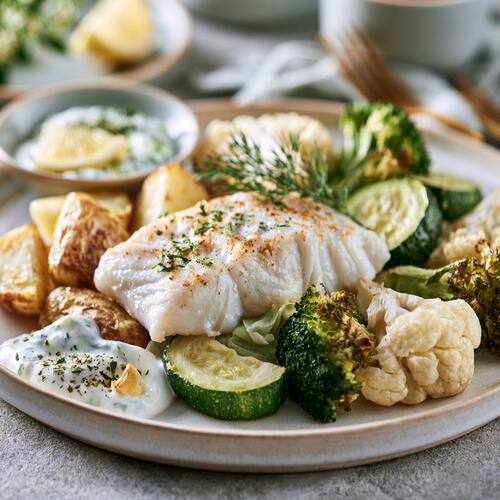 inner: hake with potatoes and baked vegetables
Calories: about 359 kcal.
Approximate nutritional values:
-
protein: 34 g;
-
fat: 9 g;
-
carbohydrates: 40 g.
Ingredients
-
raw hake fillet: 160 g;
-
raw potato: 160 g;
-
broccoli, cauliflower, or zucchini: 250 g;
-
vegetable oil: 4 g;
-
lemon juice: to taste;
-
salt, pepper, and spices for fish: to taste.
How to prepare
Peel the potatoes and cut into small pieces. You can boil them or bake together with the vegetables.
Salt the hake fillet, add spices and lemon juice. Bake at 180–190°C for about 15–20 minutes. The exact time depends on the thickness of the fillets.
Cook the vegetables by steaming, stewing, or baking. Add 4 g of oil before cooking or use it to dress the cooked vegetables.
Potatoes can be included while losing weight. In this menu, their amount and method of preparation are important. A portion of potatoes without lots of oil contains a moderate amount of calories and pairs well with low-fat fish.
Hake can be replaced with pollock or cod. If using a fattier fish, such as salmon, the calorie content of dinner will change. Simply swapping foods gram-for-gram won’t work in that case.
Shopping list for one day
Grains and bread
-
oat flakes: 40 g;
-
buckwheat: 65 g.
Meat and fish
-
chicken breast: 140 g;
-
hake fillet: 160 g.
Dairy products
-
1.5% milk: 100 g;
-
2% cottage cheese: 120 g;
-
2% Greek yogurt: 170 g.
Fruits and berries
-
banana: 60 g;
-
apple: 150 g;
-
berries: 80 g.
Vegetables
-
salad vegetables: 200 g;
-
potatoes: 160 g;
-
vegetables for baking: 250 g.
Nuts, butter, and spread
-
peanut butter: 8 g;
-
nuts: 15 g;
-
vegetable or olive oil: 12 g.
You will also need salt, spices, herbs, cinnamon, and lemon juice.
How to prepare your menu in advance
To avoid cooking each meal separately, you can prepare some foods in the evening.
-
Cook buckwheat for lunch.
-
Bake chicken breast and fish.
-
Boil or bake potatoes.
-
Wash vegetables and fruits.
-
Portion out cottage cheese, yogurt, and nuts into separate containers.
-
Add products to your SIT30 food diary in advance.
Pre-filling your diary helps you immediately see your day’s calories. If your cottage cheese, yogurt, or any other product differs from the one in the calculation, you can adjust the portion ahead of time.
Store prepared food in closed containers in the fridge. It’s best to chop fresh salad just before eating.
In what form should foods be weighed
This menu uses the following rules:
-
rolled oats and buckwheat are listed in dry form;
-
chicken, fish, potatoes, and vegetables are listed before cooking;
-
banana is listed peeled;
-
oil, nuts, and peanut butter are tracked separately;
-
cottage cheese, milk, and yogurt are tracked by actual packaging weight.
After cooking, foods may lose or absorb water. This changes their weight, but not the original calorie content.
For example, 65 g of dry buckwheat may weigh significantly more once cooked. In your diary, you should enter either 65 g of dry buckwheat or the actual portion of cooked buckwheat, using the appropriate food card.
Don’t mix the two tracking methods. Do not weigh cooked buckwheat and log it as dry.
How to substitute foods and keep to about 1600 kcal
There is no need to repeat the menu exactly. Foods can be swapped, considering their calorie and nutritional values.
What to substitute for chicken breast
Suitable options are:
-
turkey breast;
-
lean beef;
-
lean pork;
-
white fish;
-
tofu.
Different foods vary in fat content. After the swap, check the lunch’s final calories in SIT30.
What to substitute for buckwheat
You can use:
-
rice;
-
bulgur;
-
whole wheat pasta;
-
pearl barley;
-
couscous;
-
potatoes.
It's easiest to compare grains in the same state. Compare dry to dry, cooked to cooked.
What to substitute for cottage cheese
Possible options:
-
Greek yogurt;
-
eggs;
-
omelet from eggs and egg whites;
-
low-fat cheese with crispbreads;
-
plant-based protein product with suitable composition.
Simply substituting by weight can change the protein amount. Pay attention not only to calories, but also to nutritional values.
What to substitute for hake
Pollock, cod, haddock, or other low-fat white fish are suitable. You can use fattier fish, but then you’ll need to reduce oils, nuts, or other portion sizes.
What to do when intolerant to dairy products
Milk can be replaced with a suitable plant-based drink, and cottage cheese and yogurt with eggs, fish, poultry, tofu, or other protein sources.
The calorie content of plant-based drinks varies widely. Some options contain added sugar, so check the packaging information.
How to add the menu to SIT30
You don’t have to enter the entire meal plan manually just before eating. It’s more convenient to fill out the diary for the next day in advance.
-
Open the desired day in your food diary.
-
Add oat flakes, milk, banana, berries, and peanut butter to breakfast.
-
Add cottage cheese, apple, and nuts to the first snack.
-
Add chicken, dry buckwheat, vegetables, and oil to lunch.
-
Add yogurt and nuts for the second snack.
-
Add fish, potatoes, vegetables, and oil to dinner.
-
Check total calories and nutritional breakdown.
If your foods come to not 1595 but, for example, 1570 or 1630 kcal, that's fine. Differences arise due to brands, fat content, and composition.
To adjust, you can slightly change the amount of grains, potatoes, nuts, or oil. Usually, you don't need to reduce protein foods first.
Do you have to eat five times per day?
No. Five meals were chosen for convenient distribution of foods. You can eat at a different frequency.
You can combine snacks with breakfast, lunch, or dinner. For example, have the apple for breakfast, and the yogurt with nuts after lunch.
When merging meals, the total daily calorie intake does not change. Choose the schedule that fits your routine and helps control your appetite.
Can you use the 1600 kcal menu for weight loss?
You can, when 1600 kcal creates a suitable deficit relative to your individual needs. The number alone does not guarantee weight loss.
If you have a high energy requirement, this menu might help you lose weight. For someone with lower needs, 1600 kcal might maintain their current weight.
Assess not just one day but the trend over several weeks. Weight may temporarily fluctuate due to water, salt, carbs, workouts, and digestion.
Don't decrease calories just because your weight hasn't changed for a few days. First, check the accuracy of your tracking and observe the overall trend.
Common mistakes when using a ready-made menu
Not tracking oil
Oil in salad, on the pan, and in the oven tray must be entered into your diary. A few unlogged servings can noticeably increase your daily calories.
Weighing foods in the wrong form
When the menu specifies dry grains, you cannot use the same weight of cooked grains. These are different values.
Selecting a random product card
The calories in cottage cheese, yogurt, peanut butter, and other ready-made products depend on their composition. It’s best to select your actual brand or to create your own card using the label.
Adding drinks and sauces without tracking
Sugar in coffee, cream, sweet drinks, ketchup, and other additions also contain calories.
Treating the ready-made menu as a strict guideline
This meal plan is an example, not a rigid diet. You can adapt it according to the season, available foods, tolerance, and personal preferences.
Summary
A 1600 kcal menu can consist of familiar foods and does not require complicated recipes. The suggested plan includes oatmeal with fruit, two protein snacks, chicken with buckwheat, and fish with potatoes.
Total calories are about 1595 kcal. Per day: around 129 g protein, 46 g fat, and 168 g carbohydrates.
Use the menu as a ready-made base, but check the calorie content of specific products from the packaging. In the SIT30 calorie tracker, you can fill out your diary in advance, save your own recipes, and adjust portions to your needs.
Frequently asked questions
Is the 1600 kcal menu suitable for weight loss?
Yes, if 1600 kcal is below your daily requirement and creates a moderate deficit. Your individual norm depends on gender, age, height, weight, and activity.
How much weight can you lose on 1600 kcal?
The rate of loss depends on the size of the deficit, starting weight, activity, and accuracy of tracking. You can’t predict results by calories alone.
Do you need to eat exactly 1600 kcal every day?
No. A small deviation is not critical. A daily intake of 1580 or 1620 kcal essentially matches the 1600 kcal plan.
Are the foods in the menu listed raw or cooked?
Grains are listed in dry form. Chicken, fish, potatoes, and vegetables are listed before cooking. Dairy products, fruits, nuts, and oil are listed as actual weight.
Can you skip snacks?
Yes. You can move snack foods to breakfast, lunch, or dinner. The total daily calorie intake will not change.
Why is the calorie amount different in SIT30?
The reason could be a different brand, fat content, product composition, or the database entry you selected. Use data from your packaging and adjust the portion size as needed.
Can you replace foods in the ready-made menu?
Yes. When substituting, compare calorie and nutritional values. Be especially careful when replacing lean fish with fatty fish, cottage cheese with cheese, or swapping grains in dry form for cooked ones.
Also read in the SIT30 blog
-
Calorie needs for weight loss: how to calculate using the Mifflin-St Jeor formula
-
How to count calories correctly: scales, portions, oil, and drinks
-
How to count calories in complex dishes: soup, pilaf, salad, and casserole
-
How much protein is needed for weight loss: daily norm and meal distribution
-
Menu for 1500 kcal per day: breakfast, lunch, dinner, and snack options
-
Menu for 1200 kcal per day: breakfast, lunch, dinner, and snack options