

Why You Can Overeat Healthy Food: Calories and Portions | SIT30
 Why You Can Overeat Even With Healthy Food
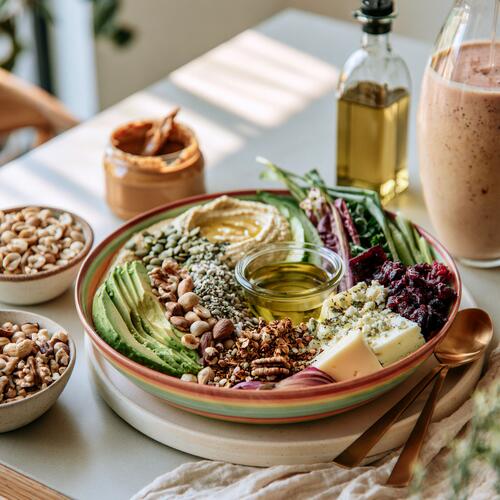
Nuts instead of candy, avocado instead of sausage, granola instead of cookies, natural yogurt instead of ice cream. It may seem that after such substitutions, the amount of food no longer matters much.
But after a few weeks, weight doesn’t go down. Sometimes it even starts to rise, even though the diet barely includes fast food, sugary drinks, or traditional desserts.
The reason may be simple: healthy food is still food and contains calories. Some foods with “good” ingredients have high energy density, so even a small portion can significantly increase your daily calorie intake.
This doesn't mean you need to exclude nuts, oils, cheese, or avocado. It's important to distinguish between two concepts: the benefits of the product for the body and the amount of energy in a portion.
Can You Overeat Healthy Food?
Yes, you can.
A product is usually called healthy if it contains protein, fiber, vitamins, minerals, unsaturated fats, or other important components. But the presence of nutrients doesn’t make a food calorie-free.
To lose weight, two conditions are equally important:
-
Your diet should provide your body with essential nutrients.
-
The total calorie intake should fit your goal.
A healthy nutrition model includes vegetables, fruits, whole grains, protein sources, and healthy fats — but it still should fit your individual energy needs.
You can eat mostly high-quality foods but still regularly consume more energy than your body burns. In this case, your weight won’t decrease.
Healthy Food and Low-Calorie Food Are Not The Same
Cucumber, apple, avocado, walnuts, and olive oil can all be part of a balanced diet. However, when comparing equal weights, their calorie content is very different.
For example, 100 grams of cucumber takes up a noticeable part of your plate and contains few calories. In 100 grams of nuts, there is many times more energy. Oil barely increases the volume of a dish, but one generous dressing can add as many calories to a salad as a small separate meal.
This characteristic is called energy density. The more calories there are per gram, the easier it is to unintentionally exceed your limit. Research shows that lowering the energy density of your diet lets you keep familiar portion sizes but cut total calorie intake.
For this reason, healthy foods can be conditionally divided into two groups.
Healthy Foods With Low Energy Density
These include:
-
most non-starchy vegetables;
-
berries;
-
many fresh fruits;
-
vegetable-based soups without much oil or cream;
-
lean fish;
-
seafood;
-
lean meat;
-
moderate-fat fermented dairy products without added sugar.
Such foods usually offer a larger portion size with relatively few calories.
Healthy Foods With High Energy Density
This group includes:
-
nuts and seeds;
-
vegetable oils;
-
nut butters;
-
avocado;
-
fatty fish;
-
cheese;
-
dried fruit;
-
granola;
-
coconut flakes;
-
tahini;
-
hummus;
-
dark chocolate;
-
Healthy Eating desserts based on nuts, dates, and coconut.
You shouldn’t avoid them completely. But it’s best to control the portion size.
Why Is It Easy to Overeat Healthy Food?
1. The “Health Halo” Effect
Labels like “sugar-free,” “fitness,” “natural,” “organic,” “high protein,” and “whole grains” create the impression that the product is nearly unlimited in quantity.
This is known as the health halo effect. A person positively evaluates one characteristic of the product and automatically applies this positive evaluation to its calorie content, portion size, and effect on weight.
Research on consumer behavior shows that health claims on packaging can change perceptions and make people underestimate a product’s caloric value.
For example, sugar-free cookies may contain flour, oil, nuts, and a sweetener. While they may really be lower in sugar, the calorie content may still be close to regular cookies.
2. Healthy Fats Are Still Fats
Vegetable oils, nuts, seeds, and avocados contain primarily healthy unsaturated fats. These are necessary for your body, help diversify your diet, and aid in the absorption of fat-soluble vitamins.
But fats are highly energy-dense.
When oil is poured straight from the bottle, nuts are eaten from a large bag, and peanut butter is scooped by the spoonful without weighing, the actual portion can easily end up two or three times bigger than planned.
3. Larger Portions Lead to Eating More
People generally eat more when presented with a bigger portion, even if they weren’t that hungry at first. This effect is seen with various foods, regardless of whether we consider them healthy or not.
A systematic review showed that increasing the served portion size resulted in greater daily energy intake.
A large bowl of granola, a deep dish of nuts, or a whole package of hummus is often perceived as a single portion, but in reality may contain several servings.
4. Calories Don’t Always Look Like “Real” Food
Smoothies, coffee with plant milk, yogurt with mix-ins, juice, and protein shakes are drunk quickly and may not feel like a full meal.
For example, a homemade smoothie might include:
-
banana;
-
oat or regular milk;
-
nut butter;
-
dates;
-
seeds;
-
rolled oats.
Each ingredient on its own looks healthy. But a large glass of such a drink may have as many calories as a lunch.
Whole fruit usually satisfies more than juice, as it retains fiber and requires chewing.
5. A Healthy Eating Dessert Feels Like an Unlimited Product
Dates, nuts, coconut flakes, honey, and cocoa are often used in homemade candies, bars, and cheesecakes.
The ingredients may truly exclude white sugar or margarine. But replacing sugar with dates, or regular cream with nut butter, doesn’t always lower the calorie count.
A Healthy Eating dessert can be a convenient part of the diet. The mistake occurs when it’s eaten after a regular meal and not counted as a dessert.
6. Small Add-Ons Add Up Throughout the Day
On their own, each add-on seems insignificant:
-
a few nuts with breakfast;
-
seeds in your oatmeal;
-
half an avocado at lunch;
-
oil in your salad;
-
a spoon of nut butter with an apple;
-
a piece of cheese while cooking.
Together, they can add up to several hundred extra kilocalories.
It’s especially easy to overlook calories if foods aren’t logged in a food diary: “it was just a nut,” “I only tasted it,” “there was barely any oil.”
Which Healthy Foods Are Most Often Overeaten by Portion Size
The numbers in the table are approximate. Exact calorie values depend on variety, fat content, composition, and manufacturer.
| Product | What’s Healthy About It | Typical Portion | Approximate Calories |
|---|---|---|---|
| Nuts | Fats, protein, minerals | 25-30 g | 150-200 kcal |
| Nut butter | Fats, protein | 15-20 g | 90-130 kcal |
| Vegetable oil | Unsaturated fats | 5-10 g | 45-90 kcal |
| Avocado | Fats, fiber | 50-100 g | 80-170 kcal |
| Seeds | Fats, fiber, minerals | 10-20 g | 50-120 kcal |
| Cheese | Protein, calcium, fats | 30-50 g | 100-200 kcal |
| Dried fruit | Carbohydrates, fiber | 20-30 g | 50-100 kcal |
| Granola | Grains, nuts, seeds | 40-60 g | 180-300 kcal |
| Hummus | Legumes, fats, fiber | 40-70 g | 70-180 kcal |
| Dark chocolate | Cocoa products | 10-20 g | 50-120 kcal |
These aren’t strict rules or a ban on eating more. They are a starting point to help you see the real size of a portion.
What Overeating Healthy Foods Looks Like In Practice
Let’s look at a sample day.
Breakfast
Oatmeal with banana, honey, and nuts:
-
rolled oats: about 220 kcal;
-
banana: about 100 kcal;
-
nuts: about 180 kcal;
-
honey: about 60 kcal.
Total: about 560 kcal.
Snack
Smoothie with banana, plant-based milk, dates, and nut butter.
Total: about 400-500 kcal.
Lunch
Large vegetable salad with avocado, cheese, seeds, and olive oil.
The vegetables themselves may contain about 100 kcal, and the add-ons another 500-600 kcal.
Second Snack
A small handful of nuts, not weighed.
Total: about 200-250 kcal.
By dinner, a person might consume about 1800-2000 kcal. Yet the whole day subjectively feels like “porridge, fruits, salad, and a few nuts.”
The problem is not the quality of the foods. The problem is the combination of several calorie-dense ingredients — and the lack of portion control.
Does This Mean You Should Fear High-Calorie Foods?
No.
Trying to completely cut out oil, nuts, cheese, avocado, and desserts often makes your diet monotonous and unsatisfying. This increases the risk of food cravings and subsequent overeating.
The goal is not to eat only the lowest-calorie foods. It's important to combine:
-
enough volume of food;
-
protein;
-
fiber;
-
moderate amount of fats;
-
an appropriate portion of carbs;
-
foods that bring you pleasure.
A healthy product doesn't have to be low-calorie. It just needs to have a clear, conscious place in your diet.
How to Know If Healthy Foods Are Preventing Your Deficit
Watch for these signs:
-
you eat nuts, seeds, and dried fruit straight from the package;
-
you pour oil by eye;
-
you don’t count sauces, butters and dressings;
-
you log homemade Healthy Eating desserts as just a light snack;
-
one dish contains avocado, cheese, seeds, and oil all at once;
-
you don't consider smoothie or coffee drinks as meals;
-
you often nibble while cooking;
-
you only count main dishes, not add-ons;
-
portions of healthy foods gradually get bigger;
-
your weight doesn't decrease, even though your diet feels right.
One of these habits rarely changes the result entirely, but a combination of several can erase your planned deficit.
How Not to Overeat With Healthy Foods
1. Don’t Categorize Foods as Allowed or Forbidden
Labeling foods as only “good” or “bad” makes it hard to see portion size.
It's better to evaluate foods by several criteria:
-
what does it provide the body;
-
how well does it satisfy hunger;
-
how many calories in a portion;
-
how does it fit with other foods;
-
does it fit your goals.
2. Weigh the Most Calorie-Dense Foods
You don’t have to always weigh every lettuce leaf. Start with foods where mistakes are especially noticeable:
-
oil;
-
nuts;
-
seeds;
-
cheese;
-
nut butter;
-
granola;
-
dried fruit;
-
sauces;
-
chocolate.
After a few weeks, you will start to better estimate the size of your usual portions.
3. Don't Eat Directly From the Package
Put nuts, dried fruit, granola, or hummus in a separate bowl. Put the package away before you start eating.
This makes it easier to notice when you’ve finished your planned portion.
4. Build a Plate, Not a Collection of Add-Ons
A good basis for a main meal:
-
half the plate: vegetables;
-
one quarter: source of protein;
-
one quarter: grains, potatoes, pasta, or other starchy side;
-
a separate small portion of fat or sauce.
This scheme helps you balance vegetables, protein, and carbs without complex calculations.
The main mistake with salads and weight loss is adding oil, cheese, avocado, nuts, and seeds all at once. It's better to pick one or two high-calorie components, not use them all together.
5. Add Bulk with Low-Calorie Foods
To make the portion look substantial, use:
-
fresh or cooked vegetables;
-
berries;
-
soups;
-
greens;
-
mushrooms;
-
lean sources of protein;
-
whole fruits.
A larger volume of vegetables and fruits helps you feel fuller without dramatically increasing calories.
6. Don’t Turn a Snack Into a Full Meal
A snack of apple, nuts, cheese, yogurt, granola, and chocolate can contain more calories than a main dish.
Choose one sensible combination:
-
fruit and 20g nuts;
-
yogurt and berries;
-
egg and vegetables;
-
cottage cheese and fruit;
-
crispbread and a small portion of hummus.
7. Count Homemade Recipes as a Whole
A homemade meal isn’t necessarily low-calorie just because it’s made from natural ingredients.
To calculate, you need to:
-
Weigh all ingredients.
-
Calculate their total calories.
-
Weigh the finished dish.
-
Calculate the calories per 100g.
-
Weigh your portion.
A detailed example is in the article “How to count calories in complex dishes: soup, pilaf, salad, and casserole”.
8. Do a One-Week Audit Instead of Starting a Strict Diet
If your weight isn’t dropping, you don’t have to immediately cut out nuts or cut down your entire diet.
For 7 days:
-
record every meal;
-
weigh high-calorie add-ons;
-
track drinks;
-
don’t forget about tasting while cooking;
-
keep your usual routine;
-
compare your actual caloric intake to your target.
This audit shows exactly where the deficit disappears — and you don’t have to count every gram for life.
How to Control Portions in SIT30
The SIT30 calorie counter helps you separate your actual food intake from the subjective feeling of “I eat right.”
Practical scheme:
-
Calculate your calorie target in the app.
-
Enter foods with their actual weight.
-
Add oil, sauces, seeds, and nuts as separate items.
-
Save homemade meals as your own recipes.
-
Enter high-calorie add-ons you plan to eat in advance.
-
Track not only calories but also protein, fat, and carbs.
-
Assess not just one day but your weekly nutrition average.
Planning ahead is especially convenient. You can enter nuts, oil, cheese, or dessert in your diary first, then put together the rest of your meals within your remaining allowance.
What to Do If You Overeat
One episode of overeating doesn’t require fasting, a detox day, or punishing yourself with a workout.
The next day:
-
return to your usual routine;
-
don’t skip meals;
-
drink water when thirsty;
-
add your usual activity;
-
don’t try to sharply cut calories;
-
keep logging your meals.
It’s not one meal that matters, but the repeated structure of your eating habits.
Key Takeaways
Healthy food can be high in calories. This doesn’t make it unhealthy or mean you have to exclude it.
The main idea is simple:
-
food quality is important for health and satiety;
-
food quantity matters for energy balance;
-
high nutritional value doesn’t cancel out caloric value;
-
nuts, oils, cheese, avocado, and Healthy Eating desserts are best eaten in portions;
-
vegetables, protein, and fiber help increase fullness;
-
a short period of careful tracking helps you see real portions.
You don’t have to choose between a healthy diet and calorie control to lose weight. These approaches work together.
Frequently Asked Questions
Can you gain weight from healthy food?
Yes. If your total calorie intake consistently exceeds your energy expenditure, your weight can increase regardless of the source of those calories. At the same time, healthy foods remain valuable sources of nutrients.
Which healthy foods are the most calorie-rich?
The most calorie-rich include vegetable oils, nuts, seeds, nut butters, cheese, avocado, dried fruit, granola, and desserts made with dates and nuts.
Do you need to count calories in vegetables?
Vegetables also contain calories, but most non-starchy vegetables are low in energy density. It’s best to pay special attention to oil, sauces, cheese, nuts, and other add-ons in vegetable dishes.
How many nuts can you eat when losing weight?
An easy starting portion is usually 25-30 grams. The precise amount depends on your daily calorie target, other fat sources, and your overall diet structure.
Can you lose weight without always counting calories?
Yes, if portion sizes are consistent and the diet meets your needs. However, 7-14 days of precise logging help reveal hidden sources of calories and teach you to assess portion size.
Why am I always hungry on Healthy Eating?
Your diet may consist of healthy foods but fail to satisfy if it lacks protein, fiber, overall food volume, or adequate calories. Sometimes the reason is too strict a deficit, or long gaps between meals.
See Also in the SIT30 Blog
-
How to Count Calories Properly: Scales, Portions, Oil and Drinks
-
How to Count Calories in Complex Dishes: Soup, Pilaf, Salad, and Casserole
-
Calorie Deficit: Which One to Choose and Why Too Small Often Gets in the Way
-
Why Am I Eating Little but Not Losing Weight: 12 Reasons Without Mysticism or Broken Metabolism
-
How Much Protein You Need for Weight Loss: Daily Norm and Meal Distribution
-
Fiber: How Much You Need and How to Get Enough Without Bloating