Menu for 1300 kcal per day: meal plan with portion sizes and nutritional values (calories, proteins, fats, carbohydrates)
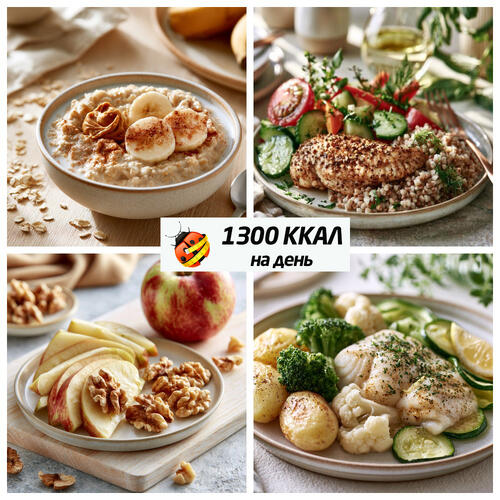 1300 kcal Daily Menu: Ready Meal Plan with Measurements and Nutritional Values
A 1300 kcal menu can be varied, filling, and quite ordinary. For weight loss, you don't have to eat only salads, cottage cheese, and dry chicken breast all day. You can include porridge, grains, potatoes, fruit, nuts, meat, and fish in your diet.
The main thing is to properly calculate portion sizes and keep in mind foods that are easy to overlook: vegetable oil, nuts, sauces, milk in coffee, and small snacks.
Below is a ready 1300 kcal daily menu made from affordable ingredients. It consists of three main meals and two snacks. Each dish lists the amounts, approximate calories, and nutritional values.
It is preferable to weigh all products. The actual calorie count may vary slightly depending on the manufacturer, product variety, fat content, and method of preparation.
Quick Answer
Approximate distribution of 1300 kcal throughout the day:
-
breakfast: 290 kcal;
-
first snack: 145 kcal;
-
lunch: 405 kcal;
-
second snack: 135 kcal;
-
dinner: 325 kcal.
Total for the day:
-
calories: about 1300 kcal;
-
protein: about 100-105 g;
-
fat: about 35-40 g;
-
carbohydrates: about 145-155 g.
You can swap meals and move snacks to a time that suits you.
Who Might Benefit from a 1300 kcal Diet
A 1300 kcal meal plan is often used for weight loss, but this calorie intake is not suitable for everyone.
The energy needs of a person depend on:
-
gender;
-
age;
-
height;
-
body weight;
-
physical activity;
-
number of steps;
-
workouts;
-
job characteristics;
-
health status.
For a shorter woman with low physical activity, 1300 kcal may result in a moderate deficit. For a taller or more active person, this intake may be too low in calories.
Before starting to lose weight, it is advisable to calculate your own calorie needs. You can do this in the SIT30 calorie counter.
The app will calculate an approximate norm taking into account age, height, weight, gender, activity, and goals.
It is not recommended to independently use low-calorie diets for children, teenagers, pregnant or breastfeeding women. With gastrointestinal diseases, endocrine disorders, and other chronic conditions, it is better to coordinate nutrition with a doctor.
Ready 1300 kcal Menu
| Meal | Dish | Calories |
|---|---|---|
| Breakfast | Oatmeal with Banana and Peanut Butter | 290 kcal |
| First Snack | Greek Yogurt with Berries | 145 kcal |
| Lunch | Chicken Fillet with Buckwheat and Vegetable Salad | 405 kcal |
| Second Snack | Apple with Walnuts | 135 kcal |
| Dinner | Hake with Potatoes and Vegetables | 325 kcal |
| Total | About 1300 kcal |
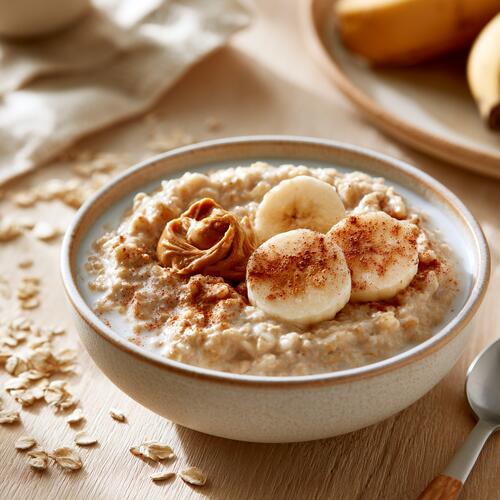 Breakfast: Oatmeal with Banana and Peanut Butter
Porridge gives your body carbohydrates, milk adds protein, and a small portion of peanut butter makes breakfast more filling.
Calories: about 290 kcal.
Approximate Nutrition:
-
protein: 11 g;
-
fat: 8 g;
-
carbohydrates: 44 g.
Ingredients
-
oat flakes: 40 g;
-
milk 1.5%: 150 ml;
-
banana: 50 g;
-
unsweetened peanut butter: 5 g;
-
water: 100-150 ml;
-
cinnamon: to taste;
-
pinch of salt.
How to Prepare
Put oat flakes in a small saucepan. Add milk, water, and a pinch of salt.
Cook the oatmeal over low heat until ready. Cooking time depends on the type of oats.
Transfer the porridge to a plate. Add sliced banana, cinnamon, and peanut butter.
It’s best to weigh the peanut butter on kitchen scales. Even a small spoon may contain much more than 5 g of product.
What to Use Instead of Peanut Butter
Instead of peanut butter, you can use:
-
5 g butter;
-
7–8 g nuts;
-
8 g seeds;
-
a small portion of chocolate;
-
a spoonful of plain yogurt.
After substitution, it is better to recalculate the breakfast calories in the SIT30 app.
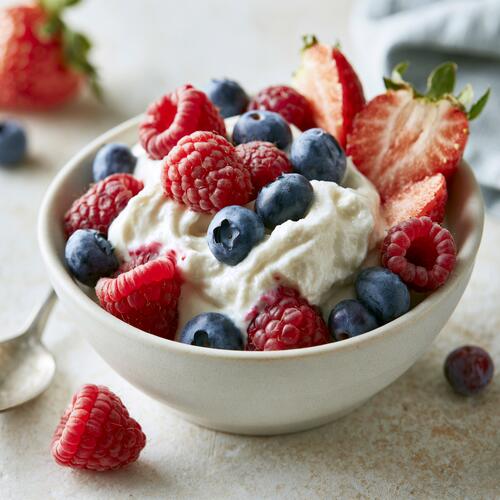 First Snack: Greek Yogurt with Berries
This snack contains protein and helps tide you over until lunch. Berries add volume, flavor, and dietary fiber.
Calories: about 145 kcal.
Approximate Nutrition:
-
protein: 14–16 g;
-
fat: 3 g;
-
carbohydrates: 14–17 g.
Ingredients
-
plain Greek yogurt 2%: 150 g;
-
fresh or frozen berries: 100 g;
-
cinnamon or sweetener: optional.
How to Prepare
Mix the yogurt with the berries. You can move frozen berries into the fridge in advance, or thaw slightly in the microwave.
Check the ingredient list on the yogurt packaging. Fruit yogurt with sugar may have more calories than plain Greek yogurt.
If there is little time between breakfast and lunch, you can move this snack to the afternoon.
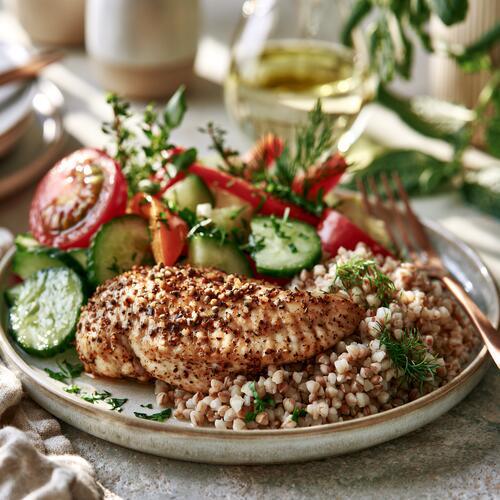 Lunch: Chicken Fillet with Buckwheat and Vegetable Salad
This lunch contains protein, complex carbohydrates, vegetables, and a small serving of vegetable oil.
Calories: about 405 kcal.
Approximate Nutrition:
-
protein: 40–43 g;
-
fat: 9–11 g;
-
carbohydrates: 38–42 g.
Ingredients
-
raw chicken fillet: 140 g;
-
dry buckwheat: 45 g;
-
cucumber: 100 g;
-
tomato: 100 g;
-
sweet pepper or cabbage: 50 g;
-
vegetable oil: 5 g;
-
greens: to taste;
-
salt and spices: to taste.
How to Prepare
Rinse buckwheat, pour in water, and cook until done.
Salt the chicken fillet and add spices. You can:
-
bake in the oven;
-
cook on a grill;
-
stew;
-
boil;
-
fry in a non-stick pan.
If oil is used to cook the chicken, it must be accounted for separately.
Chop the vegetables, add greens, and dress the salad with 5 g vegetable oil.
How to Properly Account for Buckwheat
The menu lists 45 g dry buckwheat.
After cooking, the grain absorbs water and increases in weight. Its actual calories do not increase, but the calories per 100 g of ready product change.
If you weigh buckwheat before cooking, select "dry buckwheat" in the tracker.
If you weigh the cooked portion, select "boiled buckwheat" or create your own recipe with the actual ready dish weight.
Why It’s Important to Account for Oil
Oil takes up little space, so its calorie content is easily underestimated.
There are about 45 kcal in 5 g of vegetable oil. 10 g will be around 90 kcal, and a tablespoon may contain more than 130 kcal.
If you pour oil directly from the bottle, your actual portion often ends up two to three times larger than you planned.
To weigh oil correctly for salad:
-
Place the salad plate on the kitchen scale.
-
Reset the display.
-
Add the oil.
-
Stop when the scale shows 5 g.
Oil used for frying or baking must also be counted.
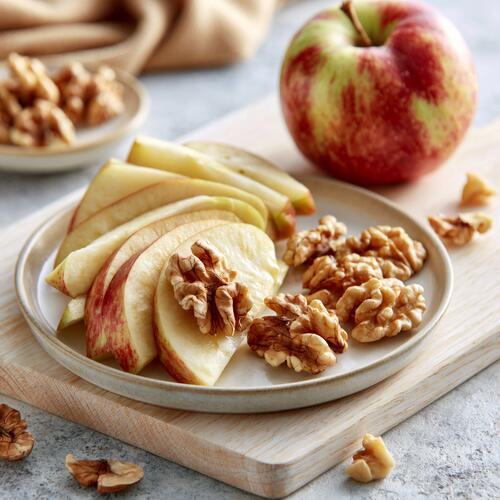 Second Snack: Apple with Walnuts
An apple is easy to take with you, and nuts add a small portion of fat and make the snack more filling.
Calories: about 135 kcal.
Approximate Nutrition:
-
protein: 2 g;
-
fat: 5–6 g;
-
carbohydrates: 22–24 g.
Ingredients
-
apple: 170–180 g;
-
walnuts: 8 g.
It’s best to weigh the nuts in advance and put them in a separate container.
Do not eat straight from a large pack. Eating 30–40 g of nuts unnoticed can add 200–260 kcal to your daily plan.
Higher Protein Snack Option
If you get hungry soon after an apple, instead of nuts and part of the apple you can use:
-
2% cottage cheese: 100 g;
-
Greek yogurt: 130–150 g;
-
one boiled egg;
-
1% kefir: 250 ml;
-
soft unsweetened cottage cheese.
The calorie count for the new snack needs to be recalculated.
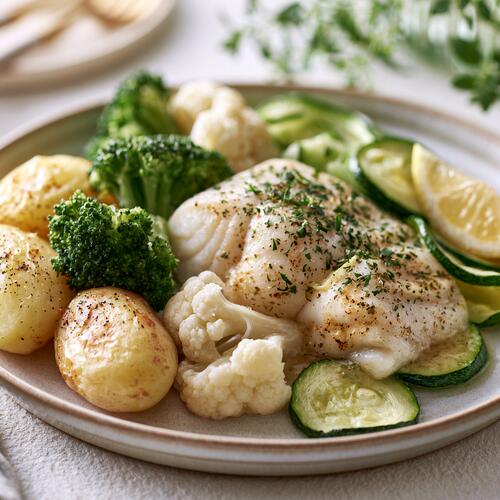 Dinner: Hake with Potatoes and Vegetables
You can eat potatoes while losing weight. It's important to control the portion size, the cooking method, and the amount of added oil.
Calories: about 325 kcal.
Approximate Nutrition:
-
protein: 32–35 g;
-
fat: 4–6 g;
-
carbohydrates: 31–35 g.
Ingredients
-
raw hake or pollock fillet: 170 g;
-
raw potatoes: 140 g;
-
broccoli or cauliflower: 100 g;
-
zucchini: 100 g;
-
vegetable oil: 2 g;
-
lemon juice: to taste;
-
salt and spices: to taste.
How to Prepare
Peel the potatoes, slice, and boil until ready. Alternatively, you can bake them with little or no oil.
Salt the fish, add spices and a little lemon juice. Bake at 180–190°C for about 15–20 minutes.
Steam, stew, or bake the vegetables along with the fish.
You can distribute 2 g of oil among the products using a cooking brush.
Can You Substitute Hake for Another Fish?
Instead of hake or pollock you can use:
-
cod;
-
zander (pike perch);
-
tilapia;
-
haddock;
-
squid;
-
shrimp;
-
chicken fillet;
-
turkey.
Red fish is also suitable, but it contains more fat and calories. In this case, you should reduce the amount of oil, nuts, or peanut butter.
Shopping List for the Day
Grains and Sides
-
oat flakes: 40 g;
-
buckwheat: 45 g;
-
potatoes: 140 g.
Dairy
-
milk 1.5%: 150 ml;
-
Greek yogurt 2%: 150 g.
Meat and Fish
-
chicken fillet: 140 g;
-
hake or pollock fillet: 170 g.
Vegetables, Fruits, and Berries
-
banana: 50 g;
-
apple: 170–180 g;
-
berries: 100 g;
-
cucumber: 100 g;
-
tomato: 100 g;
-
sweet pepper or cabbage: 50 g;
-
broccoli or cauliflower: 100 g;
-
zucchini: 100 g;
-
greens and lemon: optional.
Additional Products
-
peanut butter: 5 g;
-
walnuts: 8 g;
-
vegetable oil: 7 g;
-
salt;
-
spices;
-
cinnamon.
How to Prepare the Menu in Advance
You don't have to cook five times a day. Most products can be prepared in the evening or for several days at once.
What Can Be Prepared in Advance
-
Boil buckwheat for two days.
-
Bake several portions of chicken fillet.
-
Pack chicken and buckwheat in containers.
-
Portion out oat flakes.
-
Weigh out the nuts.
-
Divide vegetables into portions.
-
Move berries from the freezer to the fridge.
-
Thaw fish ahead of time.
-
Pre-add meals to the SIT30 food diary.
When your menu is logged in the app in the morning, it's easier to see if you have room for extra coffee, dessert, or anything else.
How to Replace Products in the Menu
You don't have to repeat the same meal plan every day. You can swap dishes as long as the calorie content stays similar.
What to Use Instead of Oatmeal
Instead of oat flakes, you can use:
-
buckwheat flakes;
-
millet porridge;
-
whole grain bread;
-
a small portion of sugar-free muesli;
-
other grains.
What to Use Instead of Buckwheat
Instead of 45 g dry buckwheat, you can use a similar portion of:
-
bulgur;
-
rice;
-
couscous;
-
whole wheat pasta;
-
pearl barley.
You'll need to check the product's calories on the package.
It's important to compare foods in the same state. You can't substitute 45 g dry buckwheat with 45 g cooked rice. Grains increase in weight after cooking due to water.
What to Use Instead of Chicken
Instead of chicken fillet, you can use:
-
turkey;
-
lean beef;
-
lean pork;
-
white fish;
-
squid;
-
shrimp;
-
canned tuna in its own juice;
-
tofu.
After substitution, check the calorie content, as fat content differs between products.
What to Use Instead of Potatoes
Instead of potatoes, you can use:
-
rice;
-
buckwheat;
-
bulgur;
-
pasta;
-
lentils;
-
whole grain bread.
The substitute portion should match in calories, not just in weight.
What to Use Instead of Greek Yogurt
Instead of yogurt, you can use:
-
2–5% cottage cheese;
-
soft cottage cheese;
-
kefir;
-
plain yogurt without sugar;
-
plant-based yogurt.
When choosing a plant-based product, check the protein content. Some coconut and oat yogurts are low in protein and higher in fats or carbs.
Can You Eat Only Three Times a Day?
Yes. For weight loss, it is not necessary to eat five times a day.
You can combine dishes in the suggested menu:
-
add the yogurt with berries to breakfast;
-
eat the apple and nuts after lunch;
-
leave breakfast, lunch, and dinner as main meals.
You can also keep one snack, and add the other between main meals.
Choose a routine that helps you manage your appetite and avoid overeating at night.
Can You Eat Sweets on 1300 kcal?
You can include sweets in your diet if they fit into your daily calorie intake.
But with a 1300 kcal intake, you have little "free" calorie room. A big dessert can take up a significant part of the daily allowance, crowding out more filling foods.
A sensible option: allocate about 100–150 kcal for sweets.
For example:
-
a few squares of chocolate;
-
one marshmallow;
-
a small cookie;
-
a small portion of ice cream;
-
homemade cottage cheese dessert.
Don’t substitute a full lunch or dinner with sweets. Calories may remain the same, but you may feel hungrier.
What to Do If You Feel Hungry on 1300 kcal
First, check the meal composition.
It is advisable for each main meal to include:
-
a protein source;
-
vegetables or fruit;
-
a small amount of fat;
-
a grain, potato, or other carb source.
It is also important to evaluate:
-
are you sleeping enough;
-
do you skip breakfast or lunch;
-
do you account for snacks;
-
do you eat too quickly;
-
has your physical activity increased;
-
is 1300 kcal really suitable for you.
If you feel strong hunger every day and your eating often ends with overeating, it's better to increase your calories. A plan of 1400 or 1500 kcal may give more stable results, as it’s easier to follow.
How to Turn this Menu into a 1200 kcal Meal Plan
To reduce your intake by about 100 kcal, you can make one of these changes:
-
remove walnuts;
-
exclude peanut butter;
-
reduce buckwheat amount;
-
remove the banana from the porridge;
-
reduce oil by 5 g.
Don’t remove oil, nuts, grains, and potatoes all at once. It’s better to make one small change and keep full main meals.
How to Increase the Menu to 1400 kcal
To get a menu of about 1400 kcal, you can add:
-
100 g cottage cheese;
-
15 g nuts;
-
25–30 g whole grain bread;
-
one small banana;
-
extra plain yogurt;
-
a small serving of grains.
How to Increase the Menu to 1500 kcal
To reach 1500 kcal, add a full snack of 180–200 kcal.
For example:
-
cottage cheese with berries;
-
cheese sandwich;
-
yogurt with banana;
-
egg and whole grain bread;
-
fruit and a small portion of nuts.
How to Enter the Menu in the SIT30 Calorie Counter
Simple products can be added separately to the diary:
-
milk;
-
oat flakes;
-
banana;
-
peanut butter;
-
yogurt;
-
berries;
-
apple;
-
nuts.
Add grains, meat, and fish based on the state of the product.
If the Product Is Weighed Raw
Select the raw product in the database and enter the weight before cooking.
For example:
-
dry buckwheat: 45 g;
-
raw chicken fillet: 140 g;
-
raw hake: 170 g;
-
raw potatoes: 140 g.
If the Product Is Weighed After Cooking
Select the appropriate cooked option:
-
boiled buckwheat;
-
baked chicken breast;
-
cooked fish;
-
boiled potatoes.
Do not enter 150 g of cooked buckwheat as 150 g of dry grains. The calorie count will be overestimated several times.
If You Cook Several Portions at Once
Create your own recipe:
-
Weigh all products before cooking.
-
Add the grain, meat, vegetables, oil, and sauces.
-
Cook the dish.
-
Weigh the total final cooked output.
-
Enter the total weight in the recipe.
-
Add the actually eaten portion to your diary.
SIT30 will calculate the final calorie content per 100 g of the cooked dish.
You can read how to correctly and accurately calculate the calories of a dish in the article "Calories in Complex Dishes".
Common Mistakes on a 1300 kcal Diet
Not Counting Oil
Even a small portion of oil can noticeably change a dish’s calorie content. Oil should be counted when frying, baking, and dressing salads.
Weighing Products in Different States
Dry grains and cooked porridge have different calories per 100 g. The same applies to meat, pasta, and potatoes.
Not Counting Drinks
Milk, cream, sugar, and syrup in coffee all count toward your daily calories.
Eating Too Little in the First Half of the Day
Coffee for breakfast and a light salad for lunch often result in severe hunger in the evening.
Estimating Nuts “By Eye”
A small handful of nuts may contain 150–250 kcal. It's best to weigh them.
Cutting Out All Fats
You should not remove oil, nuts, eggs, fish, and dairy all at once. Fats are still a necessary part of your diet.
Judging Results by One Weigh-In
Body weight can fluctuate due to water, salt, carbohydrates, physical activity, gut contents, or menstrual cycle.
A one-day jump in weight does not mean you gained fat.
How Much Weight Can You Lose on 1300 kcal
The result depends not only on menu calories, but also on energy expenditure.
For example, if a person burns around 1800 kcal a day, eating 1300 kcal creates an estimated deficit of about 500 kcal.
If expenditure is about 1450 kcal, the deficit will be minimal.
Weight loss speed is also affected by:
-
accuracy of tracking;
-
physical activity;
-
number of steps;
-
weekends and holidays;
-
sleep;
-
water retention;
-
weight fluctuations during the process.
It’s better to judge by your weekly average weight, not a single measurement.
Frequently Asked Questions
Is a 1300 kcal Menu Suitable for Weight Loss?
Yes, if 1300 kcal is below your maintenance level and creates an appropriate deficit. For some people, this intake may be too low.
Can I Eat 1300 kcal Every Day?
Yes, if the meal plan fits your calorie needs, doesn't cause constant hunger, and ensures normal well-being. It's recommended to alternate foods.
How Many Times a Day Should I Eat?
You can eat three, four, or five times a day. The frequency depends on your lifestyle and appetite.
Can I Swap Meals?
Yes. Breakfast, lunch, dinner, and snacks can be moved to a convenient time. It's more important to keep the total calories the same.
Is It Necessary to Eat Everything from the Menu?
No. You can substitute foods with options that have similar calories and nutritional value.
Can You Have Coffee?
Yes. Black coffee has almost no effect on your total calories. Milk, sugar, cream, and syrups must be counted.
Can You Eat Bread on 1300 kcal?
Yes. Bread can be included instead of some grains, potatoes, or other carb sources.
What if I Feel Hungry All the Time?
Check the amount of protein, vegetables, fats, and main portion sizes. If you are still hungry, you may need to increase calorie intake.
Do I Need to Weigh Ready-Made Food?
Yes, especially if you prepare a complex dish with several portions. This allows you to accurately calculate calories per 100 g.
Can I Eat After 6 p.m.?
Yes. The timing of dinner does not determine weight-loss results. The total daily calorie intake is more important.
Also Read on the SIT30 Blog
-
1200 kcal Menu for the Day: Breakfast, Lunch, Dinner, and Snack Options
-
1500 kcal Menu for the Day: Breakfast, Lunch, Dinner, and Snack Options
-
Calorie Norm for Weight Loss: How to Calculate with the Mifflin-St Jeor Formula
-
How to Count Calories Correctly: Scales, Portions, Oil and Drinks
-
How to Count Calories in Complex Dishes: Soups, Pilaf, Salads and Casseroles
-
How Much Protein is Needed for Weight Loss: Daily Norm and Distribution by Meal
-
You Have a Calorie Deficit but Aren’t Losing Weight: What to Check