

Dinner for Weight Loss: 10 Simple Dishes Under 400 kcal
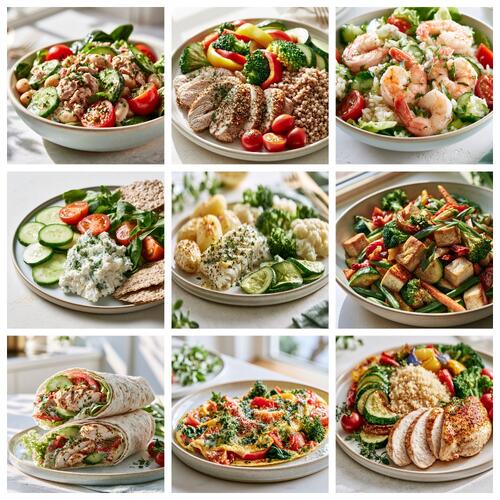 Dinner for Weight Loss: 10 Simple Meals Under 400 Kcal
Dinner for weight loss does not have to consist only of a vegetable salad or a glass of kefir. Food that is too light often isn't filling, and in just an hour the desire to open the fridge, eat a sandwich, or have tea with something sweet appears.
A good dinner should solve several tasks at once:
-
fit into your daily calorie intake;
-
contain enough protein;
-
keep you full until bedtime;
-
not require complicated cooking;
-
match your schedule and habits.
Below are 10 dinner options with calories ranging from about 240 to 400 kcal. The collection includes hot and cold dishes, options that do not require cooking, protein-based dinners, as well as meals with potatoes, rice, buckwheat, and bulgur.
Calorie and nutritional values are approximate. The exact values depend on the brand of products, their fat content, weight after cooking, and the amount of oil added.
What Dinner Should Be Like for Weight Loss
There is no single right dinner. One person may be satisfied with cottage cheese and vegetables; for another, such a meal will leave them hungry within an hour.
A practical dinner formula looks like this:
-
protein source: meat, poultry, fish, eggs, cottage cheese, seafood, legumes, or tofu;
-
vegetables: fresh, stewed, baked, or a frozen vegetable mix;
-
carbohydrates if needed: potatoes, grains, bread, or lavash;
-
a small amount of fat: oil, cheese, nuts, or fatty fish.
Protein helps make a meal more filling. It's recommended to include protein foods in each main meal, not just after a workout.
For most people, a 300 or 400 kcal dinner is more convenient than a symbolic 150 kcal portion—especially if there are several hours between dinner and sleep.
Can You Eat After 6 p.m.?
You can eat after 6 p.m. A fixed time doesn't determine whether a person will lose or gain weight.
To lose weight, the most important factors are overall calorie intake, portion size, and meal regularity. However, meal timing can also affect appetite, sleep, and eating behavior. Research shows some potential benefits of distributing calories earlier in the day, but the long-term effects of different eating patterns are not fully understood yet.
If you go to bed at 11:00 p.m. or later, having dinner at 6:00 p.m. may be too early. This can lead to strong hunger in the evening.
Usually, it’s convenient to have dinner about 2 or 3 hours before sleep. But this is not a strict rule. Listen to your routine, appetite, and well-being.
For example:
-
sleep at 10:30 p.m., dinner around 7:00 or 8:00 p.m.;
-
sleep at midnight, dinner around 8:30 or 9:30 p.m.;
-
late return from work—it's okay to have a light dinner even later.
The problem is not that someone eats after 6:00 p.m., but that in the evening, too many calories can easily add up: a full dinner, sweet tea, nuts, sandwiches, and late-night snacks.
What Portion Size to Choose
There's no need to try to make the portion as small as possible. It's important for your dinner to fit into your daily norm and provide satiety.
Approximate size for a balanced serving:
-
protein product: 100 or 200 g;
-
vegetables: 150 or 300 g;
-
cooked grains: 80 or 150 g;
-
potatoes: 120 or 200 g;
-
oil: 2 or 5 g.
Usually, a ready dinner portion weighs from 300 to 500 g. A large volume does not always mean high calories. For example, fish, potatoes, and broccoli can fill an entire plate and still be about 330 kcal.
If you are making a dish from several ingredients, count oil, sauces, and dressings separately. Even a small amount of oil can noticeably change the total calories.
Dinners for 250, 300, and 400 kcal
| Dinner Option | Calories | Protein | Fat | Carbohydrates |
|---|---|---|---|---|
| Tuna and Bean Salad | about 240 kcal | 34 g | 2 g | 22 g |
| Cottage Cheese with Vegetables and Crispbread | about 285 kcal | 36 g | 4 g | 27 g |
| Chicken Lavash Roll | about 320 kcal | 38 g | 5 g | 29 g |
| Omelet with Vegetables and Cheese | about 350 kcal | 36 g | 16 g | 15 g |
| Hake with Potatoes and Broccoli | about 330 kcal | 39 g | 6 g | 34 g |
| Turkey with Buckwheat | about 380 kcal | 43 g | 7 g | 33 g |
| Salad with Shrimp and Rice | about 385 kcal | 44 g | 5 g | 39 g |
| Tofu with Vegetables | about 340 kcal | 28 g | 18 g | 20 g |
| Lentils with Egg and Vegetables | about 375 kcal | 27 g | 9 g | 49 g |
| Chicken with Bulgur | about 395 kcal | 44 g | 8 g | 35 g |
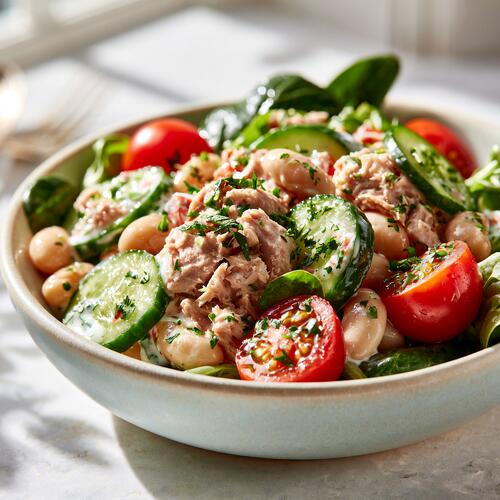 1. Tuna and Bean Salad
A cold dinner that can be put together in just a few minutes. No cooking required if you use canned beans.
Calories: about 240 kcal.
Approximate nutrition (BJU):
-
protein: 34 g;
-
fat: 2 g;
-
carbohydrates: 22 g.
Ingredients
-
tuna in its own juice, drained: 100 g;
-
beans (cooked): 50 g;
-
tomatoes: 150 g;
-
cucumber: 100 g;
-
plain yogurt 2%: 30 g;
-
herbs, salt, and spices: to taste.
How to Prepare
Drain the liquid from the tuna and beans. Chop the vegetables, combine with the other ingredients, and dress with yogurt.
If you want to increase dinner's calories to 300 kcal, add a whole-grain crispbread or a bit more beans.
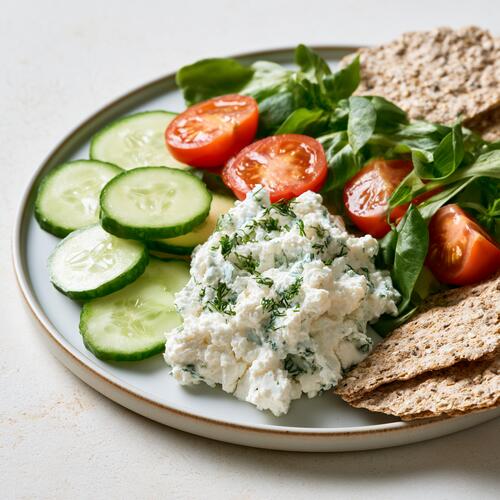 2. Cottage Cheese with Vegetables and Crispbread
Another no-cook dinner, perfect for those days when you don't have time or the desire to stand by the stove.
Calories: about 285 kcal.
Approximate nutrition (BJU):
-
protein: 36 g;
-
fat: 4 g;
-
carbohydrates: 27 g.
Ingredients
-
cottage cheese 2%: 180 g;
-
tomatoes: 150 g;
-
cucumber: 100 g;
-
crispbread: 15 g;
-
herbs: 20 g;
-
salt, garlic, or spices: to taste.
How to Prepare
Chop the vegetables and mix them with cottage cheese and herbs. Serve crispbreads on the side.
If the cottage cheese is too dry, add a spoonful of plain yogurt. You’ll need to count its calories separately.
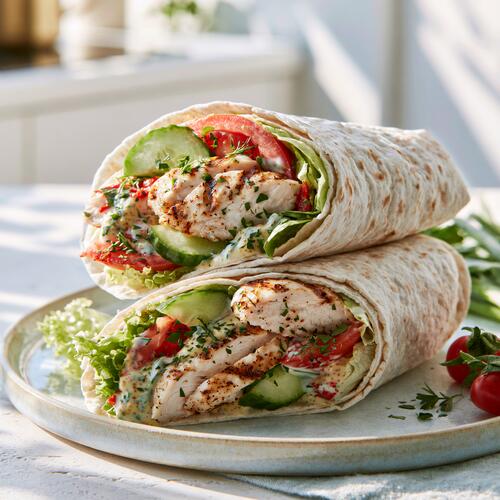 3. Lavash Roll with Chicken and Vegetables
This dinner is convenient to take with you. It can be eaten cold, making it suitable for work, school, or travel.
Calories: about 320 kcal.
Approximate nutrition (BJU):
-
protein: 38 g;
-
fat: 5 g;
-
carbohydrates: 29 g.
Ingredients
-
cooked chicken breast: 100 g;
-
thin lavash: 35 g;
-
tomato, cucumber, and lettuce leaves: 150 g;
-
plain yogurt: 25 g;
-
mustard, salt, and spices: to taste.
How to Prepare
Slice the chicken breast and vegetables. Mix yogurt with mustard. Place the filling on the lavash, add the sauce, and roll it up tightly.
For a hot version, heat the roll on a dry frying pan for one minute on each side.
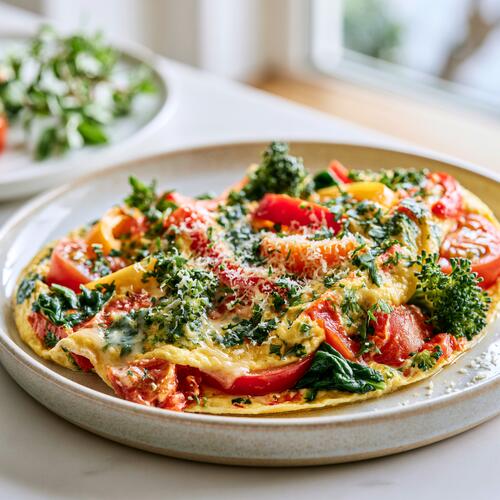 4. Omelet with Vegetables and Cheese
A hot protein-rich dinner ready in about 10 minutes.
Calories: about 350 kcal.
Approximate nutrition (BJU):
-
protein: 36 g;
-
fat: 16 g;
-
carbohydrates: 15 g.
Ingredients
-
eggs: 2 pcs;
-
egg whites: 120 g;
-
vegetable mix: 250 g;
-
cheese up to 20% fat: 20 g;
-
vegetable oil: 2 g;
-
salt and spices: to taste.
How to Prepare
Sauté the vegetables in a pan with a little water. Add the eggs and whites, stir, and cook covered. Sprinkle grated cheese on top just before serving.
You can use fresh or frozen vegetables. If buying a mix, check that it doesn't contain oil or creamy sauce.
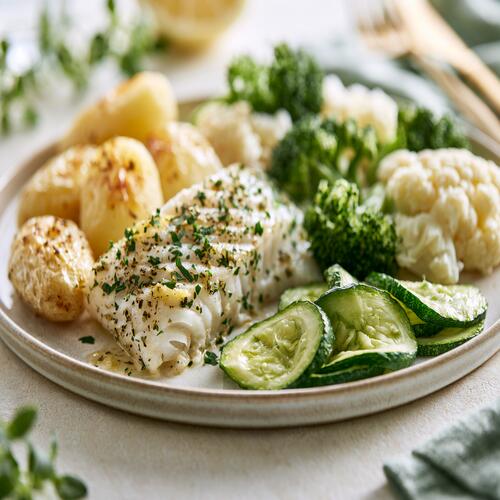 5. Hake with Potatoes and Broccoli
Potatoes do not hinder weight loss if you control portion size and cooking method. In this dish, they complement lean fish and make dinner more satisfying.
Calories: about 330 kcal.
Approximate nutrition (BJU):
-
protein: 39 g;
-
fat: 6 g;
-
carbohydrates: 34 g.
Ingredients
-
hake or pollock fillet (raw): 170 g;
-
potatoes (raw): 140 g;
-
broccoli: 150 g;
-
vegetable oil: 3 g;
-
lemon juice, salt, and spices: to taste.
How to Prepare
Boil or bake the potatoes. Salt the fish, add spices, and bake for about 15–20 minutes at 180–190°C.
Steam or boil the broccoli, or add to the fish in the oven. Distribute the oil between the potatoes and vegetables.
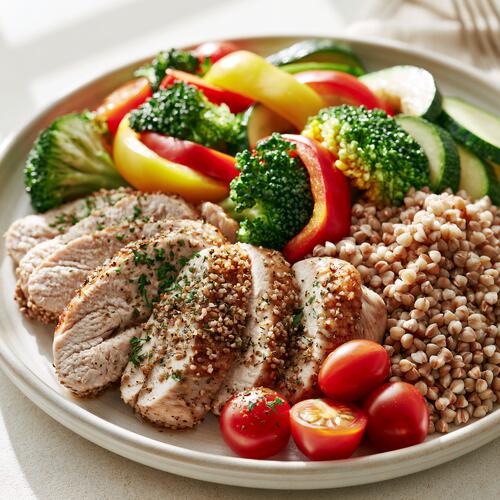 6. Turkey with Buckwheat and Vegetables
A hearty hot dinner option at about 380 kcal. Suitable after a busy day or a workout.
Calories: about 380 kcal.
Approximate nutrition (BJU):
-
protein: 43 g;
-
fat: 7 g;
-
carbohydrates: 33 g.
Ingredients
-
cooked turkey breast: 125 g;
-
cooked buckwheat: 110 g;
-
vegetables: 200 g;
-
vegetable oil: 3 g;
-
salt and spices: to taste.
How to Prepare
Bake, stew, or pan-cook the turkey. Serve with cooked buckwheat and vegetables.
To save time recalculating, you can cook several servings of turkey and buckwheat in advance and store in separate containers.
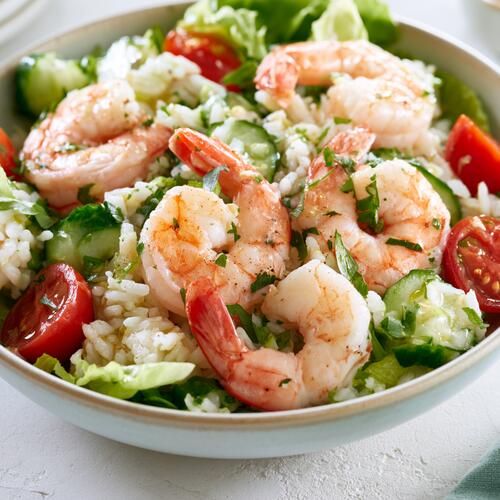 7. Cold Salad with Shrimp and Rice
This dinner can be prepared in advance and stored in the fridge until evening.
Calories: about 385 kcal.
Approximate nutrition (BJU):
-
protein: 44 g;
-
fat: 5 g;
-
carbohydrates: 39 g.
Ingredients
-
cooked, peeled shrimp: 160 g;
-
cooked rice: 100 g;
-
cucumber, tomato, and lettuce leaves: 200 g;
-
vegetable oil: 4 g;
-
lemon juice, salt, and spices: to taste.
How to Prepare
Combine cooled rice, shrimp, and chopped vegetables. Add oil, lemon juice, and spices.
Instead of oil, you can use a yogurt-based dressing—in this case, the meal’s calorie count will be slightly lower.
 8. Tofu with Vegetables
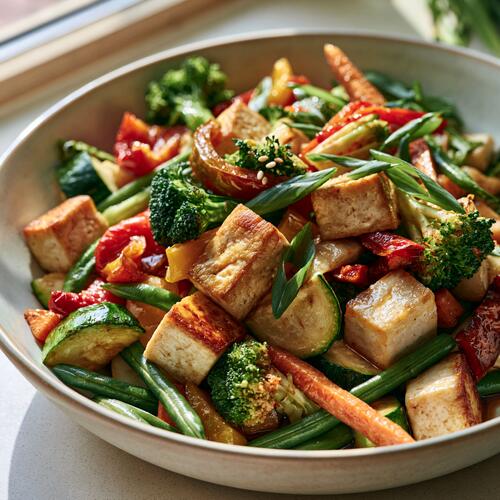
A hot meatless dinner. Tofu provides protein, and a large serving of vegetables increases the dish’s volume.
Calories: about 340 kcal.
Approximate nutrition (BJU):
-
protein: 28 g;
-
fat: 18 g;
-
carbohydrates: 20 g.
Ingredients
-
tofu: 180 g;
-
vegetable mix: 300 g;
-
vegetable oil: 4 g;
-
soy sauce: to taste;
-
garlic, paprika, or pepper: to taste.
How to Prepare
Cut the tofu into cubes. Fry it in a non-stick skillet with oil, add vegetables, and cook until soft. Add a bit of soy sauce at the end.
Tofu can vary greatly in calories depending on the producer. For accurate calculation, use the nutrition data from the package.
 9. Lentils with Egg and Vegetables
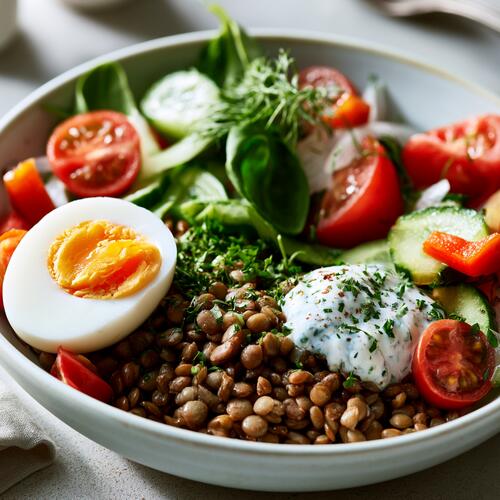
A hearty meatless option. The dish contains protein, complex carbohydrates, and fiber.
Calories: about 375 kcal.
Approximate nutrition (BJU):
-
protein: 27 g;
-
fat: 9 g;
-
carbohydrates: 49 g.
Ingredients
-
cooked lentils: 180 g;
-
egg: 1 pc;
-
vegetables: 200 g;
-
plain yogurt: 30 g;
-
vegetable oil: 2 g;
-
herbs, salt, and spices: to taste.
How to Prepare
Reheat lentils and vegetables in a pan. Add a boiled egg. Mix yogurt with herbs and use as a sauce.
You can make a cold version by combining chilled lentils, vegetables, and chopped egg.
 10. Chicken with Bulgur and Vegetables
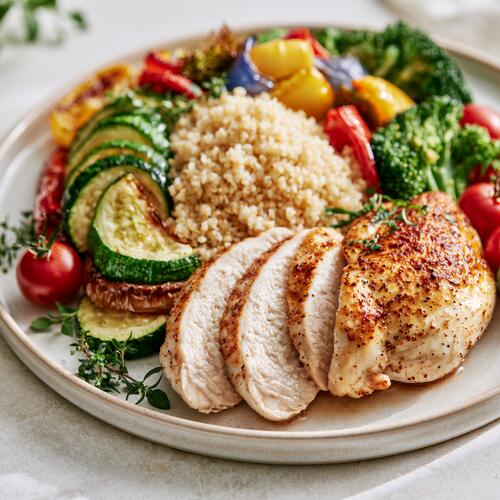
A simple hot dinner that's great for meal prepping for several days.
Calories: about 395 kcal.
Approximate nutrition (BJU):
-
protein: 44 g;
-
fat: 8 g;
-
carbohydrates: 35 g.
Ingredients
-
cooked chicken breast: 120 g;
-
cooked bulgur: 130 g;
-
vegetables: 200 g;
-
vegetable oil: 3 g;
-
salt, paprika, and other spices: to taste.
How to Prepare
Bake or pan-cook the chicken breast on a non-stick skillet. Boil the bulgur. Stew the vegetables or serve them fresh.
If you want to reduce calories by about 50 kcal, decrease the bulgur serving to 70–80 g cooked.
How to Choose Dinner Calorie Content
A 250 kcal dinner is suitable if:
-
you've already reached most of your daily calories during the day;
-
dinner is soon before bedtime;
-
you don't have much appetite in the evening;
-
you’ve already had a full breakfast and lunch during the day.
A 300–350 kcal dinner is suitable if:
-
you need a regular, everyday meal;
-
there are several hours between dinner and sleep;
-
you want to add some grains, bread, or potatoes;
-
you crave sweets after a too-light dinner.
About a 400 kcal dinner works if:
-
your daily norm is high enough;
-
you moved a lot during the day;
-
you have a workout in the evening;
-
dinner is one of your main meals;
-
lighter meals are not satisfying enough.
Don't automatically choose the lowest-calorie option. Being too strict can increase hunger and lead to unplanned snacking. A moderate calorie deficit over the whole day and week is key for weight loss.
What to Do if You’re Still Hungry After Dinner
First, assess your dinner. Maybe it lacked protein, vegetables, or overall calories.
Also, a strong evening appetite might appear if:
-
you skipped breakfast or lunch;
-
intervals between meals were too long;
-
you had little protein during the day;
-
your overall diet was too low in calories;
-
you're tired, stressed, or didn’t get enough sleep;
-
eating at night became a usual way to relax.
You don’t always need to battle hunger with willpower. Sometimes it’s better to increase dinner by 100 kcal in advance than to eat 500 kcal worth of sweets and sandwiches later without notice.
Read more about causes of evening appetite in the article "Evening Hunger and Night Binges: Causes and Action Plan".
How to Add Dinner to SIT30
You can enter a simple meal into your diary as separate foods. For example:
-
chicken breast;
-
cooked bulgur;
-
vegetables;
-
vegetable oil.
If you often cook the same meal, it's more convenient to save it once in SIT30 as your own recipe.
To do this:
-
Add all ingredients and specify their exact weight.
-
After cooking, weigh the finished dish as a whole.
-
Enter the final weight.
-
Save the recipe.
-
Next time you eat it, just enter the weight of your portion.
This way, the app will automatically calculate the calories and nutrition for your portion.
This is especially convenient for casseroles, stewed meat with vegetables, grains with add-ins, and other dishes prepared in multiple servings at once.
Common Mistakes When Preparing Dinner
Not Counting Oil
Even if oil is just used to grease the pan, it's better to weigh it. Pouring oil by eye is not recommended.
Choosing Only Vegetables
Vegetable salad may be a good addition, but it does not always replace a full dinner. Without protein and other nutrients, satiety may disappear quickly.
Completely Banning Carbohydrates
Potatoes, grains, bread, and lavash are acceptable in the evening. Portion size and total calories are what matter.
Making the Portion Too Small
A 150 kcal dinner may look attractive on paper but can lead to a more caloric snack before bedtime.
Not Counting Sauces
Mayonnaise, cheese sauce, cream, and other add-ins may contain more calories than the main salad ingredients.
The Main Point
The right dinner for weight loss doesn’t have to be tiny or consist only of vegetables.
For a filling meal, add a protein source, vegetables, and if needed, a small portion of potatoes, grains, or bread. For most people, dinners of 300–400 kcal are suitable, but the exact portion size depends on your daily needs.
You can eat after 6 p.m. It’s much more important to consider your entire dietary intake and not turn your evening into a series of unplanned snacks.
Use the suggested meals as a base, swap the sides and vegetables, and always check the exact calorie content using the foods you actually use.
Frequently Asked Questions
What is Best to Eat for Dinner When Losing Weight?
Meals should include a protein product, vegetables, and if needed, a small portion of grains, potatoes, or bread. For example, fish with potatoes, chicken with bulgur, omelet with vegetables, or tuna salad.
How Many Calories Should Dinner Be?
There is no universal norm. Often, dinner contains about 20–30% of your daily calorie intake. For many people, 300–400 kcal is a convenient guideline.
Can I Have Dinner After 6 p.m.?
Yes. The key is not the specific time, but the total calories for the day, portion size, and how your schedule helps control appetite.
How Many Hours Before Bed is Best to Have Dinner?
It's often convenient to eat about 2–3 hours before sleep. But if you're very hungry, a small meal later is also allowed.
Can I Eat Potatoes for Dinner When Losing Weight?
Yes. You can include potatoes for dinner if you consider their weight, preparation method, and added oil. The best option: boiled or baked potatoes.
Can I Eat Grains in the Evening?
Yes. Buckwheat, rice, bulgur, and other grains are allowed in the evening. For dinner, 80–150 g of cooked grain is usually enough.
What Dinner is Considered Protein-Rich?
A protein dinner contains a notable portion of fish, poultry, meat, eggs, cottage cheese, seafood, tofu, or legumes. The dishes in this list contain about 27 to 44 g of protein.
What to Eat for Dinner Without Cooking?
Cottage cheese with vegetables, tuna and bean salad, a lavash roll with cooked chicken, yogurt with cottage cheese, or a cold salad with shrimp are suitable.
What to Do if You Want Sweets After Dinner?
Make sure your dinner has enough protein and overall calories. Sometimes a small portion of grains or potatoes helps you feel full and reduces sweet cravings.
Do I Need to Skip Dinner to Lose Weight Faster?
No. Skipping dinner alone does not guarantee weight loss. It can lower your daily calories, but for some it leads to strong hunger and overeating.