

Why You Shouldn't Weigh Yourself After Eating: The Best Time to Do It | SIT30
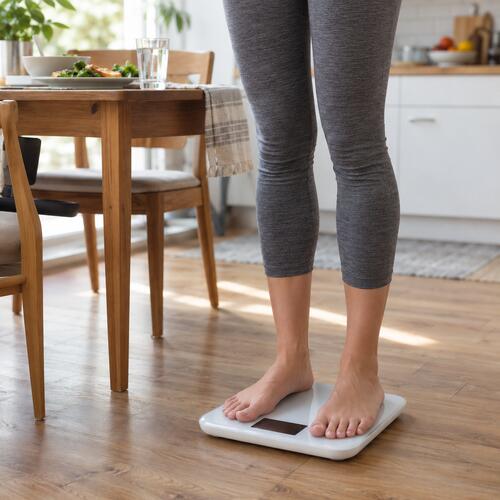 Why You Shouldn’t Weigh Yourself After Eating and When It’s Okay to Step on the Scale
Did you eat, step on the scale, and see a plus of 500 g, a kilo, or even more? That doesn’t mean you gained that much fat from just one meal.
After eating, the number on the scale really can go up noticeably. The reason is simple: the scale shows not only the amount of fat in your body. It measures your total body mass, including the water you drink, the food you eat, the contents of your intestines, and the fluid your body is temporarily retaining.
So, you can weigh yourself after eating, but such a measurement is almost useless for tracking weight loss.
Let’s figure out how much your weight can increase after eating, why your weight is usually higher in the evening than in the morning, when you should step on the scale after eating, and how to weigh yourself correctly.
Why Your Weight Increases After Eating
Here’s a simple example.
You had lunch:
-
350 g of soup;
-
200 g of salad;
-
300 g of a main dish;
-
drank 400 ml of water.
About 1.25 kg of food and drink entered your body.
If you step on the scale right after, part of this mass will show up on the display. This is the physical weight of food and drink still inside your body.
This does not mean you gained a kilogram of fat.
The food has to go through digestion, the water must be distributed and partially excreted, and undigested remains will leave your intestines.
So, comparing your morning weight on an empty stomach and your weight right after lunch is incorrect.
If the numbers on your scale change literally every day, be sure to also read why your weight fluctuates every day and what it really means.
Can You Really Gain 1 Kg From One Meal?
It’s entirely possible to see a +1 kg on the scale.
But a higher number on the scale and an increase in body fat are not the same thing.
After a big meal, your weight can increase for several reasons:
-
The mass of the food itself.
-
The fluid you drank.
-
Water retention after salty foods.
-
Increased glycogen stores after lots of carbs.
-
Contents of the intestines.
-
Difference in timing of weighing.
So, after a celebratory dinner, a restaurant outing, or eating a lot of salty foods, your weight may look alarming. But most of that quick change isn’t fat.
If your weight suddenly went up by a kilogram or more, also check out why your weight can increase by 1-2 kg in a day and what to do about it.
Simple Example: Drinking a Liter of Water
A liter of regular water weighs about 1 kg.
If a person drinks a lot of fluid and weighs themselves right after, the scale will naturally show more.
Your body didn’t turn that water into fat.
Over time, the fluid redistributes and exits through your kidneys, respiration, and sweat.
The same happens with food. While it is inside the gastrointestinal tract, its mass is part of your total body weight.
Why Salty Foods Increase Weight Even More
After a salty dinner, the gain may last longer than just the mass of the food consumed.
Sodium affects your body’s fluid balance. After a lot of salt, the body can temporarily hold on to more liquid.
So, after:
-
salty fish;
-
sushi rolls;
-
pizza;
-
sausages;
-
pickled foods;
-
fast food;
-
sauces;
-
a lot of cheese
the next morning your weight may sometimes be higher than usual.
That’s one reason not to panic over a single measurement.
It’s much more important to observe what happens to your average weight over several days or weeks.
Why Carbohydrates Can Also Make Your Weight Go Up
After a lot of carbs, some of the glucose is stored in your body as glycogen.
Glycogen is stored along with water.
So, after a day with more bread, grains, pasta, sweets, or other carb-rich foods, your weight may temporarily increase.
Conversely, during the first days of a very low-carb diet, a person may lose weight quickly. A significant part of that initial drop can be due to decreased glycogen and its associated water, not just fat loss.
This is why weight change on a single day tells you almost nothing about your rate of weight loss.
Why You Shouldn’t Weigh Yourself Right After Eating
More accurately, weighing yourself after eating isn’t forbidden, but the result can’t be accurately compared to your morning weight on an empty stomach.
Suppose:
in the morning you weigh 70.2 kg;
after breakfast 70.8 kg;
after lunch 71.4 kg;
by evening 71.7 kg.
This absolutely does not mean you gained 1.5 kg of fat in a day.
Throughout the day, you eat and drink. Fluid levels in your body and the content of your digestive system also change.
The next morning, after sleeping and visiting the bathroom, the number may drop significantly again.
So, when tracking weight loss, you need the same measurement conditions.
How Long After Eating Should You Wait to Weigh Yourself?
There’s no universal rule like «after two hours your weight is real again».
After two, three, or even several hours, some of the food may still be in your digestive system. The result is also influenced by water, salt, carbs, using the bathroom, and physical activity.
If you want to track body weight changes, it’s easier not to count the hours since dinner.
It’s better to weigh yourself the following morning under your usual conditions.
This way, your results on different days are much more comparable.
We covered details about how and how often to weigh yourself when losing weight in a separate article.
When Is the Best Time to Weigh Yourself?
The most convenient option for tracking weight loss:
in the morning, after waking up and using the bathroom, before breakfast or any drinks.
It’s best to use the same scale each time, placed on the same solid surface.
If today you weighed yourself on an empty stomach in the morning, tomorrow after breakfast, and the day after in the evening after a workout, comparing those three numbers is almost meaningless.
The conditions are too different.
Is It Necessary to Weigh Yourself Every Day?
You can.
Weighing in daily allows you to see natural weight fluctuations and stop worrying about a single number.
But it’s better not to judge the result by:
«Yesterday I was 70.1 kg, today 70.6 kg, so I’ve gained weight».
It’s more helpful to look at the trend.
For example:
| Day | Weight |
|---|---|
| Monday | 70.6 kg |
| Tuesday | 70.2 kg |
| Wednesday | 70.5 kg |
| Thursday | 69.9 kg |
| Friday | 70.3 kg |
| Saturday | 69.8 kg |
| Sunday | 70.0 kg |
The weight bounces up and down, but the overall trend may still be downward.
And that’s much more important than a single random number.
Why Is Evening Weight Higher Than Morning Weight?
This is totally normal for most people.
By evening, you’ve already:
-
eaten several times;
-
drunk water, tea, coffee, and other drinks;
-
consumed salt and carbs;
-
built up contents in your digestive system.
That’s why evening weight is often higher than morning weight.
Don’t compare your evening weight today to your morning weight yesterday.
If you want to weigh yourself in the evening, only compare that to other evening weights under similar conditions. But for weight loss tracking, a morning measurement is usually more convenient.
Why Can Your Morning Weight Be Higher After Eating the Night Before?
Sometimes a person has kept a calorie deficit, but finds a higher number on the scale in the morning.
For example, yesterday it was 70.0 kg, today it’s 70.8 kg.
The first thought: «I ruined everything».
But this could be due to:
-
a salty dinner;
-
more carbs;
-
a late meal;
-
intense workout;
-
fluid retention;
-
menstrual cycle;
-
constipation;
-
a large volume of food;
-
changes in sleep routine.
So just one higher morning weight doesn’t mean you gained fat.
If your eating is actually in a deficit, it’s much more informative to track the trend over several weeks.
Why Can Your Weight Be Higher After a Workout?
This is a separate situation after intense physical activity.
Following an unusual or grueling workout, your weight may sometimes increase temporarily. This can be due to changes in body water balance, recovery processes in your muscles, and glycogen stores.
So weighing yourself right after a workout, or using the next morning’s weight after a heavy session, isn’t always informative for weight loss either.
We covered this situation separately in the article why weight increases after a workout.
Can You Just Subtract Food Weight After Eating?
Suppose you weighed 70 kg before lunch.
Then you ate 600 g of food and drank 400 ml of water.
It might seem logical to step on the scale and simply subtract 1 kg.
But in practice this method is inaccurate.
In that time you could have:
-
used the bathroom;
-
lost water from sweat and breathing;
-
drunk something else;
-
changed your body’s fluid balance.
So there’s no real point in trying to calculate your “real weight” by subtracting your food’s mass.
It’s easier to do your next measurement in the morning under standard conditions.
What If Your Weight Doesn't Change After Eating?
That happens too.
For example, you ate, but before that you used the bathroom, exercised, or lost some body fluid.
The scale shows the net result of all these processes at once.
So you can’t say in advance:
«I ate 700 g, so my weight should be exactly 700 g higher».
Your body weight is always fluctuating.
Can Your Weight Drop After Eating?
Yes.
Your weight after eating isn’t always higher than the previous measurement.
Between measurements, you could have lost fluid, gone to the bathroom, or exercised.
For example, you weighed yourself in the morning after having a lot of water, then later were active for several hours, went to the bathroom, and only ate lunch after that.
After lunch, your weight could theoretically turn out lower than before.
This is exactly why single daily measurements are not so useful for monitoring weight loss.
Why Scales Showing Body Fat Percentage May Be Even Less Accurate After Eating
Some smart scales, in addition to body mass, show:
-
body fat percentage;
-
amount of water;
-
muscle mass;
-
visceral fat;
-
other body composition indicators.
Most home models calculate these figures using bioimpedance.
The result is affected by the amount of fluid in your body, food intake, physical activity, and other factors.
This is why it’s also misleading to compare your fat percentage on an empty stomach in the morning to your percentage in the evening after eating.
If you use such scales, measure yourself under as consistent conditions as possible.
What to Do If You Gain 2 kg After a Restaurant Visit
Don’t rush to “burn off” the food by starving or with exhausting workouts.
Just return to your regular routine:
-
your usual diet;
-
normal water intake;
-
regular physical activity;
-
consistent sleep.
Within a few days, part of the temporary gain may disappear by itself.
This is especially common after restaurant food, which often contains more salt, carbohydrates, and sauces than homemade meals.
How To Tell the Difference Between a Temporary Gain and Real Weight Gain
Rely on the trend, not on a single day.
If today your weight jumped by a kilogram, but returns to normal after a few days, most of that change was likely due to water and digestive contents.
If the average weight is slowly increasing over several weeks, then it makes sense to check your calorie intake and activity level.
The same principle applies to weight loss.
One morning drop of a kilogram doesn’t mean you’ve lost a kilogram of fat.
If you want to better understand body composition changes, read how to know you are losing fat, not water or muscle.
How to Track Weight Loss Correctly
It’s best to use several indicators at once.
1. Body Weight
Weigh yourself in the same conditions.
2. Weekly Average Weight
This helps smooth out daily fluctuations.
3. Body Measurements
Measure your waist, hips, and other areas of interest every few weeks.
4. Photos
Pictures in the same clothes and lighting can sometimes show changes better than the scale.
5. How Your Clothes Fit
If your waist feels looser, that’s another useful sign of progress.
It’s best not to judge the outcome of your weight loss solely by today’s number on the scale.
Weight doesn’t have to be your only way of tracking. You can also use other ways to measure weight loss progress without scales.
What to Do If the Scale Upsets You
If daily swings make you anxious, you can reduce how often you weigh in.
For example, weigh yourself 2-3 times a week in the morning under the same conditions.
Another option: keep up daily measurements, but focus only on the weekly average.
The main thing is that your scale helps you track progress, not pushes you to change your diet over every 300-500g fluctuation.
Frequently Asked Questions
Why shouldn’t you weigh yourself after eating?
You can weigh yourself, but the result includes the mass of food and liquid you just consumed. So this result shouldn’t be compared to your fasting morning weight.
How long after eating can you step on the scale?
For tracking weight loss, there’s no need to wait a specific number of hours. It’s better to weigh yourself the next morning, after using the bathroom and before eating or drinking.
How much does your weight increase after eating?
It depends on the amount of food and drink, salt, carbs, time of day, and other factors. After a large meal, your scale may temporarily show several hundred grams or more than a kilo higher.
If you gain 1 kg after eating, is it fat?
No. Right after eating, most of the gain is due to the mass of food and liquid, as well as possible fluid retention.
Why is my weight 1-2 kg higher in the evening?
Throughout the day, you eat and drink, so the amount in your digestive system increases. Fluid retention also affects your weight.
When is weight most accurate?
To track changes, it’s best to compare results recorded under the same conditions. In practice, it’s convenient to weigh yourself in the morning after the bathroom, before eating or drinking.
Should I weigh myself before or after using the bathroom?
For more comparable results, it’s best to weigh yourself after using the bathroom.
Can I weigh myself after breakfast?
You can, but don’t compare this result to your weight measured fasting yesterday morning.
The Bottom Line
Your weight after eating nearly always answers not the question «how much fat have I gained», but «how much does my whole body weigh right now including food, water, and digestive contents».
So you shouldn’t change your diet or cut calories because of one high reading after lunch or dinner.
If you’re tracking weight loss, stick to the simple rule:
weigh yourself in the morning, after the bathroom, before eating or drinking, and compare not the individual numbers, but the trend over several days and weeks.
This way, the scale becomes a helpful tool for monitoring progress, and normal weight fluctuations stop looking like sudden fat gain.