

Honey for Weight Loss: Benefits, Caloric Content, and How Much You Can Have
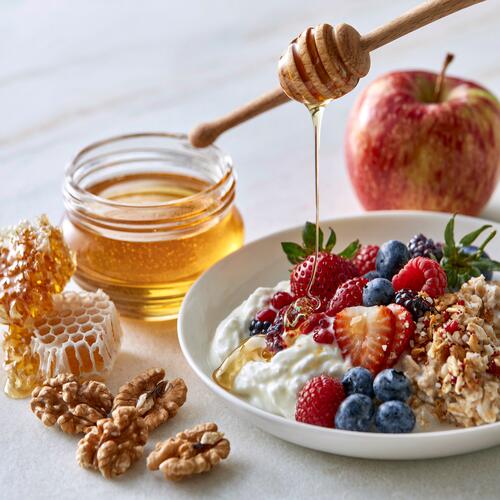 Honey: Beneficial Properties, Calorie Content, and Is It Allowed During Weight Loss
Honey is often called a healthy substitute for sugar. It is added to tea, porridge, cottage cheese, homemade desserts, and lemon drinks. For those watching their weight, this raises a logical question: can you eat honey during weight loss, or will its high calorie content prevent you from creating a deficit?
Short answer: honey can be included in a weight loss diet. You don't need to ban it, but you do need to monitor the amount. It’s primarily a source of sugars, not a product with unique fat-burning properties.
One small spoon easily fits into the diet. Several generous spoonfuls added throughout the day to tea, porridge, and dessert can quietly increase your calorie intake by 150-250 kcal.
The main rule is simple: use honey as a small addition to food, not as a product that can be ignored just because it’s natural.
Contents
-
What Is Honey
-
Honey Composition and Calorie Content
-
Beneficial Properties of Honey
-
Can You Eat Honey When Losing Weight
-
How Much Honey Per Day
-
Honey or Sugar: Which Is Better
-
How to Eat Honey Right During Weight Loss
-
Popular Myths About Honey
-
Who Should Limit Honey
-
How to Log Honey in SIT30
What Is Honey
Honey is a sweet product made by bees from floral nectar or other plant sources. Its taste, aroma, color, and texture depend on the plants from which the nectar was collected, the region, storage conditions, and processing method.
The main part of the product consists of simple sugars, mainly fructose and glucose. Honey also contains water, and a small amount of organic acids, amino acids, enzymes, minerals, and plant compounds.
The composition of different types may vary slightly. For example, buckwheat, linden, acacia, and flower honey differ in taste and ratio of certain substances. However, from a weight loss perspective, there’s no fundamental difference: any variety remains a concentrated source of carbohydrates and calories.
Honey Calorie Content
The average calorie content of natural honey is about 304 kcal per 100g. Almost all of the energy comes from carbohydrates. 100g of honey contains about 82g of sugars.
Calories in a Spoon of Honey
| Amount of honey | Approximate weight | Calories |
|---|---|---|
| 1 tsp (without a heap) | 7 g | 21 kcal |
| 2 teaspoons | 14 g | 43 kcal |
| 1 tablespoon | 21 g | 64 kcal |
| Small portion | 10 g | 30 kcal |
| 100 g | 100 g | 304 kcal |
Values are approximate. A heaping teaspoon may hold not 7g, but 10-12g of honey. Therefore, during weight loss it’s better to weigh your typical portion at least a few times on kitchen scales.
For example:
-
5g of honey: about 15 kcal;
-
10g of honey: about 30 kcal;
-
20g of honey: about 61 kcal;
-
30g of honey: about 91 kcal;
-
50g of honey: about 152 kcal.
If you regularly add a tablespoon of honey to your tea twice a day, that's about 128 kcal. Over a week, that's almost 900 kcal.
Beneficial Properties of Honey
Just being a natural product doesn’t make honey a medicine, but there are indeed some useful properties.
Quick Source of Energy
Glucose and fructose are absorbed relatively quickly. A small portion of honey can be convenient before a long walk, workout, or other physical activity if a person needs a light carbohydrate snack.
However, on a typical sedentary day, you may not need an extra source of fast carbs. You can get your energy from more filling foods containing protein, fiber, and complex carbohydrates.
Contains Antioxidant Compounds
Honey contains phenolic compounds and other components with antioxidant properties. The quantity depends on variety, origin, and processing.
However, the standard portion size of honey is small. It should not be considered a main source of vitamins, minerals, or antioxidants. Vegetables, berries, fruits, greens, nuts, and other whole foods contribute much more meaningfully to your nutrition.
May Soothe the Throat and Relieve Cough
Honey is sometimes used for temporary relief of coughing and throat irritation. Studies show it can reduce cough severity in upper respiratory infections, especially in children over one year old. However, honey doesn't treat the cause of the infection or replace medical care.
Helps Make the Diet More Diverse
The pronounced taste of honey allows you to use a small amount in porridges, dairy products, sauces, and homemade desserts.
Sometimes 5g of honey is enough to make natural yogurt or cottage cheese taste better. This can be more convenient than buying a ready-made sweet product where sugar content is preset.
But the result depends on the portion. If you add nuts, dried fruits, granola, and peanut butter along with honey, your light snack quickly becomes a high-calorie meal.
Can You Eat Honey When Losing Weight?
Yes, you can eat honey during weight loss.
Weight loss depends not on the presence of a specific product but on the overall energy balance. If the body consistently gets less energy than it expends, body mass decreases over time.
Honey does not block weight loss if its calories are accounted for. At the same time, it does not trigger fat burning or compensate for an excess of calories.
For example, one person can add 5–10g of honey to porridge and stay in a deficit. Another may give up honey completely but consistently overeat cheese, nuts, pastries, or butter. In the first case, weight can drop — in the second, it may not change.
To determine the right calorie intake, see the resource «Calorie Norm for Weight Loss: How to Calculate by the Mifflin St. Jeor Formula».
Does Honey Help You Lose Weight?
Honey itself is not a weight loss remedy.
Some scientific literature discusses possible effects of specific honey components on metabolism. However, much of the positive data comes from animal studies. There isn’t enough evidence to recommend honey as a stand-alone way to treat obesity or speed up weight loss.
Honey may help only indirectly, for example:
-
replace a more caloric dessert;
-
make plain yogurt tastier;
-
help give up sugary syrup;
-
allow you to control the amount of sweetener;
-
reduce the feeling of harsh prohibition of sweets.
But if honey is simply added to your regular diet, the total calorie content increases.
The accurate phrasing is not “honey helps you lose weight,” but “a small amount of honey can fit into a weight loss diet.”
How Much Honey Can You Eat a Day While Losing Weight
There is no single official recommendation specifically for honey. Its consumption should be counted within your total free sugar intake.
The World Health Organization recommends limiting free sugars to less than 10% of daily calories. Reducing to 5% may provide additional benefit. Sugars naturally present in honey also count as “free sugars.”
For a 1500 kcal diet:
-
10% of calories is about 37g of sugars;
-
5% of calories is about 19g of sugars.
One tablespoon of honey contains approximately 17g of sugars. This can make up a significant part of the recommended daily amount of free sugars.
Practical Portion Size for Weight Loss
A useful guideline for most diets:
-
5g, if honey is just for flavor;
-
10g, if it's the only sweetener in a dish;
-
15g, if the portion has been pre-logged in your daily calorie count.
This is not a medical norm but a practical way to manage calories.
It’s not necessary to have honey every day. One day you can add it to porridge, another day choose berries, banana, apple, or an unsweetened breakfast.
Honey or Sugar: Which Is Better for Weight Loss
Honey is often seen as a completely healthy alternative to sugar. But from an energy balance perspective, both are sources of simple carbohydrates.
Per 100g, honey has fewer calories because of its water content. However, comparing by spoonfuls can be misleading: honey is dense and heavy, so a tablespoon holds quite a large portion.
The main advantage of honey is not that its calories are “healthier.” It has a more pronounced taste, so some people need less sweetener overall.
For example, if someone uses 5g of honey instead of 15g of sugar, the calorie content really does decrease. If instead of one teaspoon of sugar, two tablespoons of honey are used, there will be a lot more calories.
What to Choose
Choose the product that:
-
you enjoy more;
-
is easier for you to control in quantity;
-
helps you stick to your meal plan;
-
doesn’t tempt you to add a few extra spoons.
For weight loss, the exact portion size matters more than the sweetener’s name.
Read more about how to eat desserts without strict restrictions in the article «How to Eat Sweets and Lose Weight: Rules, Examples, and Common Mistakes».
How to Eat Honey Right During Weight Loss
Weigh Your Portion
Don’t pour honey straight from the jar. Put your plate or cup on a scale, zero it, and add the required amount.
The visual difference between 5g and 20g may seem small, but it’s about 46 kcal.
Use Honey Instead of Another Sweetener
The addition should be a replacement, not an addition.
For example, if you add honey to cottage cheese, there’s no need to also use sweet yogurt, jam, chocolate chips, and granola at the same time.
Combine With Protein and Fiber
Honey contains virtually no protein or fiber. So a spoon of honey by itself usually isn’t as filling as a balanced snack.
Better combinations include:
-
natural yogurt, berries, and 5g of honey;
-
cottage cheese, apple, and a little honey;
-
oatmeal, honey, and berries;
-
whole grain toast, cream cheese, and a little honey;
-
salad with chicken and a dressing made from mustard, lemon juice, and 5g of honey.
Don’t Drink Calories Unnoticed
Tea with honey may feel like an ordinary beverage, but each spoon increases its calorie content.
If you drink four cups of tea a day, adding 10g of honey to each, that’s about 122 kcal. With a small calorie allowance, that’s equivalent to a separate snack.
Account for All Ingredients
Often the problem isn’t the honey itself, but the combination of several high-calorie foods.
For example:
-
150g yogurt: about 90 kcal;
-
20g nuts: about 120 kcal;
-
20g honey: about 61 kcal;
-
30g granola: about 130 kcal.
The total calories for such a snack may surpass 400 kcal.
Examples of Honey Portions for Weight Loss
Oatmeal with Honey
-
oat flakes: 40g;
-
milk 1.5%: 150ml;
-
berries: 100g;
-
honey: 5g.
Honey will add about 15 kcal and make the porridge taste more pronounced.
Cottage Cheese with Apple and Honey
-
cottage cheese 2-5%: 150g;
-
apple: 100g;
-
honey: 5g;
-
cinnamon to taste.
This version contains protein and provides longer satiety compared to tea with honey or a sweet bun.
Yogurt with Berries
-
natural yogurt: 170g;
-
berries: 100g;
-
honey: 5-7g.
If the yogurt already contains sugar, you usually don’t need to add honey.
Honey-Mustard Dressing
For several servings of salad, mix:
-
natural yogurt: 100g;
-
mustard: 10g;
-
honey: 5g;
-
lemon juice;
-
salt and spices.
Honey is used for taste balance, not as a primary ingredient.
When Is the Best Time to Eat Honey
There is no special time of day when honey more effectively promotes weight loss.
You can eat it:
-
in the morning with porridge;
-
during the day with cottage cheese or yogurt;
-
before physical activity;
-
in the evening, if the portion fits your daily calorie target.
What matters is not the time, but the total number of calories and sugars per day.
If honey in the evening increases your craving for sweets, it’s better to have it for breakfast or lunch. If a small portion helps you calmly finish the day without a breakdown, there’s no strict ban on eating it in the evening.
Popular Myths About Honey
Honey on an Empty Stomach Triggers Weight Loss
Water with honey does not trigger fat burning. It provides your body with water and a small amount of sugars.
If a person starts drinking such a drink instead of sugary coffee, juice, or a calorie-rich breakfast, their calorie intake may drop. But the reason is dietary change, not any special property of honey on an empty stomach.
Honey with Lemon Burns Fat
Lemon does not turn honey into a fat-burning product. Such a drink can be a pleasant way to drink more water, but honey’s calories still need to be counted.
Honey with Cinnamon Speeds Up Metabolism
Cinnamon affects the taste and aroma of a drink, but a blend of honey and cinnamon will not create a calorie deficit automatically.
If you add the drink to your regular diet, its energy value will only increase your total intake.
Honey at Night Helps With Weight Loss
The time of day does not affect the calorie content of the product. A spoon of honey contains the same energy in the morning, afternoon, and evening.
Weight loss depends on your overall balance for the day and week.
Natural Honey Can Be Ignored
Natural products also contain calories. This common mistake happens with nuts, avocado, vegetable oil, dried fruit, and honey.
It’s the small but calorie-dense extras that often cause the actual deficit to be less than calculated.
Honey Becomes Toxic in Hot Tea
Simply adding honey to a hot drink doesn’t make it poisonous. Long-term exposure to high temperature may change the taste, aroma, and amount of certain compounds, and increase hydroxymethylfurfural content. But the claim that a spoonful of honey in hot tea becomes toxic is not scientifically proven.
Can You Gain Weight from Honey?
You gain weight not from any single product, but from a consistent calorie surplus.
If you eat an extra 50g of honey every day, that’s about 152 kcal. In a month, it adds up to about 4,500 extra kilocalories.
Your body may not immediately gain much fat, because energy expenditure and appetite change. But regular, unaccounted additions can slow weight loss or eliminate your deficit entirely.
It’s especially easy to overeat honey if you:
-
eat it straight from the jar;
-
pour it without weighing;
-
add it to every cup of tea;
-
combine it with nuts and dried fruits;
-
consider it a healing product without limits;
-
use honey in addition to sugar and desserts.
What Honey Is Best for Weight Loss
There’s no special type of honey for weight loss.
Acacia, linden, floral, buckwheat, and other types differ in taste, color, and aroma, but are similar in calorie content.
Choose the variant that:
-
has a clear composition;
-
is made by a reputable producer;
-
is sold in a sealed package;
-
has labeling, packing date, and manufacturer details;
-
you enjoy so much that a small amount is enough for flavor.
Crystallization does not mean the honey has gone bad. It’s a natural process, the rate of which depends on the product's composition and storage conditions.
For weight loss, what matters is not the variety but the quantity.
Who Should Limit Honey
Children Under One Year Old
Honey should not be given to children under 12 months. The product may contain bacterial spores that cause infant botulism. This rule applies to all varieties of honey and to dishes containing it.
People With Diabetes
Honey increases carbohydrate intake and affects blood glucose. It is not a sugar-free alternative.
For diabetes, the amount of honey should be agreed upon with your doctor and counted as part of your total carbohydrate load for a meal.
If You Have Allergies
If you have a known allergy to honey or bee products, you should not consume it.
If, after honey, you experience itching, swelling, rash, difficulty breathing, or other unusual symptoms, seek medical help.
If You Have Dental Problems
Sugars in honey can contribute to the development of tooth decay. After sweet foods, it’s helpful to rinse your mouth with water and follow standard dental hygiene.
How to Log Honey in SIT30
It’s best to record honey in your food diary by weight, not by the number of spoons.
Method 1. Add Honey as a Separate Product
-
Place a cup or plate on kitchen scales.
-
Zero the scale.
-
Add the desired amount of honey.
-
Find honey in the SIT30 product database.
-
Enter the actual weight, for example, 5, 7, or 10g.
Method 2. Add Honey to a Homemade Recipe
If you’re making porridge, dessert, sauce, or baked goods:
-
Create a new recipe in SIT30.
-
Add all ingredients by weight.
-
Log honey as a separate ingredient.
-
After cooking, weigh the finished dish.
-
Record the actual output of the recipe.
-
The app will calculate the calorie content per 100g and for your portion.
To see detailed rules for weighing foods, check the article «How to Count Calories Correctly: Scales, Portions, Oil and Drinks».
Calculate Your Diet’s Calories in the SIT30 Calorie Counter
The Main Mistake When Consuming Honey
The most common mistake is the “healthy product effect.”
People carefully log bread, cheese, and main dishes, but do not record honey, butter, nuts, seeds, and sauces. As a result, the diary shows a deficit that does not actually exist.
You don’t need to ban honey. Just:
-
define your portion;
-
weigh it;
-
log it in your diary;
-
don’t automatically add it to every drink;
-
analyze your whole day's nutrition.
If giving up sweets completely is hard, it’s more useful to learn how to control the amount. Read more in the article «How to Stop Eating Sweets and Not Break Down: 12 Real-Life Strategies Without Life-Long Bans».
Conclusion
Honey can be consumed during weight loss. A small portion doesn’t hinder weight reduction if it fits your daily calorie budget.
Remember:
-
honey consists mainly of sugars;
-
one teaspoon has about 21 kcal;
-
one tablespoon has about 64 kcal;
-
honey does not burn fat;
-
drinks with honey, lemon, or cinnamon don’t substitute a calorie deficit;
-
a practical portion is usually 5–10g;
-
it’s best combined with protein- and fiber-rich foods;
-
the exact weight should be logged in your food diary.
Use honey as a flavor addition, not as a mandatory healing product. This approach allows you to keep your favorite foods in the diet and continue to lose weight without rigid bans.
Also Read in the SIT30 Blog
-
How to Eat Sweets and Lose Weight: Rules, Examples, and Common Mistakes
-
How to Stop Eating Sweets and Not Break Down: 12 Real-Life Strategies
-
What to Replace Sweets With: 20 Simple and Real Alternatives
-
How to Count Calories Correctly: Scales, Portions, Oil and Drinks
-
Healthy Eating Desserts with Cottage Cheese: 12 Recipes Without Sugar
-
Calorie Norm for Weight Loss: Calculation by Mifflin St. Jeor Formula