

Lunch for Weight Loss: 15 Satisfying Options at 300, 400, and 500 kcal
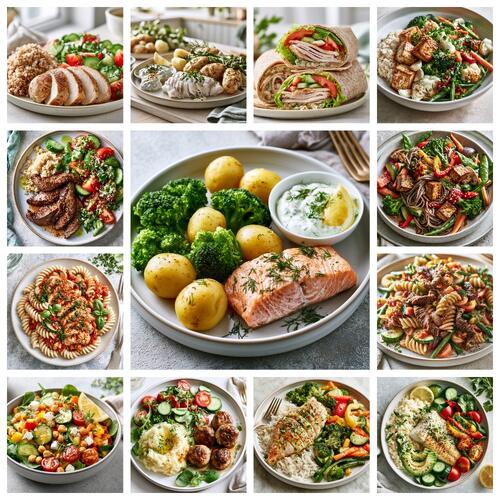 What to Eat for Lunch When Losing Weight: 15 Hearty Options
A lunch for weight loss does not have to consist of dry chicken breast and a few lettuce leaves. It can include potatoes, pasta, grains, bread, meat, fish, and even cheese. What matters is not individual “forbidden” foods, but the total calorie content, portion size, and ingredients in the dish.
A good lunch should solve several tasks at once:
-
keep you full until the next meal;
-
provide enough protein;
-
fit within your daily calorie limit;
-
be easy enough to prepare;
-
and not provoke a desire to seek out sweets within an hour.
Below you’ll find 15 lunch options at 300, 400, and 500 kcal. Among them are dishes with meat, fish, legumes, and tofu, as well as options that are convenient to take to work.
All calculations are approximate. Actual caloric values and macronutrient content depend on the product manufacturer, meat fat content, amount of oil, and cooking method. The weights of grains, pasta, meat, and fish are given in ready-to-eat form unless stated otherwise.
How Many Calories Should Lunch Have When Losing Weight?
There is no universal caloric value for lunch. It depends on your daily allowance, number of meals, and the usual distribution of calories throughout the day.
You can use the following guidelines:
-
a 300 kcal lunch is suitable for a small daily intake or for those who plan to have full snacks;
-
a 400 kcal lunch is a convenient average option for most diets;
-
a 500 kcal lunch is suitable for a higher daily calorie intake, physical activity, or skipping snacks.
For example, with a 1400 kcal meal plan, lunch can be around 350-450 kcal. With a 1700-1900 kcal plan, the lunch portion can be 450-550 kcal. You can calculate your individual calorie needs in the SIT30 calorie counter.
Don't purposefully make lunch too small if it leaves you very hungry afterwards. Saving 100-150 kcal at lunch often ends in unplanned sandwiches, cookies, or a large dinner.
What Does the Right Lunch Portion Look Like?
The simplest way to assemble lunch without complicated calculations:
-
half the plate: vegetables;
-
a quarter of the plate: meat, poultry, fish, eggs, legumes, or tofu;
-
a quarter of the plate: grains, pasta, potatoes, or bread;
-
a small portion of fats: oil, cheese, seeds, nuts, or avocado.
Example of one serving:
-
cooked chicken fillet: 100-150g;
-
cooked buckwheat: 100-150g;
-
vegetables: 200-300g;
-
vegetable oil: 3-7g.
You need to adjust the portion size to your own needs. One person may be satisfied with 100g of a side dish; another may need 180-200g.
You can read more about this way of structuring meals in the article «Healthy Eating Plate».
Lunches for Weight Loss Around 300 kcal
These options are suitable for a small calorie plan, a light workday, or situations where snacks are planned between main meals.
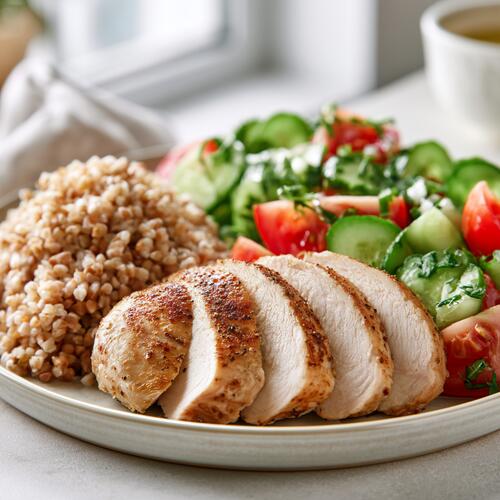 1. Chicken Fillet with Buckwheat and Vegetables
Ingredients:
-
chicken fillet: 90g;
-
cooked buckwheat: 90g;
-
cucumbers and tomatoes: 150g;
-
vegetable oil: 2g;
-
herbs, salt, and spices to taste.
Calories: about 296 kcal.
Approximate nutrition:
-
protein: 33g;
-
fat: 7g;
-
carbohydrates: 25g.
You can boil, bake, or grill the chicken. If you're preparing several servings at once, portion out the chicken and buckwheat into containers and add fresh vegetables before eating.
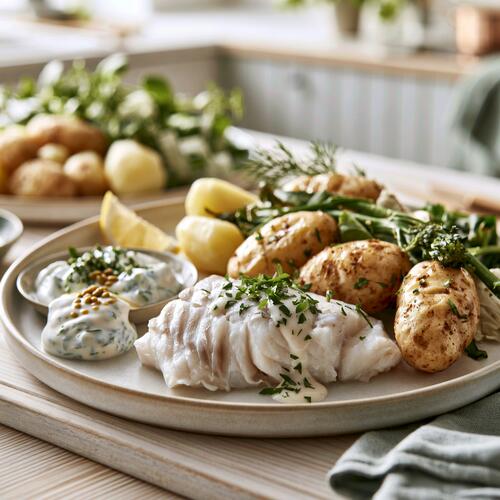 2. Pollock with Potatoes and Yogurt Sauce
Ingredients:
-
pollock or hake: 170g;
-
boiled potatoes: 150g;
-
fresh or roasted vegetables: 150g;
-
natural yogurt 2%: 30g;
-
lemon juice, mustard, and herbs to taste.
Calories: about 293 kcal.
Approximate nutrition:
-
protein: 33g;
-
fat: 3g;
-
carbohydrates: 33g.
For the sauce, mix yogurt, herbs, a little mustard, and lemon juice. This option is low in fat, so if necessary, you can add another 3-5g of oil or increase the portion of potatoes.
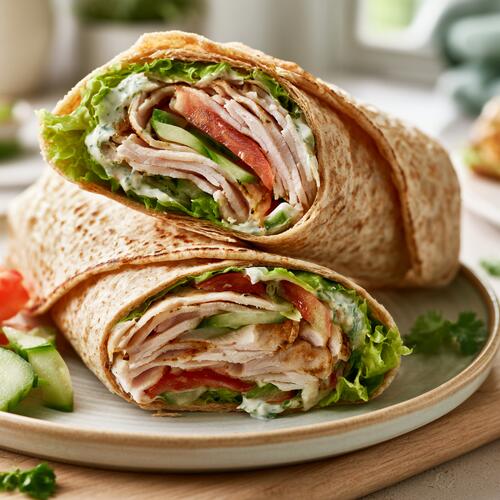 3. Whole Grain Lavash Roll with Turkey
Ingredients:
-
thin whole-grain lavash: 45g;
-
turkey fillet: 90g;
-
tomato, cucumber, and lettuce leaves: 150g;
-
natural yogurt: 30g;
-
mustard, herbs, and spices to taste.
Calories: about 305 kcal.
Approximate nutrition:
-
protein: 33g;
-
fat: 5g;
-
carbohydrates: 32g.
Mix yogurt with mustard, spread on the lavash, add sliced turkey and vegetables. Roll it up tightly. This is one of the most convenient lunches for work or travel.
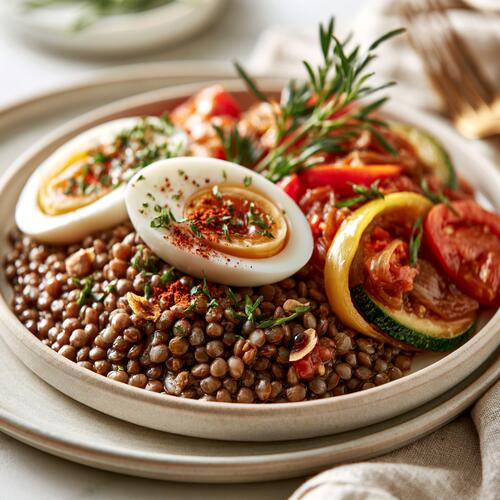 4. Lentils with Egg and Vegetables
Ingredients:
-
cooked lentils: 180g;
-
egg: 1 piece;
-
tomatoes, bell pepper or zucchini: 100g;
-
herbs, garlic, and spices to taste.
Calories: about 301 kcal.
Approximate nutrition:
-
protein: 24g;
-
fat: 6g;
-
carbohydrates: 40g.
You can prepare lentils in advance for several days. Add stewed vegetables and sliced boiled egg. For more flavor, use paprika, dried garlic, or a small amount of soy sauce.
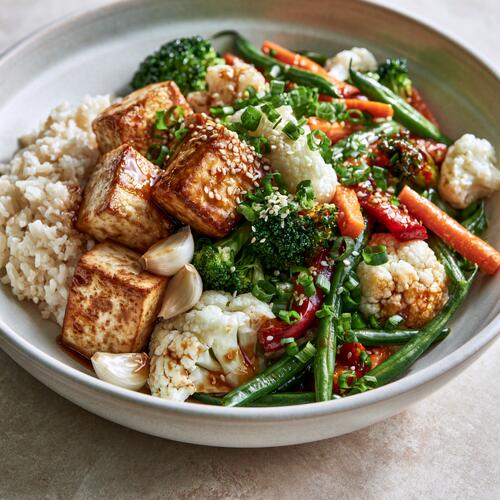 5. Tofu with Rice and Vegetables
Ingredients:
-
tofu: 120g;
-
cooked rice: 70g;
-
vegetable mix without sauce: 250g;
-
soy sauce: 10g;
-
garlic and spices to taste.
Calories: about 290 kcal.
Approximate nutrition:
-
protein: 21g;
-
fat: 9g;
-
carbohydrates: 33g.
Sauté tofu and vegetables in a nonstick pan without oil or with a little water. Add cooked rice and soy sauce.
Check the ingredients list when using frozen vegetable mixes. They shouldn't contain butter sauce, breading, or pre-added oil if you're counting calories as you would for plain vegetables.
Lunches for Weight Loss Around 400 kcal
A 400 kcal lunch easily fits into most meal plans. In this portion, you can already combine a normal amount of protein, a side dish, vegetables, and a small portion of fats.
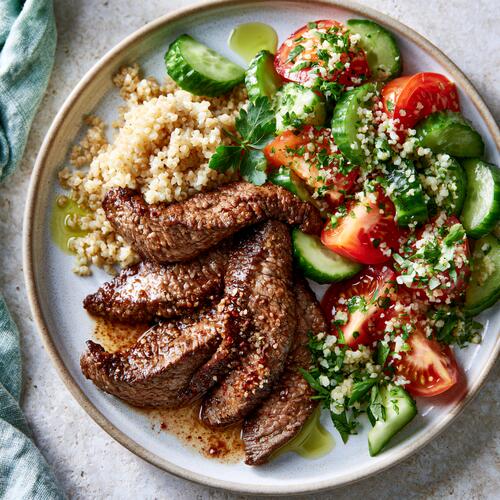 6. Beef with Bulgur and Salad
Ingredients:
-
lean beef: 100g;
-
cooked bulgur: 120g;
-
cucumbers, tomatoes, and herbs: 200g;
-
vegetable oil: 5g.
Calories: about 385 kcal.
Approximate nutrition:
-
protein: 33g;
-
fat: 16g;
-
carbohydrates: 30g.
It's best to stew, boil, or bake the beef. The fat content of different beef cuts varies noticeably, so select in SIT30 the exact product that matches the type of cut you're using.
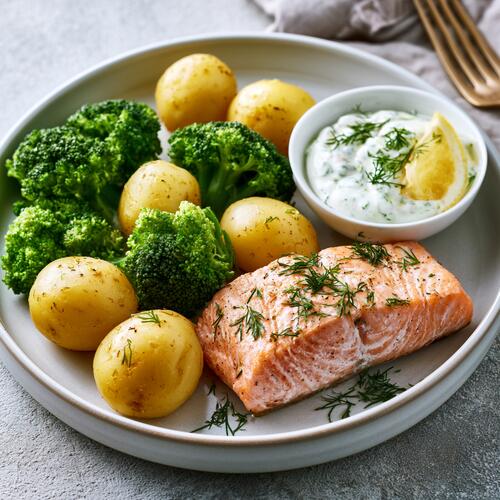 7. Salmon with Potatoes and Broccoli
Ingredients:
-
salmon or trout: 110g;
-
boiled potatoes: 120g;
-
broccoli: 150g;
-
natural yogurt: 30g;
-
lemon juice and spices to taste.
Calories: about 394 kcal.
Approximate nutrition:
-
protein: 32g;
-
fat: 15g;
-
carbohydrates: 32g.
This dish usually does not require additional oil, since oily fish already contains enough fats. Mix the yogurt with dill and lemon juice.
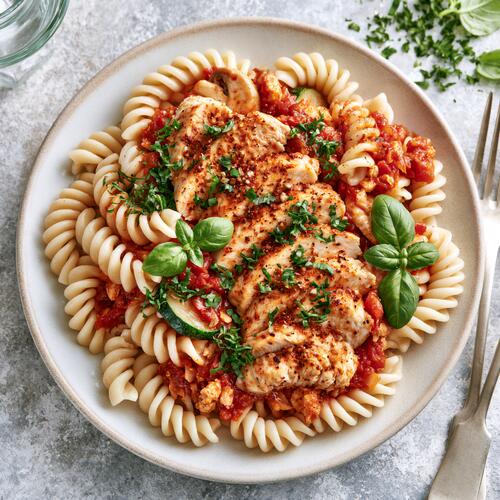 8. Pasta with Chicken and Tomato Sauce
Ingredients:
-
chicken fillet: 100g;
-
cooked pasta: 120g;
-
tomato sauce (no cream): 100g;
-
garlic, basil, and spices to taste.
Calories: about 391 kcal.
Approximate nutrition:
-
protein: 40g;
-
fat: 5g;
-
carbohydrates: 45g.
Pasta can be eaten when losing weight. The mistake is when people add a lot of oil, fatty ground meat, cream, or cheese, but don’t count those as part of the total calories.
For a larger portion, add zucchini, mushrooms, or sweet pepper.
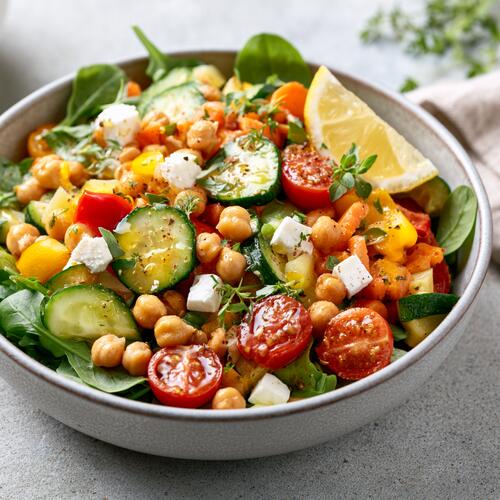 9. Bowl with Chickpeas, Vegetables, and Cheese
Ingredients:
-
cooked chickpeas: 140g;
-
fresh or baked vegetables: 200g;
-
feta cheese or bryndza: 30g;
-
vegetable oil: 3g;
-
lemon juice, herbs, and spices.
Calories: about 376 kcal.
Approximate nutrition:
-
protein: 19g;
-
fat: 13g;
-
carbohydrates: 48g.
You can cook chickpeas yourself or use canned. If using canned chickpeas, it's best to rinse and drain fully.
Cheese here is used as a flavoring, not as the main source of protein. Don’t increase the amount "by eye" as this will quickly increase the calorie content of the portion.
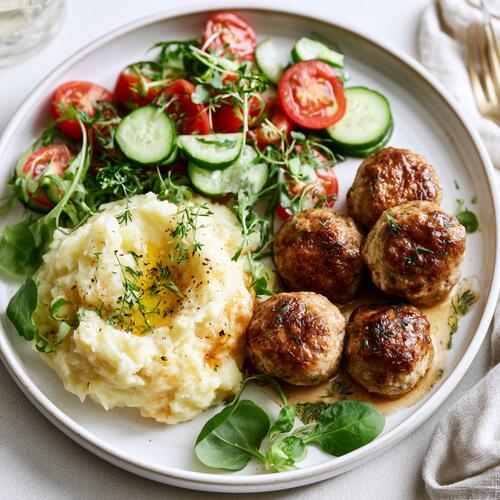 10. Turkey Meatballs with Mashed Potatoes
Ingredients:
-
turkey meatballs: 120g;
-
boiled potatoes: 180g;
-
milk 1.5%: 30ml;
-
vegetable oil: 3g;
-
vegetable salad: 150g.
Calories: about 412 kcal.
Approximate nutrition:
-
protein: 35g;
-
fat: 12g;
-
carbohydrates: 42g.
For the meatballs, use turkey mince without skin. If you add bread, egg, cheese, or oil to the mince, include them in the recipe.
Store-bought meatballs may differ in ingredients and calories, so for those, it's better to use information from the packaging.
Lunches for Weight Loss Around 500 kcal
These lunches are suitable for higher daily calorie intake, an active lifestyle, or a routine without daytime snacks.
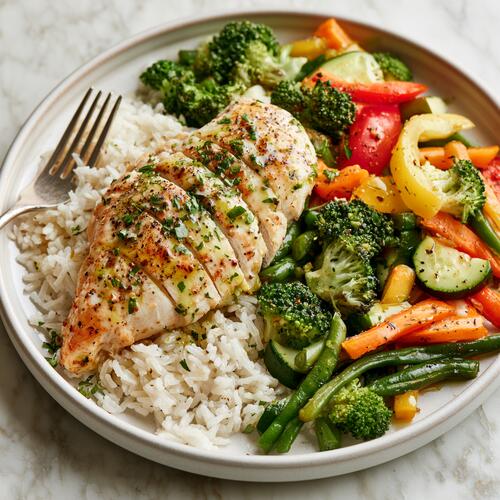 11. Chicken with Rice and a Large Portion of Vegetables
Ingredients:
-
chicken fillet: 130g;
-
cooked rice: 160g;
-
vegetables: 250g;
-
vegetable oil: 3g;
-
spices and herbs to taste.
Calories: about 500 kcal.
Approximate nutrition:
-
protein: 47g;
-
fat: 9g;
-
carbohydrates: 55g.
This is a basic lunch that’s convenient to prepare for two or three days. To prevent boredom, change up the spices and vegetables—for example, use curry and broccoli one day, paprika and bell pepper the next.
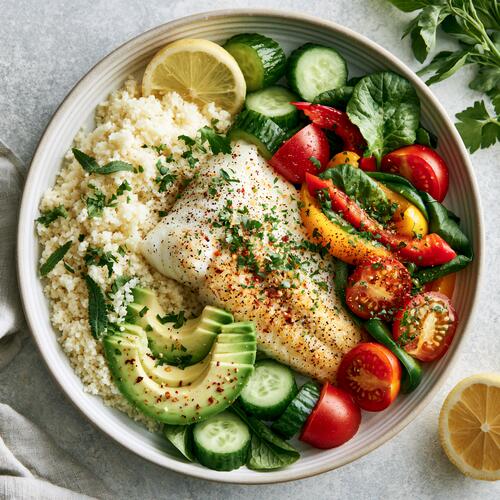 12. Cod with Couscous and Avocado
Ingredients:
-
cod or other white fish: 200g;
-
cooked couscous: 180g;
-
avocado: 60g;
-
vegetables: 150g;
-
lemon juice and spices.
Calories: about 492 kcal.
Approximate nutrition:
-
protein: 46g;
-
fat: 11g;
-
carbohydrates: 53g.
Avocado replaces oil and gives the dish a richer flavor. Couscous is convenient to prepare directly in the container: pour over hot water, cover, and leave for a few minutes.
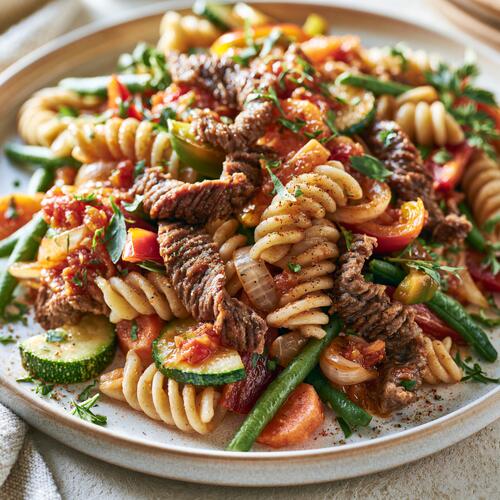 13. Pasta with Beef and Vegetables
Ingredients:
-
lean beef: 120g;
-
cooked pasta: 140g;
-
vegetables: 150g;
-
tomato sauce: 50g;
-
spices to taste.
Calories: about 507 kcal.
Approximate nutrition:
-
protein: 43g;
-
fat: 14g;
-
carbohydrates: 53g.
Slice the beef thinly and stew with vegetables and tomato sauce. Then mix with cooked pasta.
If you use oil for frying, add it separately to the calculation. Even a small amount can significantly change the total caloric value of the dish.
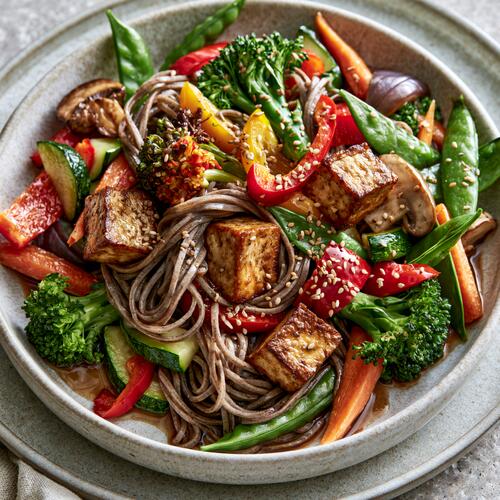 14. Soba Noodles with Tofu, Vegetables, and Sesame
Ingredients:
-
tofu: 180g;
-
cooked soba noodles: 190g;
-
vegetables: 250g;
-
sesame seeds: 10g;
-
soy sauce: 15g.
Calories: about 519 kcal.
Approximate nutrition:
-
protein: 38g;
-
fat: 18g;
-
carbohydrates: 57g.
Fry the tofu in a dry nonstick pan. Add vegetables, then cooked noodles and soy sauce. Sprinkle with sesame seeds before serving.
It’s best to weigh the sesame. One extra spoonful can add dozens more calories to the dish.
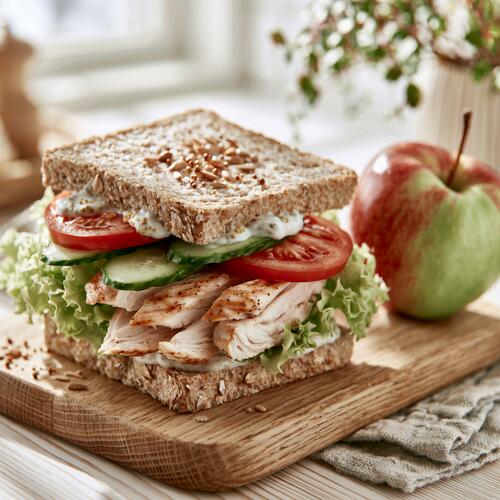 15. Sandwich with Chicken, Vegetables, and Apple
Ingredients:
-
whole grain bread: 90g;
-
chicken fillet: 100g;
-
tomato, cucumber, and lettuce: 100g;
-
natural yogurt: 40g;
-
apple: 120g;
-
mustard and spices to taste.
Calories: about 487 kcal.
Approximate nutrition:
-
protein: 42g;
-
fat: 8g;
-
carbohydrates: 62g.
Mix yogurt with mustard and use instead of mayonnaise. The apple can be eaten after the main course or saved for later in the workday.
This lunch does not require reheating and is suitable for the office, study, or travel.
Which Lunches Are Convenient to Take to Work
For a work lunch, it's best to choose dishes that:
-
don’t lose flavor after reheating;
-
don’t have too much liquid sauce;
-
are easy to divide into portions;
-
can be stored in a lunchbox;
-
don’t require assembling from many components.
The best options from the list:
-
Chicken with buckwheat and vegetables.
-
Lavash roll with turkey.
-
Beef with bulgur.
-
Pasta with chicken and tomato sauce.
-
Turkey meatballs with mashed potatoes.
-
Chicken with rice and vegetables.
-
Chicken and apple sandwich.
To save time, prepare your base for two or three days:
-
bake meat or fish;
-
boil your grain side dish;
-
prepare several containers;
-
package vegetables and sauces separately.
You don’t have to eat the same lunch for three days in a row. For example, ready-cooked chicken can be served with buckwheat on day one, wrapped in lavash on day two, and added to pasta and tomato sauce on day three.
How to Swap Foods and Keep the Same Calories
When replacing foods, focus not just on weight but also on caloric value.
Approximate swaps:
-
chicken can be replaced with turkey;
-
cod can be replaced with pollock, hake, or pike-perch;
-
rice can be swapped with buckwheat, bulgur, or couscous;
-
chickpeas can be swapped for beans or lentils;
-
natural yogurt can be used instead of mayonnaise;
-
avocado can be replaced by a small portion of oil;
-
pasta can be replaced by potatoes or grains.
At the same time, 100g of one product is not always equal to 100g of another in calories. For example, red and white fish have different fat content, and ready grains contain a different amount of water than dry ones.
How to Add a Ready Dish in SIT30
If your lunch consists of separate products, for example, chicken, buckwheat, and salad, each product can be added to the diary separately.
For soup, casserole, pilaf, stew, meatballs, or another complex dish, it’s more convenient to create your own recipe.
Step-by-step instructions
-
Open the «My Recipes» section in the SIT30 sidebar menu.
-
Click the green «+» icon.
-
Select «Add new recipe».
-
Enter the dish name.
-
Add all ingredients with exact weights.
-
Be sure to include oil, sauces, cheese, and other calorie-dense add-ins.
-
After cooking, weigh the entire finished dish.
-
Enter its actual yield.
-
Save the recipe.
-
When adding the dish to the diary, specify the weight of the portion you ate.
For example, your entire casserole weighs 1200g after cooking and contains 1800 kcal. SIT30 will calculate that there are 150 kcal in 100g. If you eat 250g, 375 kcal will be added to your diary.
This is easier than manually dividing all ingredients by portion each time.
Calculate the calories in your lunch with SIT30
Why Can Homemade Dishes Have Different Calories?
The main causes for differences:
-
foods were weighed raw, but a ready-made option was selected in the database;
-
oil was added to the pan but not entered into the diary;
-
an approximate, not the actual portion, was specified;
-
a product from a different manufacturer was selected;
-
sauce, cheese, cream, or breading was not included;
-
the final yield of a complex dish wasn't weighed.
After cooking, meat and fish usually lose water, so their weight decreases. Grains and pasta, on the contrary, absorb water and become heavier. The total calories of the product do not increase with boiling, but calories per 100g can change because of the changing water content.
To avoid confusion, stick to one principle: the weight of the product must correspond to the selected entry in the database. Count cooked buckwheat as cooked, and raw grain as raw.
Common Mistakes When Assembling Lunch
Too Little Protein
A portion made up of vegetables and a small spoonful of grains may be low in calories but often doesn't keep you satisfied for long. Add chicken, fish, eggs, cottage cheese, legumes, or tofu.
Vegetables Without Accounting for Dressing
Vegetables themselves usually have low calories. But oil, mayonnaise, cheese, nuts, and seeds can increase the calorie content of a salad several times over.
Too Small a Portion at Lunch
If you are always looking for something sweet after lunch, the problem might not be willpower, but the insufficient size of your main meal.
Complete Refusal of Side Dishes
Grains, pasta, and potatoes do not hinder weight loss by themselves. They can stay in your meal plan if you control the amount and any added fats.
Caloric Drinks
Sweet coffee, juice, soda, or a large milk-based drink may add another 100-300 kcal to lunch, but hardly affect the main portion size.
Which Lunch to Choose Today
Use this simple scheme:
-
need a light lunch: fish with potatoes or lentils with egg;
-
need a lunch for work: lavash with turkey or chicken sandwich;
-
craving pasta: choose the chicken or beef option;
-
need a meat-free lunch: tofu with rice, chickpeas with cheese, or soba with tofu;
-
active day ahead: chicken with rice or cod with couscous;
-
little time to cook: canned chickpeas, vegetables, and cheese;
-
need maximum protein: chicken with rice or cod with couscous.
There’s no need to constantly invent new dishes. Choose three or four suitable lunches, save them in SIT30, and rotate them throughout the week.
Summary
A filling lunch for weight loss can be made from ordinary foods. You don’t need special diet mixtures, expensive superfoods, or to eliminate side dishes completely.
Use this straightforward base:
-
protein source;
-
moderate portion of a side dish;
-
vegetables;
-
a small amount of fats;
-
precise accounting of oils and sauces.
Choose a lunch for 300, 400, or 500 kcal depending on your daily requirement and appetite. And to avoid recalculating the same dishes manually, save your favorite combinations and homemade recipes in the SIT30 calorie counter.
See Also in the SIT30 Blog
-
How to Count Calories in a Complex Dish: Soup, Pilaf, Salad, and Casserole
-
Counting Calories for Foods Raw or Cooked: Rules for Calculation
-
How to Count Calories After Cooking: Why Product Weight Changes
-
How to Count Calories Properly: Scales, Portions, Oil, and Drinks
-
Menu for 1400 Calories for Weight Loss: Ready Meal Plan for the Day
-
Calorie Norm for Weight Loss: How to Calculate Your Caloric Need
FAQ
What is best to eat for lunch while losing weight?
Assemble lunch from a protein food, a moderate portion of grains, potatoes, or pasta, and vegetables. For example, you can make chicken with buckwheat, fish with potatoes, or lentils with egg.
How many calories should lunch have for weight loss?
Most often, lunch contains about 300-500 kcal. The exact caloric value depends on your daily requirement, number of meals, activity level, and appetite.
Can you eat pasta for lunch while losing weight?
Yes. Pasta can be included in the meal plan if you control the portion size and added ingredients. The dish’s calories often increase not because of pasta itself but because of oil, cheese, cream, and fatty sauces.
Can you eat potatoes when losing weight?
Yes. Boiled or baked potatoes can be used as a side. It’s important to track their weight, cooking method, and oil amount.
What to take to work for lunch while losing weight?
Chicken with grains and vegetables, lavash roll with turkey, meatballs with potatoes, pasta with chicken, or a whole grain sandwich are all good options.
Is it necessary to add a side dish to lunch?
No, but completely skipping a side dish doesn’t suit everyone. If you get hungry quickly after a no-carb lunch, add a moderate portion of grains, potatoes, pasta, or bread.
How to calculate calories in a homemade dish?
Include all ingredients in the recipe, including oil and sauces, then weigh the finished dish. Divide the total calories of the ingredients by the actual weight of the dish. In SIT30, this calculation is done automatically.