

Bread for Weight Loss: Which One to Choose and How Much You Can Eat
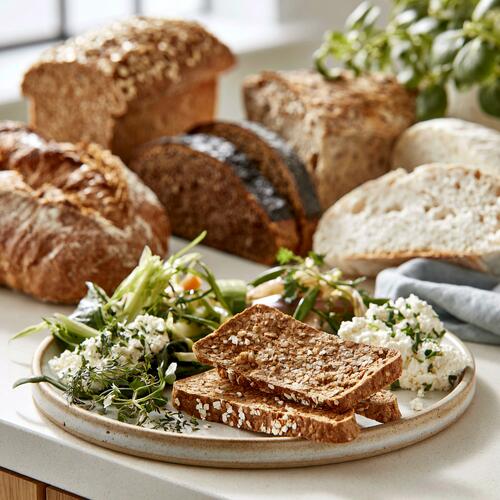 Bread During Weight Loss: Which to Choose and How Much to Eat
Bread often becomes the first product that people remove from their diet when they decide to lose weight. Along with it go breakfast sandwiches, a slice of bread with soup, and the usual cheese toast. For a while, such restriction can really help you eat less. But soon a strong craving for baked goods appears, and an ordinary slice of bread starts to feel like a diet violation.
In reality, you do not need to completely give up bread to lose weight.
You can eat bread during weight loss. It does not stop fat burning and does not automatically turn into body fat. Weight goes down when the body receives less energy than it burns. Therefore, what matters is not the mere presence of bread on the menu, but its amount, calorie content, and combination with other foods.
A practical guideline for most people losing weight: 30-60 g of bread per day. This is about one large or two small slices. A more precise serving depends on your total calorie intake, appetite, and other sources of carbohydrates.
Can You Eat Bread While Losing Weight?
You can, if it fits into your daily calorie allowance.
For example, two small slices of bread with a total weight of 50 g may contain about 110-140 kcal. Such a portion can easily fit into even a moderately low-calorie diet, especially if the bread is used as part of a balanced meal.
The problem usually doesn't come from the bread itself, but from the spreads and toppings:
-
butter;
-
full-fat cheese;
-
sausage;
-
mayonnaise;
-
pâté;
-
nut butter;
-
sweet spreads.
Two slices of bread may contain about 130 kcal. But a sandwich with butter, cheese, and sausage can already reach 350-500 kcal.
Therefore, the question is better phrased not as: “Can I eat bread?” but as: “What portion of bread can I include in my diet?”
How Much Bread Can You Eat While Losing Weight
There is no universal norm. The amount depends on your calorie intake, usual menu, and how much bread helps keep you full.
To start, you can use the following guidelines:
| Bread Portion | Approximate Quantity | Approximate Calories |
|---|---|---|
| 25-30 g | 1 small slice | 55-85 kcal |
| 40-50 g | 1 large or 2 thin slices | 90-140 kcal |
| 60-80 g | 2 large or 3 small slices | 135-220 kcal |
| 100 g | Several slices | 200-300 kcal |
The calorie content is approximate. Always check the information on the package of the specific product.
For most people losing weight, a convenient portion is 30-60 g per day. With a higher calorie diet, active workouts, or a greater need for carbohydrates, the amount may be larger.
Example for a 1200-1400 kcal Diet
You can leave 30-40 g of bread per day:
-
one toast with egg for breakfast;
-
a small piece of bread with soup;
-
an open-faced sandwich with cream cheese and fish.
Example for a 1500-1700 kcal Diet
You can include 40-70 g of bread:
-
two small slices for breakfast;
-
one slice in the morning and one with lunch;
-
a small sandwich with a protein filling.
These are not strict norms. A person can lose weight even with a larger bread portion, as long as there is a calorie deficit.
Which Bread Is Best to Choose During Weight Loss
The most practical option for a daily diet: bread made with whole grain, wholemeal, or rye flour, containing enough fiber.
The World Health Organization recommends getting carbohydrates mainly from whole grains, vegetables, fruits, and legumes. For adults, at least 25 g of natural dietary fiber is also recommended daily. Such bread usually contains more fiber, vitamins, and minerals than bread made from refined flour. Fiber increases the bulk of food and may help to keep you satiated for longer. The label “whole grain” on the front of the package does not guarantee a good composition. Be sure to check the ingredient list and nutritional value.
How to Read the Ingredients of Bread
Do not rely solely on color, name, and pictures of grain on the packaging.
1. See Which Flour Is Listed First
It’s a good sign if the first ingredients are:
-
whole wheat flour;
-
wholemeal wheat flour;
-
coarse rye flour;
-
wholemeal rye flour;
-
whole ground grain;
-
sprouted grain.
If the first ingredient is refined wheat flour, what you have is mostly regular white bread, even if seeds, bran, or a small amount of rye flour have been added.
2. Check the Fiber Content
A practical guideline: 5-6 g of fiber per 100 g of product.
Some good options may have less, so you shouldn’t judge bread by one number alone. However, when comparing two similar loaves, a higher fiber level is often an advantage.
When evaluating whole grain products, it is also recommended to look not only at the color, but also the order of ingredients and fiber per serving. at the calories
Most types of bread contain about 200-300 kcal per 100 g.
Bread with lots of seeds, nuts, oil, and dried fruit can be much higher in calories than ordinary whole grain bread. A healthy composition does not mean that you can eat the product without watching the portion.
4. Pay Attention to Added Sugar
A small amount of sugar does not make bread forbidden. Sugar may be used for yeast activity, flavor, and crust color.
But if sugar is accompanied by molasses, syrup, honey, dried fruit, or caramel, the calorie content may be higher.
5. Don’t Be Afraid of a Long Ingredients List
A long list is not always a bad sign. It may include different grains, seeds, sourdough, spices, and vitamins.
What’s more important is to understand:
-
which flour is used;
-
how much fiber is in the product;
-
whether there is a lot of oil and sugar;
-
how many calories are in 100 g;
-
the weight of one slice.
Comparison of Different Types of Bread
Whole Grain Bread
One of the most convenient options when losing weight.
It is made from flour that retains the bran and germ of the grain. As a result, the product usually contains more fiber and micronutrients.
Advantages:
-
helps diversify sources of fiber;
-
pairs well with eggs, fish, poultry, and cream cheese;
-
suitable for toasts and sandwiches;
-
often more satiating than soft white bread.
However, whole grain bread is not necessarily low in calories. You also need to weigh and account for it.
Rye Bread
Rye bread can be a good choice if it really contains predominantly coarse, wholemeal, or whole grain rye flour.
It usually has a denser texture and a distinctive flavor. A small piece is often enough for a sandwich or to accompany soup.
However, the word “rye” on the label does not mean the product is made only from rye flour. Many types are mixed rye-wheat, with refined wheat flour possibly topping the ingredients list.
Borodinsky Bread
Borodinsky bread can be eaten when losing weight, but you shouldn’t consider it a diet product just because it is dark in color.
Its composition may include:
-
rye and wheat flour;
-
malt;
-
molasses;
-
sugar;
-
coriander.
The calories in Borodinsky bread are often comparable to other types. Its main advantage is its rich taste: some people are satisfied with a small slice.
White Bread
White bread is not forbidden while losing weight.
It usually contains less fiber, so it may be less filling than whole grain bread. But if you like white bread, a small portion will not interfere with your weight loss.
The NHS notes that white bread does contain vitamins and minerals, but usually less fiber compared to whole grain bread. – take one small slice;
-
add a source of protein;
-
add some vegetables to the meal;
-
record the entire portion in your food diary.
This approach is usually more sustainable than a total ban followed by overeating.
Bread with Seeds
Seeds add flavor, texture, unsaturated fats, and some minerals. But they also increase the calorie content of bread.
Bread with lots of sunflower, pumpkin, flax seeds, or nuts can contain more calories than regular white bread.
This does not make it bad. You just need to reduce the portion or track it carefully.
Sourdough Bread
Sourdough bread can be included in a weight loss diet if you like it and it suits you.
Sourdough affects fermentation, flavor, and the texture of bread, but does not make the product lower in calories. Two breads with the same calories will affect your energy balance the same, regardless of whether they are made with yeast or sourdough.
Yeast-Free Bread
The phrase “yeast-free” is often used as a marketing point.
For weight loss, the absence of baker’s yeast makes no significant difference. Yeast-free bread may have as many calories as regular bread, or even more in some cases.
Choose it based on taste, digestibility, and ingredients—not in hopes of speeding up weight loss.
Protein Bread
In protein bread, some of the flour may be replaced with plant protein, seeds, or other ingredients.
It sometimes contains more protein and fiber, but often remains quite high in calories due to seeds and fats. Always compare the values per 100 g and per slice.
Gluten-Free Bread
Gluten-free bread is necessary for people with celiac disease and may be used for other medical reasons.
If you are losing weight for general health, you do not need to switch to gluten-free bread. Gluten-free baked goods are often made from rice, corn flour, and starch. They may contain little fiber and the same or more calories than regular bread.
Which Is Better for Weight Loss: Bread or Crispbread
Crispbread may seem lighter, but per 100 g it is often higher in calories than bread. Much of the water is removed, so nutrients and calories become more concentrated in a smaller volume.
For example:
-
100 g of bread may contain about 220-270 kcal;
-
100 g of crispbreads may contain about 320-380 kcal.
At the same time, one crispbread weighs little and may contain only 25-45 kcal. So crispbreads are convenient not due to a low calorie count per 100 g, but because of their fixed portion size.
The main danger: unknowingly eating five or six crispbreads instead of just one or two.
Choose whatever keeps you fuller. If after two crispbreads you still want to eat, but one regular slice of bread with egg keeps you full for hours, bread will be the more practical choice.
Is Toasted Bread Healthier?
After toasting, bread loses water but the calories remain.
If you put a 40 g slice into the toaster, after toasting it will become lighter. But its overall calories will remain about the same.
The error happens when a person:
-
weighs already toasted bread;
-
chooses regular bread in their calorie tracker;
-
calculates the portion based on the reduced post-toasting weight.
It is better to weigh the slice before toasting, or use data specifically for finished toast if the manufacturer provides it.
Can You Eat Bread in the Evening?
The time of day alone won’t cause bread to turn into fat.
You can eat bread in the morning, afternoon, or evening. For weight changes, total calories for the day and regular meals matter more.
In the evening, bread pairs well with:
-
fish;
-
poultry;
-
eggs;
-
cottage cheese;
-
vegetable salad;
-
soup;
-
low-fat cheese.
However, a large sandwich with sausage, mayonnaise, and cheese before bed could create a calorie surplus. The reason will be the size and composition of the meal, not the timing.
What to Combine with Bread to Stay Fuller Longer
Bread itself is mainly a source of carbohydrates. For a more filling meal, add protein and vegetables.
Successful Combos
-
whole grain toast, egg, and tomato;
-
bread, cream cheese, and lightly salted fish;
-
toast, tuna canned in water, and cucumber;
-
bread, baked turkey, and vegetables;
-
rye bread, cottage cheese, and herbs;
-
bread, hummus, and vegetables;
-
toast, avocado, and egg;
-
a small piece of bread with soup containing meat or legumes.
A high-protein breakfast with vegetables and whole grains is often more filling than bread with a sweet spread or a couple of plain toasts.
Less Filling Options
-
bread with jam;
-
toast with honey;
-
white bread with a small amount of butter;
-
bread with chocolate spread;
-
several plain crispbreads with no extras.
These options are not forbidden, but hunger may come back faster after them.
How to Log Bread in a Calorie Tracker
One of the main sources of error: adding bread to your food diary “by slices.”
Slices vary. One thin slice may weigh 20 g, while a thick piece from the same loaf could be 50-60 g.
The correct sequence:
-
Place a plate on the kitchen scale.
-
Zero out the weight.
-
Add the bread.
-
Record the exact weight.
-
Find the product by name or barcode.
-
Check if the calorie count matches the packaging.
-
Enter the actual portion weight.
In SIT30, bread can be found by name or added using the barcode scanner. The app will calculate calories and account for them in your daily allowance.
Calculate your allowance and keep a food diary in SIT30
Why Bread Sometimes Interferes with Weight Loss
Bread itself is rarely the only reason for lack of results. But there are situations where the amount really is too much.
Bread Is Eaten in Addition to the Main Side Dish
For example, in one meal there is:
-
pasta;
-
bread;
-
sweet drink;
-
dessert.
Each product separately may be fine. But together they greatly increase the total calories.
It's not always necessary to remove bread completely. Sometimes it’s enough to pick just one: a large serving of the side dish or a few slices of bread.
Spreads Are Not Counted
A person logs 60 g of bread, but forgets to add:
-
15 g of butter;
-
30 g of cheese;
-
20 g of mayonnaise;
-
several slices of sausage.
As a result, the real calorie count of sandwiches can be two or three times higher than expected.
Bread Is Eaten Without Satiety
Soft bread is easy to eat almost automatically. You may have several pieces while making dinner, and then add two more to the main course.
A simple rule helps in these cases: slice out the needed portion in advance and put away the rest of the loaf.
You Choose Very High-Calorie Bread
Bread with nuts, seeds, oil, cheese, and dried fruit can be nutritious, but high nutritional value does not cancel out high calories.
Pay attention to the numbers, not just labels like “fitness,” “whole grain,” “natural,” or “healthy.”
Is It Necessary to Completely Exclude Bread
Complete exclusion is justified for medical reasons or when a person consciously prefers to get carbs from other foods.
It's not necessary to remove bread just for weight loss.
Strict bans can lead to several problems:
-
bread becomes especially desirable;
-
one sandwich feels like a failure;
-
after breaking the ban, a person may overeat;
-
the diet becomes less convenient;
-
it's harder to eat away from home.
It’s much more practical to learn to control your portion.
A Sample Day with Bread While Losing Weight
Below is an example of how bread can be included in a typical diet.
Breakfast
-
whole grain bread: 50 g;
-
two eggs;
-
tomatoes and cucumbers;
-
coffee or tea without sugar.
Lunch
-
chicken fillet;
-
buckwheat;
-
vegetable salad;
-
vegetable oil, measured by weight.
Dinner
-
fish;
-
roasted vegetables;
-
plain yogurt or light sauce.
Bread is part of the menu but does not replace protein, vegetables, or other nutrient sources.
How to Choose Bread in the Store: A Quick Checklist
Check these five points before buying:
-
Whole grain, wholemeal, or rye flour is listed first in the ingredients.
-
The calorie content is appropriate for your usual serving.
-
The product preferably contains at least 5-6 g of fiber per 100 g.
-
A lot of seeds, oil, and dried fruit is accounted for in the calorie count.
-
You like the bread’s taste and can stick to a reasonable portion.
There’s no need to look for the perfect loaf. Bread should be available, tasty, and convenient for your usual diet.
Common Mistakes When Choosing Bread
Mistake 1. Buying Bread by Color Alone
Dark bread may be colored with malt, molasses, or other ingredients. Color does not indicate actual whole grain content.
Mistake 2. Thinking Any Bread with Seeds Is Diet-Friendly
Seeds add nutritional value, but also raise calorie content.
Mistake 3. Not Weighing Your Portion
The phrase “one slice” is too vague. Slice sizes can vary several times over.
Mistake 4. Thinking Crispbreads Are Not Caloric
Per 100 g, crispbreads are often higher in calories than regular bread.
Mistake 5. Looking for Carb-Free Bread
Bread is a carbohydrate-rich food. That's normal. For weight loss, you don't need to exclude carbohydrates altogether—unless medically necessary.
Mistake 6. Being Afraid of Yeast
Yeast does not prevent weight loss. Portion size and calories are much more important in practice.
Quick Summary
You can eat bread while losing weight.
The best everyday choices are usually whole grain or rye bread with a clear ingredient list and enough fiber. But even regular white bread won’t stop weight loss if you control your portion.
Start with 30-60 g per day and see if it suits your appetite and diet. Combine bread with protein foods and vegetables, and account for butter, cheese, and other toppings.
The main rule is simple: don’t look for bread that makes you lose weight, but choose a product that helps you maintain suitable calorie intake without constantly feeling deprived.