

Winter Diet: How to Support Immunity and Energy
 Winter is a time when our body especially needs care and support. Cold weather, short days, lack of sunlight, and increased risks of colds require special attention to nutrition. A properly composed winter diet will help strengthen immunity, preserve energy, and improve overall well-being. In this article, we'll look at which foods should be included in your winter diet: warm dishes, root vegetables, and foods rich in vitamins.
Warm dishes for warmth and satiety
Why is this important?
In cold weather, the body spends more energy maintaining body temperature. Warm dishes not only provide internal warmth but also help improve digestion and give a sense of comfort.
Warm dish ideas:
-
Soups and broths:
- Chicken broth: Rich in protein and beneficial amino acids, helps to strengthen the immune system.
- Vegetable cream soups: made from pumpkin, carrots, broccoli—packed with vitamins and fiber.
- Legume soups: lentil, bean—an excellent source of plant-based protein and iron.
-
Porridge:
- Oatmeal porridge: Rich in fiber and slow carbohydrates that ensure a long-lasting feeling of fullness.
- Buckwheat porridge: A source of iron, magnesium, and rutin.
- Millet porridge: Contains B vitamins and improves gastrointestinal function.
-
Stewed and baked dishes:
- Stewed meat with vegetables: Provides the body with proteins, beneficial vitamins, and fiber.
- Casseroles made with vegetables and grains: A tasty and healthy dish that both nourishes and warms.
Root vegetables—a treasure trove of nutrients
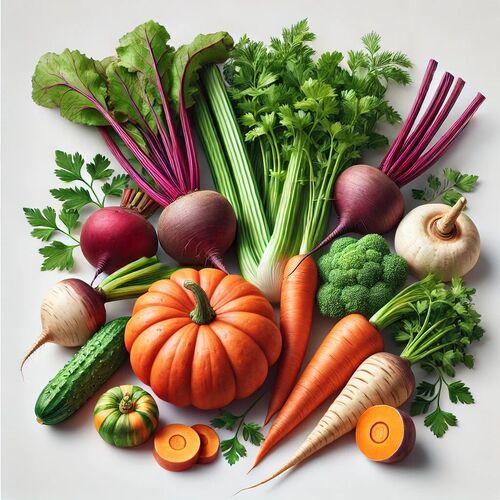 Benefits of root vegetables:
Root vegetables are a true treasure of vitamins, minerals, and fiber. They keep well in the winter and are affordable.
Healthy root vegetables:
-
Carrots:
- Rich in beta-carotene (provitamin A), which supports eye and skin health.
- Contains antioxidants that boost immunity.
-
Beets:
- A source of folic acid, necessary for blood formation.
- Contains antioxidants and promotes body detoxification.
-
Pumpkin:
- Contains vitamins A, E, C, and B-group vitamins.
- High in fiber, improves digestion.
-
Turnip and parsnip:
- Contain vitamin C and potassium.
- Improve metabolism and support the cardiovascular system.
-
Celery root and parsley root:
- Possess diuretic properties, help remove excess fluid.
- Rich in vitamins and minerals.
How to include root vegetables in your diet:
- Salads: Grated raw carrots and beets dressed with olive oil and lemon juice.
- Baked vegetables: Mix chopped root vegetables with vegetable oil and spices, bake until soft.
- Soups and stews: Add root vegetables to main and side dishes to further boost their nutritional value.
Foods high in vitamins
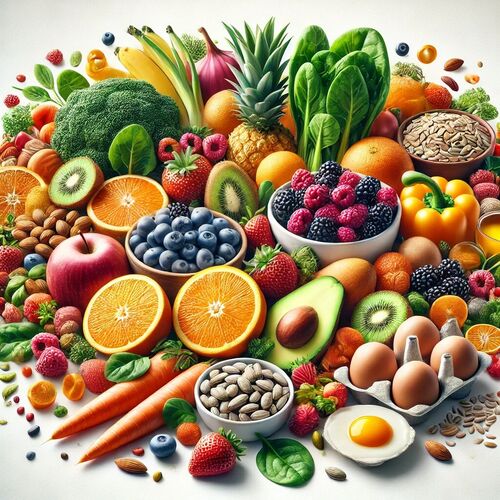 Why is it important to consume more vitamins in winter?
In winter, access to fresh fruits and vegetables decreases, and there's less sunlight, which can lead to deficiencies in important vitamins such as vitamin D and C. This can weaken immune defenses and lower energy levels.
Vitamin C:
-
Sources:
- Citrus fruits: Oranges, tangerines, grapefruits.
- Kiwi: Just one fruit provides your daily vitamin C requirement.
- Sauerkraut: Contains more vitamin C than fresh cabbage as well as beneficial probiotics.
-
Benefits:
- Strengthens immunity.
- Antioxidant, protects cells from damage.
Vitamin D:
-
Sources:
- Fatty fish: Herring, salmon, mackerel.
- Egg yolks.
- Dairy products and butter.
-
Benefits:
- Supports bone and dental health.
- Affects mood and the immune system.
B-group vitamins:
-
Sources:
- Whole grains: Buckwheat, oats, brown rice.
- Nuts and seeds: Almonds, walnuts, sunflower seeds.
- Legumes: Beans, peas, chickpeas.
-
Benefits:
- Involved in energy metabolism.
- Support the nervous system.
Antioxidants and minerals:
-
Ginger:
- Possesses anti-inflammatory properties.
- Improves blood circulation and heat exchange.
- Can be added to tea, smoothies, or dishes.
-
Honey:
- A natural source of energy and micronutrients.
- Boosts the immune system.
-
Garlic and onion:
- Contain phytoncides with antibacterial properties.
- Help fight off infections.
Additional tips to maintain immunity and energy in winter
-
Proper hydration:
- Warm drinks: Herbal teas (chamomile, linden, rosehip), dried fruit compotes.
- Water with lemon and honey: Helps maintain water balance and provides vitamins.
-
Regular meals:
- Don't skip meals.
- Eat regularly, including proteins, healthy fats, and complex carbohydrates in your diet.
-
Physical activity:
- Maintains metabolism.
- Improves mood and strengthens the immune system.
-
Avoid excessive sugar and fatty foods:
- Reduces stress on the immune system.
- Helps maintain a healthy weight and energy.
-
Sleep and rest:
- Quality sleep is essential for recovery.
- Stress negatively affects immunity.
The winter diet plays a key role in maintaining health, immunity, and energy during the cold season. Including warm dishes, root vegetables, and vitamin-rich foods in your menu helps your body resist seasonal illnesses, and makes you feel more energetic and vigorous. Take care of your nutrition, lead an active lifestyle, and enjoy the winter days in perfect health!
Take care of yourself and stay healthy this winter!