Chia Seeds or Flax Seeds: What to Choose for Weight Loss, Gut Health, and Omega-3
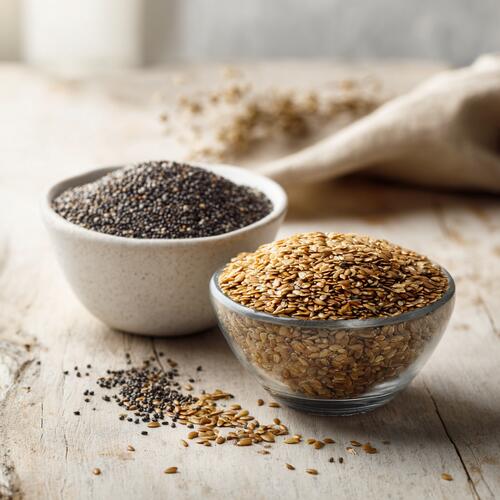 Chia seeds and flax seeds are often bought with the same goal: to add fiber, stay full longer, improve gut function, and support a diet during weight loss. Both options are worthy, but they really behave differently in dishes, are digested differently, and have distinct effects on the body.
Below is a breakdown without myths: who benefits more from chia, who benefits more from flax, how to eat without bloating, and how much you need.
In short:
-
Want maximum omega-3 benefit for reasonable money: flax wins more often.
-
Need a convenient thickener for yogurt, pudding, or oatmeal to keep it tasty and simple: chia usually wins.
-
Have gut sensitivity, bloating, or irritable bowel syndrome: start with small doses and choose what feels best for you.
-
Want maximum benefit from flax: usually requires grinding or very thorough chewing.
Comparison Table: Chia vs Flax
| Criterion | Chia Seeds | Flax Seeds |
|---|---|---|
| Satiety | High, due to the gel | High, but without pronounced gel |
| Texture in dishes | Thicken, make "pudding" | Mainly an additive, slight thickening |
| Convenience | Just soak and ready | Better to grind or chew thoroughly |
| Omega-3 (ALA) | Yes | Yes, often chosen as a more "practical" option |
| For the gut | Gentler due to gel, with sufficient water | Stronger "fiber" effect, better ground |
| Risk of bloating | Possible with large portions and no water | Possible, especially if dose is suddenly increased |
| Best dishes | Yogurt, pudding, smoothies, oatmeal | Porridge, cottage cheese, salad, baked goods |
What are the main differences
1) Fiber and Satiety
Both chia and flax are rich in fiber. For weight loss this matters for three reasons:
-
slows stomach emptying, satiety lasts longer
-
reduces chances for snacking and sweet cravings
-
improves regularity of bowel movements if enough water
Chia are especially convenient because they quickly absorb liquid and turn into a gel. This helps make "voluminous" food with low calories: yogurt, pudding, overnight oats in a jar. An example of a simple chia snack can be found in the recipes on the site.
Flax also works for satiety, but the feeling is different: it doesn’t provide the same strong “gel” in yogurt, but is perfect in porridge, salads, baked goods, cutlets as a fiber additive.
2) Omega-3 and Fatty Acids
Both options contain ALA (alpha-linolenic acid), plant-based omega-3. This is a plus in the diet, but it's important to remember: ALA partially converts to EPA and DHA, and the conversion rate in people is low. So seeds are not equal to fish, but as everyday nutritional support they're suitable.
Practical takeaway: if omega-3 is your priority, flax is usually chosen more often due to its familiar accessibility and price. If convenience and texture matter more, chia is often easier to include in your routine.
3) Flax’s “signature”: Lignans
Flax is valued not only for fiber and ALA, but also for lignans. These are plant compounds often discussed in the context of antioxidant support and hormonal balance. In everyday choice, this means one thing: flax contains unique components that chia has less of.
But: to really get the benefit, flax seeds are better absorbed when ground or chewed very thoroughly. Whole seeds often pass through almost unchanged.
4) Ease of Preparation
Chia:
-
ideal for “jar” breakfasts
-
easy to dose
-
neutral taste
-
thicken perfectly
Flax:
-
works better in porridge, cottage cheese, salads
-
good in baking and as a breading
-
needs grinding for maximum effect
If you create content and recipes, chia often wins visually: puddings, layers, gloss, “dessert-like” appearance.
What to choose for weight loss
Choose what you’ll actually eat regularly. Both products help with weight loss not by “burning fat,” but because they:
-
increase satiety
-
reduce urge to snack
-
add fiber
-
help manage calories more carefully in your diet
If you’re always hungry and crave sweets
Chia is usually more convenient. They increase the volume of the meal and provide a “dense” satiety, especially with a protein base: yogurt, cottage cheese, kefir.
If you want maximum benefit for minimal cost
People usually choose flax. It’s a convenient daily habit, but best when ground.
If your goal is gut health and regularity
Both are suitable.
Chia can act more gently if you drink enough water.
Flax often gives a more noticeable effect, but you should start with a small dose.
How to take chia and flax seeds for effect
Chia seeds: how to eat properly
Best: soak 10–15 minutes (or overnight).
Options:
-
yogurt + chia + berries
-
overnight oats in a jar
-
smoothie (add chia at the end, let it sit)
-
pudding with milk/kefir
Important: don’t eat large dry portions of chia without liquid.
Flax seeds: how to take properly
To get the best benefit:
-
grind in small portions (coffee grinder)
-
add to ready meals: porridge, cottage cheese, salad
-
don’t overheat for a long time in the pan
If flax is whole, chew thoroughly.
Daily Dosage: How Much Can You Have
Starting dose for most people:
-
chia: 1 tsp per day for 3–5 days, then 2 tsp, then up to 1 tbsp if well tolerated
-
flax: 1 tsp ground for 3–5 days, then up to 1 tbsp per day
If you have bloating, reduce the dose and add more water, don’t just “endure” it.
How to avoid bloating and discomfort
-
Increase the dosage gradually.
-
Drink water: fiber without water often makes you feel worse.
-
Eat seeds in the first half of the day while getting used to them.
-
If your gut is sensitive, start with half a teaspoon.
Contraindications and Cautions
Caution is needed if:
-
exacerbation of gastrointestinal diseases
-
problems with swallowing (especially important for chia)
-
you're taking medications where it’s important to separate taking them from large amounts of fiber
For chronic conditions, it's better to discuss the dose with a doctor.
What to choose in the end: ready-made scenarios
Choose chia if:
-
you want quick breakfasts and desserts without cooking
-
you need a pudding-like texture
-
maximum ease of use is important
Choose flax if:
-
you want a budget option for every day
-
you're willing to grind the seeds
-
you eat porridge and cottage cheese more often than puddings
Ideally: keep both at home and alternate.
FAQ
Which is healthier: chia or flax?
Both are healthy. Chia is more convenient and often better for satiety due to its gel. Flax is more often chosen as a daily fiber source, especially if ground.
Which is better for weight loss?
The one that helps you maintain a calorie deficit and snack less. Chia is usually more convenient in snacks; flax is more convenient as an addition to basic dishes.
Do you need to soak chia?
Preferably yes, at least 10–15 minutes.
Do you need to grind flax?
Recommended. This way nutrients are better absorbed.
How much can you have per day?
Usually 1–2 tsp to start, then up to 1 tbsp if tolerated well. Always with water.