10.04.2026
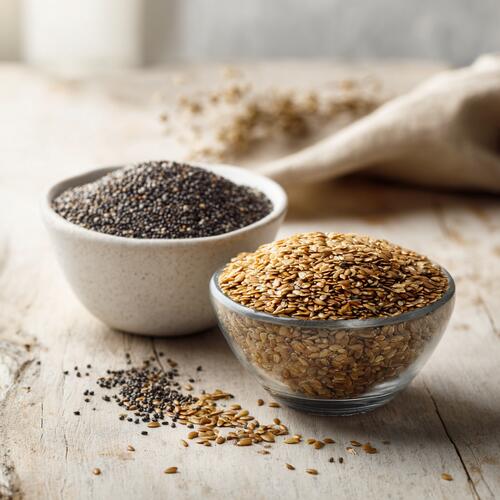 Chia seeds and flax seeds are often bought with the same goal: to add fiber, stay full longer, improve gut function, and support a diet during weight loss. Both options are worthy, but they really behave differently in dishes, are digested differently, and have distinct effects on the body.
Below is a breakdown without myths: who benefits more from chia, who benefits more from flax, how to eat without bloating, and how much you need.
In short:
-
Want maximum omega-3 benefit for reasonable money: flax wins more often.
-
Need a convenient thickener for yogurt, pudding, or oatmeal to keep it tasty and simple: chia usually wins.
-
Have gut sensitivity, bloating, or irritable bowel syndrome: start with small doses and choose what feels best for you.
-
Want maximum benefit from flax: usually requires grinding or very thorough chewing.
08.04.2026
 What "works" really means in practice
A low-calorie dessert works if 3 conditions are met:
-
it can fit into your calorie deficit
-
after eating it you don't feel like you need "something else"
-
it doesn't trigger a binge on cookies, candy, or mindless snacking
That's why not just calories are important, but also satiety, taste, habits, and triggers.
06.04.2026
 Does Jump Rope Work for Weight Loss
Yes, a jump rope can be an effective tool because it is an intense cardio workout that quickly raises your heart rate. But an important point: weight loss happens due to a calorie deficit, and workouts help you maintain this deficit and increase your total energy expenditure.
If you’re jumping but your diet is not under control, your weight may not change. So the logic is: nutrition plus regular activity. In this sense, the jump rope is a great addition to walking and strength training.
04.04.2026
 What should be considered a problem
If you sometimes eat later than usual, it’s not always “night eating syndrome.” The problem usually looks like this:
-
in the evening, there is a strong hunger that’s hard to control
-
you crave sweets and fast carbs
-
overeating happens almost automatically
-
after dinner, you want more and more, especially closer to night
02.04.2026
 What’s Important to Understand Before Starting
The main goal for a beginner is not speed or miles. The main goal is to turn running into a habit and not quit after a week. If you start gently and gradually increase your workload, your body will adapt, your breathing will become steadier, and your legs will stop feeling heavy.
A healthy activity benchmark is 150 minutes of moderate activity per week or 75 minutes of vigorous effort, plus strength training twice a week.
Running can cover part of these minutes, but for a beginner it’s better to start by alternating running with walking.
31.03.2026
 Why Chia Is So Loved in Healthy Eating Recipes
Chia seeds are convenient because:
-
they quickly thicken a dish and give a creamy texture
-
add fiber and a bit of healthy fats
-
fit easily into breakfasts, snacks, and desserts
Important: chia swells. It's better to soak them in advance and not make large portions if you're not used to them.
29.03.2026
 The Main Truth About Weight Loss and Sports
Sports help you lose weight, but they are not the only factor. Weight goes down when there’s a calorie deficit, and sports make achieving a deficit easier: they increase energy expenditure, improve body shape, and reduce stress. Therefore, the best sport for weight loss is the one you can do regularly for 8-12 weeks, not the one that looks perfect on paper.
 Why Strength Training at Home Really Works
 What Changes After 40 and Why Losing Weight Seems Harder
 How to Make a Filling Healthy Eating Breakfast with 300-450 kcal