Is it necessary to have cheat meals while losing weight: benefits, drawbacks, and when they are counterproductive
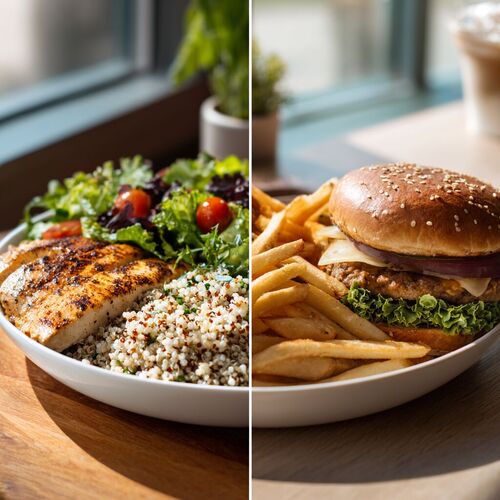 Do You Need Cheat Meals When Losing Weight?
Cheat meals are one of the most debated topics in weight loss. Some consider them essential for boosting metabolism, while others are convinced that cheat meals are a direct path to breakdowns and setbacks.
Let’s calmly break it down with facts: are cheat meals necessary for weight loss, when can they be helpful, and when do they only get in the way of results.
What a Cheat Meal Really Is
A cheat meal is not just off-plan eating.
The classic definition:
-
a planned meal
-
with higher calories
-
in the context of a deficit
-
without guilt
Important to distinguish:
-
a cheat meal is a controlled deviation
-
a breakdown is uncontrolled overeating
In practice, these concepts are often confused.
Why Cheat Meals Were Invented in the First Place
The original idea of cheat meals was based on three arguments:
-
Psychological relief
-
Temporary increase in calories
-
Help with long-term adherence to diet
It sounds logical in theory. In reality, the effect depends greatly on the person.
Do Cheat Meals Boost Metabolism?
Short answer: no.
A single meal:
-
does not speed up metabolism for long
-
does not override bodily adaptation
-
does not burn fat by itself
To truly influence metabolism, you need not cheat meals, but:
-
gaining muscle mass
-
increasing overall activity
-
adequate nutrition and recovery
A cheat meal may temporarily increase weight due to water and glycogen, which is often mistaken for a setback.
When Cheat Meals Can Be Helpful
There are situations where a cheat meal can indeed help.
Scenario 1. Long-Term Diet Without Breaks
If a person:
-
has been in a deficit for many months
-
strictly limits their diet
-
feels tired and irritable
Then a rare, planned cheat meal can reduce psychological stress.
Scenario 2. High Discipline and Control
Cheat meals work best for those who:
-
know how to stop
-
don’t turn one meal into a whole day of overeating
-
easily return to their routine
When Cheat Meals Get in the Way of Weight Loss
In reality, this happens much more often.
Problem 1. A Cheat Meal Turns into a Cheat Day
One meal easily becomes:
-
an evening
-
then a day
-
then a weekend
As a result, the weekly deficit is completely wiped out.
Problem 2. Loss of Control
For many, a cheat meal:
-
triggers cravings for sweets
-
breaks routine
-
leads to several days of overeating
This is especially relevant for people with previous dieting and breakdown experiences.
Problem 3. The Illusion That a Cheat Meal is Mandatory
Some have cheat meals not because they need them, but because the internet says so. As a result, they harm their progress unnecessarily.
Cheat Meal and Plateaus. Does It Help Break Through?
Sometimes, weight drops after a cheat meal. But the reason is usually not fat loss.
What happens:
-
water levels change
-
stress drops
-
sleep normalizes
You can achieve the same by:
-
increasing your steps
-
improving sleep
-
taking a maintenance break
All without the risk of a breakdown.
Alternatives to Cheat Meals
In many cases, alternatives work better.
Maintenance Eating for 7–14 Days
This means:
-
without overeating
-
without restrictions
-
with preserved meal structure
This approach is often more effective and psychologically safer than a cheat meal.
Flexible Dieting
When:
-
no forbidden foods
-
everything fits within your calories
-
no built-up tension
With this approach, the need for cheat meals often disappears entirely.
Planned Increase in Calories
A small increase in calories for 1–2 days:
-
without chaos
-
without loss of control
-
with tracking in the app
In SYPB 30 this is easy to implement, simply by temporarily changing the goal. The calorie counter will automatically recalculate your daily target.
Do You Personally Need Cheat Meals?
Ask yourself honest questions:
-
Can I stop after just one meal?
-
Do I get back on track the next day?
-
Does this trigger overeating for me?
-
Do I actually have a weight loss plateau?
If the answer to at least one question is "no," a cheat meal will likely do more harm than good.
Who Shouldn’t Do Cheat Meals?
-
people with frequent breakdowns
-
with high dietary tension
-
in the early stages of weight loss
-
with very low calorie intake
Who Might Benefit from Cheat Meals?
-
those with stable eating control
-
on a long-term diet
-
with a high level of self-discipline
-
as a rare, not regular, tool
Short Conclusion
Cheat meals are not necessary for weight loss.
They don’t boost metabolism and don’t guarantee breaking through a plateau.
For most people:
-
cheat meals get in the way more often than they help
-
it’s safer to use maintenance or a flexible approach
If you are losing weight steadily, without much stress and with eating control, you don’t need cheat meals.
And to manage calories without stress, change goals, and see real progress, the SYPB 30 calorie counter helps you keep the process under control without extremes.