Healthy Eating Plate
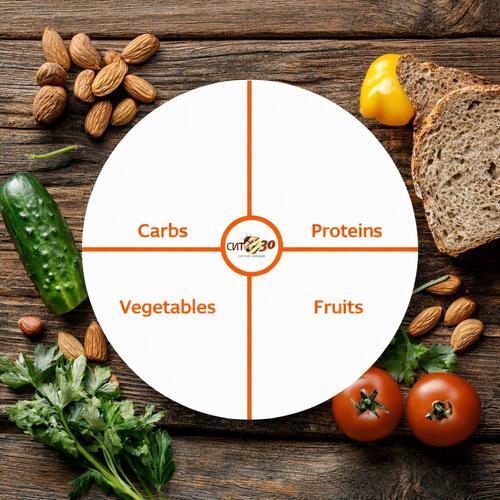 Healthy Eating Plate: How to Properly Distribute Foods and Control Portion Sizes
Healthy eating is not only about healthy foods but also about the right proportions. To make food selection easier and visually control portion sizes, nutritionists around the world recommend using the “Healthy Eating Plate” method. In this article, we’ll explain how to create a balanced diet following a simple rule: ½ vegetables, ¼ protein, and ¼ complex carbohydrates.
What is the “Healthy Eating Plate”?
The “Healthy Eating Plate” is a convenient model that helps you quickly navigate food choices and combine them optimally in one meal. It’s important to focus not only on selecting high-quality ingredients but also on correctly distributing the portions.
- Half of the plate (½) — fresh vegetables and/or greens.
- Quarter of the plate (¼) — protein-rich foods.
- Quarter of the plate (¼) — complex carbohydrates (grains, whole grain bread, pasta made from durum wheat).
Such a ratio helps balance energy levels, provide the body with essential vitamins and minerals, and maintain a healthy weight.
1. Half the plate: vegetables and greens
 Why is this important?
Vegetables are a source of fiber, vitamins and minerals. They saturate the body with nutrients, improve digestion, and promote proper metabolism.
Which vegetables should you choose?
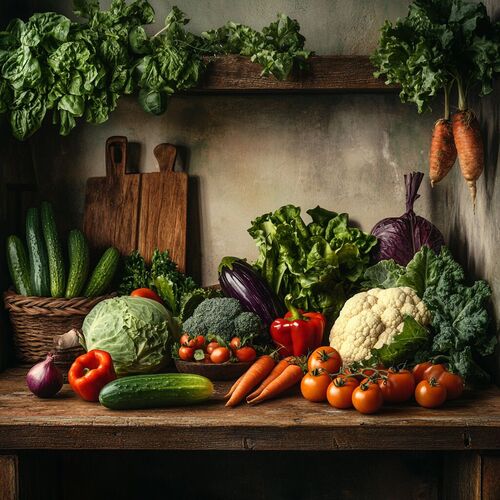
- Leafy greens (spinach, arugula, lettuce): rich in vitamins A, C, K, and folic acid.
- Cruciferous (broccoli, cauliflower, white cabbage): contain substances that strengthen the immune system.
- Juicy vegetables (cucumbers, tomatoes, bell peppers): high in water and antioxidants that help cleanse the body.
- Root vegetables (carrots, beets): an excellent source of beta-carotene and other phytonutrients.
It’s important to alternate different types of vegetables to get the full spectrum of nutrients. Part of this half of the plate can be made up of fruit.
2. Quarter of the plate: proteins
 Why do we need proteins?
Protein is the “building material” for muscles, hormones, and enzymes. Getting enough protein in your diet gives a feeling of fullness, helps support a healthy immune system, and normalizes metabolism.
Sources of protein
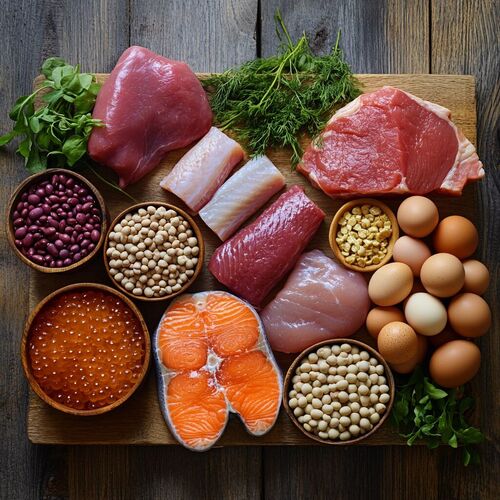
- Lean meats (chicken, turkey, rabbit): contains less fat than red meat, and is easily absorbed.
- Fish and seafood (salmon, tuna, shrimp): rich in polyunsaturated Omega-3 and Omega-6 fatty acids.
- Eggs: easily digested protein, as well as vitamins and minerals (D, B12, and others).
- Plant proteins (legumes, tofu, tempeh): a great option for vegetarians and those reducing animal products.
It’s recommended to choose different protein sources so that the body receives a full range of amino acids.
3. Quarter of the plate: complex carbohydrates
 What are complex carbohydrates?
Unlike simple carbohydrates (sugar, pastries, sweets), complex carbohydrates take longer to digest, providing the body with a gradual supply of energy. They help maintain stable blood sugar levels and prevent sharp insulin spikes.
Examples of complex carbohydrates
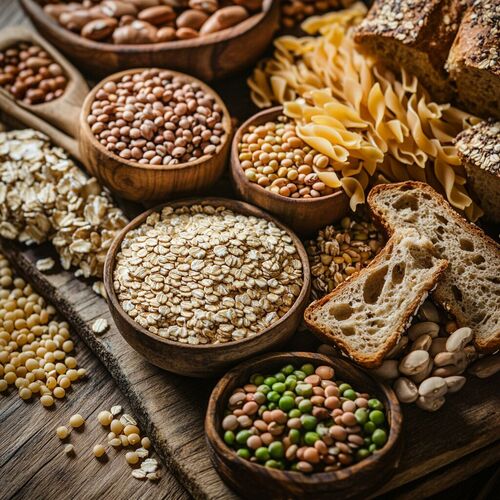
- Grains (buckwheat, oatmeal, brown rice, quinoa): high in fiber, B vitamins, and minerals.
- Whole grain foods (whole grain bread, pasta made from durum wheat): more fiber and nutrients than white flour products.
- Legumes (lentils, beans, peas): are both a source of protein and complex carbohydrates.
Try to choose grains and whole grain products with minimal industrial processing.
How can you visually determine portions?
For those who aren’t used to kitchen scales or don’t want to spend time on precise calculations, the “Healthy Eating Plate” is an excellent guide:
- Half the plate is a colorful “bouquet” of vegetables or salad mix (you can add a little fruit).
- Quarter of the plate — a piece of protein (about the size of your palm minus the fingers) or a serving of legumes.
- The remaining quarter — a side of grains (about the size of your fist) or whole grain foods.
This visual approach allows you to quickly understand how much and what kinds of food should be on your plate to keep your diet balanced.
Additional tips for healthy eating
-
Watch your drinks
Instead of sugary sodas, choose plain water, green or herbal tea without sugar. Reduce the amount of coffee and tea with added sugar or cream. -
Control fats
Add healthy fats (fish oil, nuts, olive oil) in small amounts. Limit saturated fats (fatty red meat, sausages, processed foods). -
Don’t forget fruit
Fruit is an excellent dessert or snack, rich in natural sugars, vitamins, minerals, and fiber. However, remember moderation, especially if you need to monitor your blood sugar. -
Activity and lifestyle
Healthy eating is an important part of your lifestyle, but not the only one. Add regular physical activity (at least 30 minutes of walking a day), full sleep (7–8 hours a night), and stress management.
Conclusion
The “Healthy Eating Plate” is a simple and visual way to create a balanced diet every day. Focus on half a plate of vegetables, a quarter with proteins, and a quarter with complex carbohydrates. This approach helps you get all the necessary nutrients, maintain a healthy weight, and keep your energy up throughout the day.
Try using this method today and diversify your diet with fresh vegetables, lean proteins, and healthy carbohydrates. Remember: the more healthy habits you adopt, the easier it will be to achieve and maintain great well-being!