Why is the weight going down but not the measurements: main reasons and what to do
 Why Is the Weight Going Down But Not the Measurements: Main Reasons and Solutions
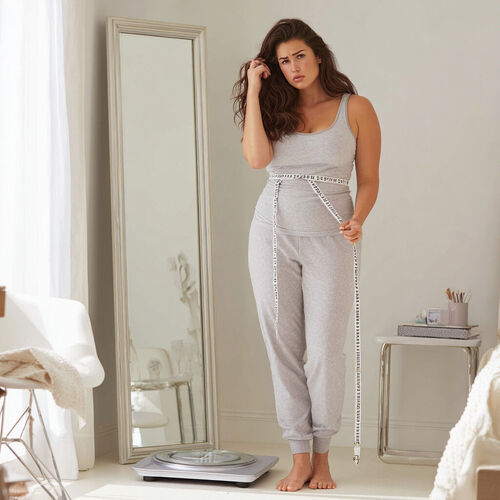
The situation seems paradoxical: the number on the scale is decreasing, but the waist, hip, or belly measurements hardly change. Sometimes it even feels like the body visually stays the same, despite weight loss.
In practice, this is a common and explainable situation. Let's break down the main reasons why you lose weight but not size, and what to do about it.
Weight and Measurements Are Not the Same Thing
The first thing to understand: weight and measurements represent different things.
-
Weight shows the total body mass.
-
Measurements reflect the distribution of fat, water, and muscle.
You can lose weight by losing water or muscle and hardly change your measurements. Conversely, you can reduce your measurements even when the weight remains stable.
Reason 1. Water Loss, Not Fat
This is the most common reason at the start of weight loss.
When you:
-
lower your calorie intake
-
reduce carbohydrates
-
reduce salt
The body loses water. Weight drops quickly, sometimes by 1-3 kg per week, but fat tissue is barely affected. Measurements change only slightly.
Sign:
-
rapid weight drop
-
measurements stay the same
-
then weight loss slows down
This is normal and not a reason to change your strategy.
Reason 2. Loss of Muscle Mass
If:
-
the deficit is too large
-
not enough protein
-
no strength training
The body can lose not only fat but also muscle. Muscles are dense and take up less space than fat, but their loss is not always immediately apparent in your measurements.
As a result:
-
weight drops
-
the body becomes softer
-
measurements visually do not change
Reason 3. Fat Disappears Unevenly
Fat does not disappear locally and does not go away from all areas at once.
The typical order:
-
first the face, chest, upper body
-
then the stomach and sides
-
lastly the hips and buttocks
A person can lose fat, but not in the areas where they measure. This creates the impression of no progress.
Reason 4. Water Retention in Problem Areas
Even with a calorie deficit, water can be retained in certain areas.
Causes:
-
hormonal background
-
stress
-
workouts
-
muscle inflammation
-
menstrual cycle
In such cases, fat may be leaving, but water temporarily masks the reduction in measurements.
Reason 5. Errors in Measuring
Measurements can also be misleading.
Common mistakes:
-
different measuring points
-
different tape tension
-
measured at different times of day
-
measured after eating
A difference of 1–2 cm is easily missed due to inaccuracy in measuring.
The right way:
-
measure in the morning
-
in the same place
-
no more than once a week
Reason 6. Lack of Strength Training
Cardio helps burn calories, but body shape changes mainly because of muscle.
Without strength training:
-
the body changes shape slowly
-
softness remains
-
measurements decrease more slowly
Even 2-3 strength workouts per week greatly improve visual results.
Reason 7. The Deficit Is Too Small
Sometimes fat goes away, but very slowly.
For example:
-
the deficit is minimal
-
weight is lost by 100–200 g a week
Such changes are difficult to detect by measuring with a tape. In this case, you need either patience or a slight adjustment to your approach.
Why This Happens More Often in Women
Women have:
-
a higher percentage of body fat
-
stronger hormonal effects
-
more frequent water retention
That's why weight loss without a noticeable decrease in measurements is more common, especially after age 30–35.
What to Do If Weight Drops but Measurements Don’t
1. Assess Progress Comprehensively
Track:
-
average weight per week
-
measurements every 7–10 days
-
photos
-
how your clothes fit
Relying on just one indicator is almost always misleading.
2. Check Your Protein Intake
The recommended guideline:
-
1.6–2.0 g of protein per kg of body weight
This helps preserve muscle and improve body composition.
3. Add or Review Strength Training
Even basic bodyweight exercises have an effect.
4. Don’t Change Strategies Too Often
Changes take time. Stick to one tactic for at least 3–4 weeks.
5. Monitor Recovery
Sleep and stress directly affect water retention and measurements.
6. Check the Actual Deficit
Tracking errors often specifically slow down fat reduction.
SYPB 30 Calorie Counter helps you see the real picture of your diet, keep track of all the small things, and monitor weight and measurement dynamics all in one place.
When to Be Concerned
Reasons to analyze further:
-
weight loss for months
-
measurements don’t change at all
-
the body becomes softer
In such cases, the problem is usually with muscles, protein, or too strict a deficit.
Brief Conclusion
If you lose weight but not measurements, it's not a failure and not an error in calculation.
Most often, the reason is:
-
water
-
uneven fat loss
-
muscle loss
-
inaccurate measuring
Focus not only on the scale, but on body quality and long-term trends.
And to control your nutrition, deficit, and progress without unnecessary guesswork, the SYPB 30 calorie counter helps track all key indicators and adjust your strategy in time.