

1 The short version
Four facts that everything else follows from. Numbers in square brackets link to the sources at the end of the article.
- We count the energy of walking - only that. The Move ring and «Active Energy» in Apple are all of the day's activity: walking plus housework, stairs, workouts, any movement that raises your heart rate. Apple says so in the description of the metric itself [1]. That is why the daily figure on a watch is always larger, and that is correct.
- A workout summary has two numbers, and only the first is comparable. «Active Calories» is the energy above resting metabolism - exactly what we count. «Total Calories» is the active ones plus the resting energy spent during the walk, and resting energy is already part of your daily norm.
- Compare walking with walking and the figures agree. A real example below: a 3.4 km walk, Apple showed 161 kcal, our calculation gives 135 - and 162 once the 37 metres of climb are taken into account.
- Nobody has an exact number. We use a formula, a watch estimates from heart rate and movement. In laboratory tests against gas analysis not one wrist device stayed below 20% error for calories [8], and when walking the Apple Watch overestimated by 20% on average [9].
2 How the app calculates
We calculate from the distance you covered and your body weight. The formula is the same on iPhone and Android.
(one mile = 1,609 m, one pound = 0.4536 kg)
0.38 kcal per pound of body weight per mile is the average cost of walking above resting metabolism, as measured in laboratories with gas analysis. The heavier the person and the longer the distance, the higher the expenditure: on the same walk, someone weighing 90 kg spends about 20% more than someone weighing 75 kg.
Example: 75 kg (165 lb), 7.3 km walked during the day - that is roughly 10,000 steps.
7.3 km = 4.54 miles; 4.54 × 0.38 × 165 = 284 kcal.
Where the distance comes from
The app takes the distance from the source of your steps - your watch or your phone. The measured distance, not one derived from the step count: stride length changes with speed, and someone walking briskly covers noticeably more ground per step than someone strolling.
If the source reports no distance (this is the case with a phone's built-in pedometer) or the steps were entered by hand, the distance is derived from your height: stride = height × 0.415 for men and × 0.413 for women. This is the standard pedometer rule, and it describes an unhurried walk.
3 Why we count only the energy above rest
Your body burns calories all the time - asleep, at your desk, in front of the television. That resting energy is already included in your daily norm: it is calculated with the Mifflin-St Jeor equation for all 24 hours. So the «Steps» line only receives what was spent above rest - otherwise the time spent on your feet would be counted twice and the deficit on screen would look bigger than it really is.
For the same reason the activity level in your profile is chosen by your workouts («fitness 3 times a week», «heavy physical work») and not by your walking: walking reaches the diary on its own line. Raise the activity level «because I walk a lot» and your walking gets counted twice.
4 What Apple shows: Fitness and Health
In the Health app, Apple describes active energy as an estimate of the energy your body uses during the day in an active state, above resting energy. And it lists what counts: any physical activity, for example slow walking and housework, as well as exercise such as cycling and dancing. The developer documentation says the same: energy from physical activity, excluding resting energy [1].
The key phrase is «any physical activity». While you cook, tidy up, climb stairs or carry bags, the watch sees movement and heart rate and keeps adding calories. The pedometer counts almost no steps during that time. Over an ordinary day this adds up to 200-300 kcal, and our line does not contain them and cannot - we count distance.
Two numbers in the workout summary
When you open a finished walk, Apple shows «Active Calories» and «Total Calories». The difference between them is the resting energy spent during the workout: for a 38-minute walk by someone weighing 77 kg that is about 49 kcal.
Only the active ones are comparable with our line. «Total» includes resting energy, which your daily norm already accounts for.
How the watches calculate
- An Apple Watch uses heart rate, the accelerometer, and your height, weight, sex and age from the Health profile, plus the calibration it builds up on GPS walks [2]. The formula is not published.
- An iPhone without a watch estimates active calories from its motion sensors: steps, distance and flights climbed [3]. Exactly how, Apple does not disclose either.
5 What Google Fit, Google Health and Health Connect show
On Android the word «calories» covers two different quantities depending on the app, and the confusion here is even greater.
- Google Fit (being replaced by Google Health during 2026): its «Calories» figure is the total expenditure for the day, including calories burned at rest - that is what Google's documentation says [14]. Google Health, the former Fitbit app, works the same way: «calories burned» combine basal metabolic rate with activity, and the number grows even while you sleep [15]. Most of such a figure is simply your body working at rest, which is why a day there easily shows 2,000-2,500 kcal.
- Health Connect, through which Android apps exchange data, separates «active calories» - without basal metabolism - from «total calories», which include it [13]. Only the active ones are comparable with our line, and even then bearing in mind that they cover the whole day's activity.
- Samsung Health, Huawei Health, Mi Fitness and watch companion apps use their own closed algorithms and each decides for itself whether to include resting metabolism. What their figure means is written in their own help.
6 One walk: what the watch showed and what we calculated
A real «Outdoor Walk» workout recorded with an Apple Watch. This is the only fair comparison: the same walking, the same data.
| What the watch showed | Value |
|---|---|
| Duration | 37 min 57 s |
| Distance | 3.38 km |
| Average pace | 11'13"/km, that is 5.3 km/h |
| Elevation gain | 37 m |
| Active Calories | 161 kcal |
| Total Calories | 225 kcal |
The person weighs 77 kg. Our formula: 3.38 km = 2.10 miles, 2.10 × 0.38 × 169 lb = 135 kcal.
The gap to the watch's active calories is 26 kcal, and it is explainable. During the walk the person climbed 37 metres. Lifting 77 kg by 37 metres is 28 kJ of mechanical work, and since muscles work at roughly a quarter efficiency, that costs the body about 27 kcal. The watch sees the climb with its altimeter; our formula knows only the distance.
| Calculation | kcal | Difference from «Active» 161 |
|---|---|---|
| our formula, 3.38 km | 135 | 16% lower |
| our formula + 37 m of climb | 162 | matches |
| Apple's «Total Calories» | 225 | contains 49 kcal of resting energy - not comparable |
Now the same day as a whole: the person walked 6.16 km, our line showed 248 kcal, and «Active Energy» in Health showed 511 kcal. Scaling the pace of that walk to the whole day's distance, about 293 kcal of Apple's figure is walking. The remaining 220 or so is everyday movement, which does not appear in steps at all.
7 Why the numbers still differ
1. We do not know the terrain
A climb can add 15-20% to a walk, a descent a few per cent. The watch measures altitude with a barometer; the app does not.
2. We do not know the pace
A kilometre at a brisk pace costs more than a kilometre at a stroll: at 6 km/h expenditure is roughly one and a half times what it is at 4 km/h. Our formula takes the average cost of a kilometre; the watch judges the effort from your heart rate.
3. Watches get it wrong too
Their figure is not a measurement but a model. In laboratory tests it is off by 20-40%, more often on the high side (see the table below). So a 10-20% gap between two estimates is normal, not an error in either of them.
4. Different data in the profiles
Our calculation relies on the weight in the app's profile, the watch's on the weight in Health. If one of them is out of date the figures drift apart: 3 kg at a body weight of 75 kg is about 4%.
8 How accurate the watches themselves are
Laboratory tests against a gas analyser - the only way to measure energy expenditure rather than estimate it.
| Study | What was tested | Result for energy expenditure |
|---|---|---|
| Shcherbina et al., 2017, Stanford [8] | 60 people, 7 wrist devices (Apple Watch among them), indirect calorimetry; sitting, walking, running, cycling | No device achieved an error below 20%. The Apple Watch was the best of the seven, but still beyond that 20% |
| Falter et al., 2019 [10] | Apple Watch, 40 cardiac patients, maximal exercise test | Systematic overestimation, mean error 114.7% |
| Fuller et al., 2020, systematic review [11] | 158 publications, 9 brands | «For energy expenditure, no brand was accurate»; in 18 of 31 comparisons Apple devices overestimated |
| Le et al., 2022 [9] | Apple Watch Series 6, 20 people, outdoor walking at 6.2 km/h and running, COSMED K5 gas analyser | Overestimation: mean error 19.8% when walking and 24.4% when running |
| Kostrna et al., 2026 [12] | Apple Watch Series 8, Fitbit Sense 2, Galaxy Watch 5, Garmin Forerunner 955; 58 people, cycle ergometer | Significant bias in three of the four devices; the authors conclude that consumer devices do not yet provide reliable calorie monitoring |
9 Where the 0.38 coefficient comes from
To compare different methods, let us convert them into one unit: joules per kilogram of body weight per metre travelled. Our 0.38 kcal per pound per mile is 2.18 J/kg/m.
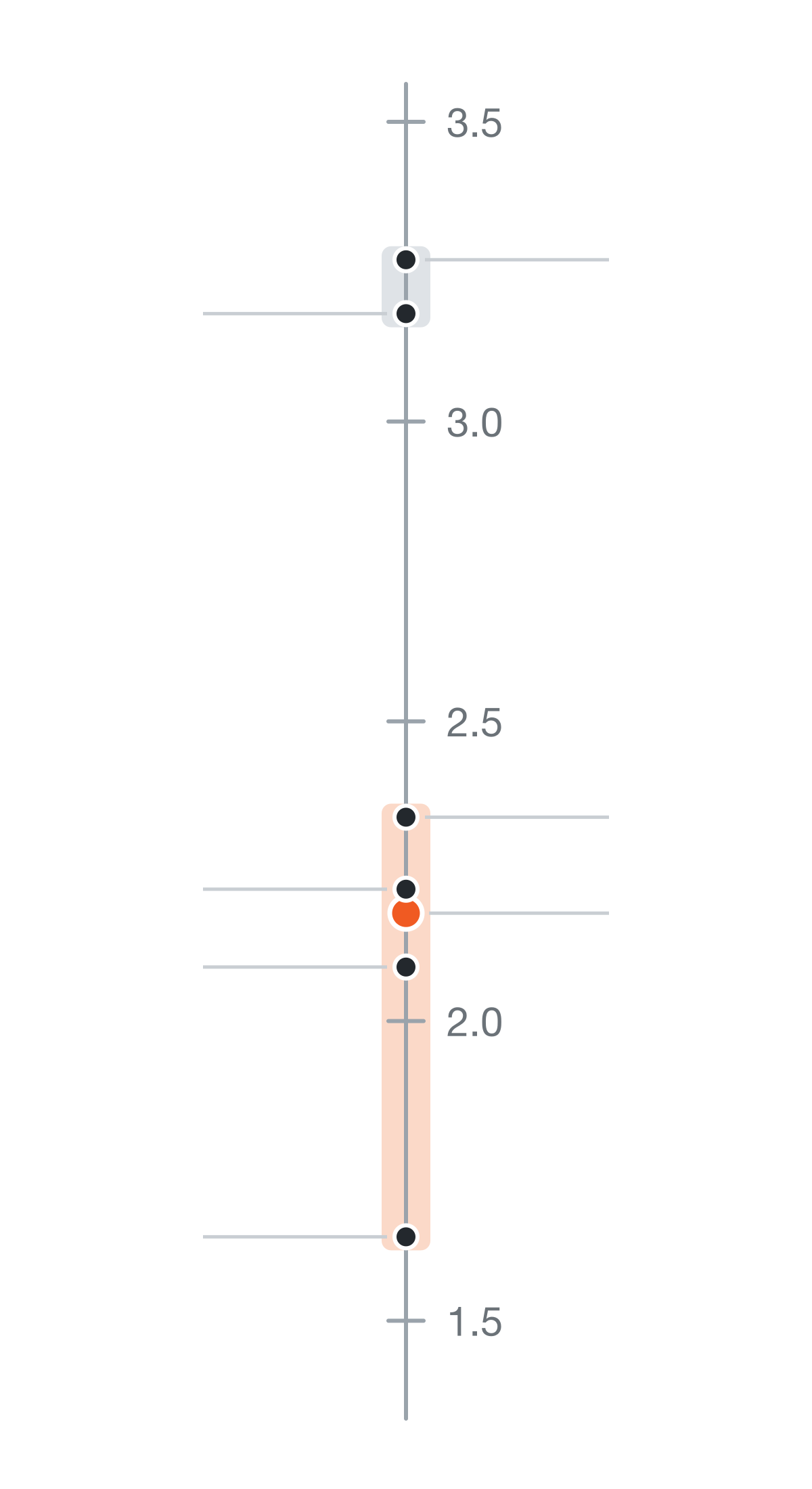
- 11.64 - Minetti et al., 2002: the minimum cost of walking at the most economical speed, around 3.6 km/h; 10 trained runners on a treadmill [4]
- 22.09 - the ACSM equation: horizontal component 0.1 ml O₂ per kg per metre, 5 kcal per litre of O₂, net [6]
- 32.18 - our coefficient of 0.38, the orange dot
- 42.22 - Tucker et al., 2024: 205 adults aged 18 to 81, BMI from 17.5 to 43, treadmill at 4.8 km/h, net of standing [5]
- 52.34 - Compendium 2024: walking at a moderate pace, 3.8 MET, converted for 5 km/h, net (minus 1 MET) [7]
- 63.18 - Compendium 2024, gross: the same figure with resting metabolism included
- 73.27 - the coefficient of 0.57 the app used until July 2026: that is gross, resting metabolism included
Our value sits between the ACSM equation and Tucker's measurements - exactly where an ordinary adult at an ordinary pace ends up. The same example (75 kg, 7.3 km) by each method:
| Method | What it is | kcal |
|---|---|---|
| Minetti et al., 2002 [4] | Minimum net cost of walking, 1.64 J/kg/m | 215 |
| ACSM [6] | Walking equation, horizontal component 0.1 ml O₂/kg/m, net | 273 |
| The Calories app | 0.38 kcal/lb/mile = 2.18 J/kg/m, net | 285 |
| Tucker et al., 2024 [5] | 2.22 J/kg/m, net of standing | 290 |
| Compendium 2024 [7] | 3.8 MET at 5 km/h, net (minus 1 MET) | 306 |
| Compendium 2024, gross | The same with resting metabolism included | 416 |
| The old coefficient of 0.57 | Gross, used until July 2026 | 428 |
The spread between honest laboratory methods runs from 215 to 306 kcal for one and the same walk, more than 40%. There is no «correct» number inside that spread: without a gas analyser nobody knows it, neither an app nor a watch.
10 Which figure to trust in your diary
Ours. Not because it is more accurate than a watch - there is no accurate figure here for anyone - but because it is calculated within the same system as everything else in the diary. The daily norm already contains resting metabolism, so only energy above rest and only for the distance covered is added to it. Put the ring's number or Health's number there instead, and resting energy and all the rest of your activity enter the balance a second time, making the deficit larger than it really is.
If you want to check the app yourself, compare like with like: take one walk on level ground and set the active calories from the workout summary against how much the «Steps» line grew during that time. The numbers should differ by no more than 10-20%. Comparing the day's ring with the steps line shows nothing: they are different quantities.
11 Units used in this article
1 kg = 2.2046 lb
1 kcal = 4,184 J
1 litre of O₂ ≈ 5 kcal
1 MET = 1 kcal per kg of body weight per hour, the resting level
Net is expenditure above resting metabolism, gross includes it.
12 Sources
- Apple Developer Documentation. HKQuantityTypeIdentifier.activeEnergyBurned - the definition of active energy: energy from physical activity, excluding resting energy. developer.apple.com
- Apple Support. Calibrate your Apple Watch for improved Workout and Activity accuracy - the watch uses height, weight, gender, age and calibration to work out calories. support.apple.com/en-us/105048
- Apple Support. Get started with Fitness on iPhone - an iPhone without a watch estimates active calories from its motion sensors. support.apple.com
- Minetti A.E., Moia C., Roi G.S., Susta D., Ferretti G. Energy cost of walking and running at extreme uphill and downhill slopes. Journal of Applied Physiology, 2002; 93: 1039-1046. doi.org/10.1152/japplphysiol.01177.2001
- Tucker et al. Treadmill walking economy is not affected by body fat and body mass index in adults. Physiological Reports, 2024. pmc.ncbi.nlm.nih.gov/articles/PMC11101323
- ACSM Metabolic Calculations (walking and running equations) - VO₂ = 0.1 × speed + 1.8 × speed × grade + 3.5 ml/kg/min. depts.ttu.edu (PDF)
- 2024 Adult Compendium of Physical Activities. Walking - codes 17170, 17190, 17200: 2.5 mph - 3.0 MET; 2.8-3.4 mph - 3.8 MET; 3.5-3.9 mph - 4.8 MET. pacompendium.com/walking
- Shcherbina A. et al. Accuracy in wrist-worn, sensor-based measurements of heart rate and energy expenditure in a diverse cohort. Journal of Personalized Medicine, 2017; 7(2): 3. doi.org/10.3390/jpm7020003
- Le et al. Validity of three smartwatches in estimating energy expenditure during outdoor walking and running. Frontiers in Physiology, 2022. pmc.ncbi.nlm.nih.gov/articles/PMC9549133
- Falter M. et al. Accuracy of Apple Watch measurements for heart rate and energy expenditure in patients with cardiovascular disease. JMIR mHealth and uHealth, 2019. doi.org/10.2196/11889
- Fuller D. et al. Reliability and validity of commercially available wearable devices for measuring steps, energy expenditure, and heart rate: systematic review. JMIR mHealth and uHealth, 2020; 8(9): e18694. mhealth.jmir.org/2020/9/e18694
- Kostrna J. et al. Body fat, skin tone, and the accuracy of smartwatch caloric expenditure estimates. PLoS One, 2026. doi.org/10.1371/journal.pone.0353261
- Google Health API. Calories and energy data types - «Active calories» exclude basal metabolism, «Total calories» include it. developers.google.com/health/data-types/calories
- Google Fit. Activity data types, com.google.calories.expended - total calories burned, including calories burned at rest (BMR). developers.google.com/fit/datatypes/activity
- Google Health Help. How does my Fitbit device calculate my daily activity? - «calories burned» combine basal metabolic rate with activity data; BMR is based on height, weight, sex and age from the profile. support.google.com/googlehealth/answer/14237111